TRAC Monthly Report: October 2026
- Category: Monthly Reports
- Author: JM
- Published: 01 Nov 2026
- Last updated: 01 Nov 2026
Astrophotography (AP)
The Ring Nebula (M57)
The Ring Nebula (M57) is a stunning planetary nebula in the constellation Lyra, about 2,500 light-years from Earth.
Although the Ring Nebula appears tiny in the Seestar's field of view, it still did a good job of capturing its ring-like structure and distinctive bright colours.

Image credit: JM (TRAC)
Above image: The Ring Nebula, one of the first DSOs we ever looked at with the telescope. Equipment: Seestar S50. F-stop: f/5. Exposure: 521 x 10 sec. Taken at 00:05 on 03 Oct 2026.
Brocchi's Cluster (The Coathanger)
Brocchi's Cluster is an asterism made up to 10 stars in the constellation Vulpecula.
The six bright blue stars in this asterism form a row spanning 1.3° of the night sky – too wide to fit within the Seestar S50's field of view. A mosaic was created to capture the group. Unfortunately, deteriorating weather prevented the entire area from being imaged, leaving some of the edges incomplete.

Image credit: JM (TRAC)
Above image: The bright stars of Brocchi's Cluster. Equipment: Seestar S50. F-stop: f/5. Exposure: 54 x 10 sec. Taken at 22:32 on 05 Oct 2026.
Comet 161P/Hartley–IRAS
Conditions were poor, and the comet was low on the horizon, making it difficult to capture a good photo. Still, this may be the only image of a comet we get this year.

Image credit: JM (TRAC)
Above image: Comet 161P is the faint greenish 'smudge' at the centre of the photo. Equipment: Seestar S50. F-stop: f/5. Exposure: 72 x 10 sec. Taken at 22:28 on 10 Oct 2026.
The Triangulum Galaxy (M33)
Messier 33 is a spiral galaxy in the constellation Triangulum. It lies roughly 2.7 million light-years from Earth.
The photo turned out reasonably well considering the poor weather conditions, although it does suffer from star trails and a few other issues.
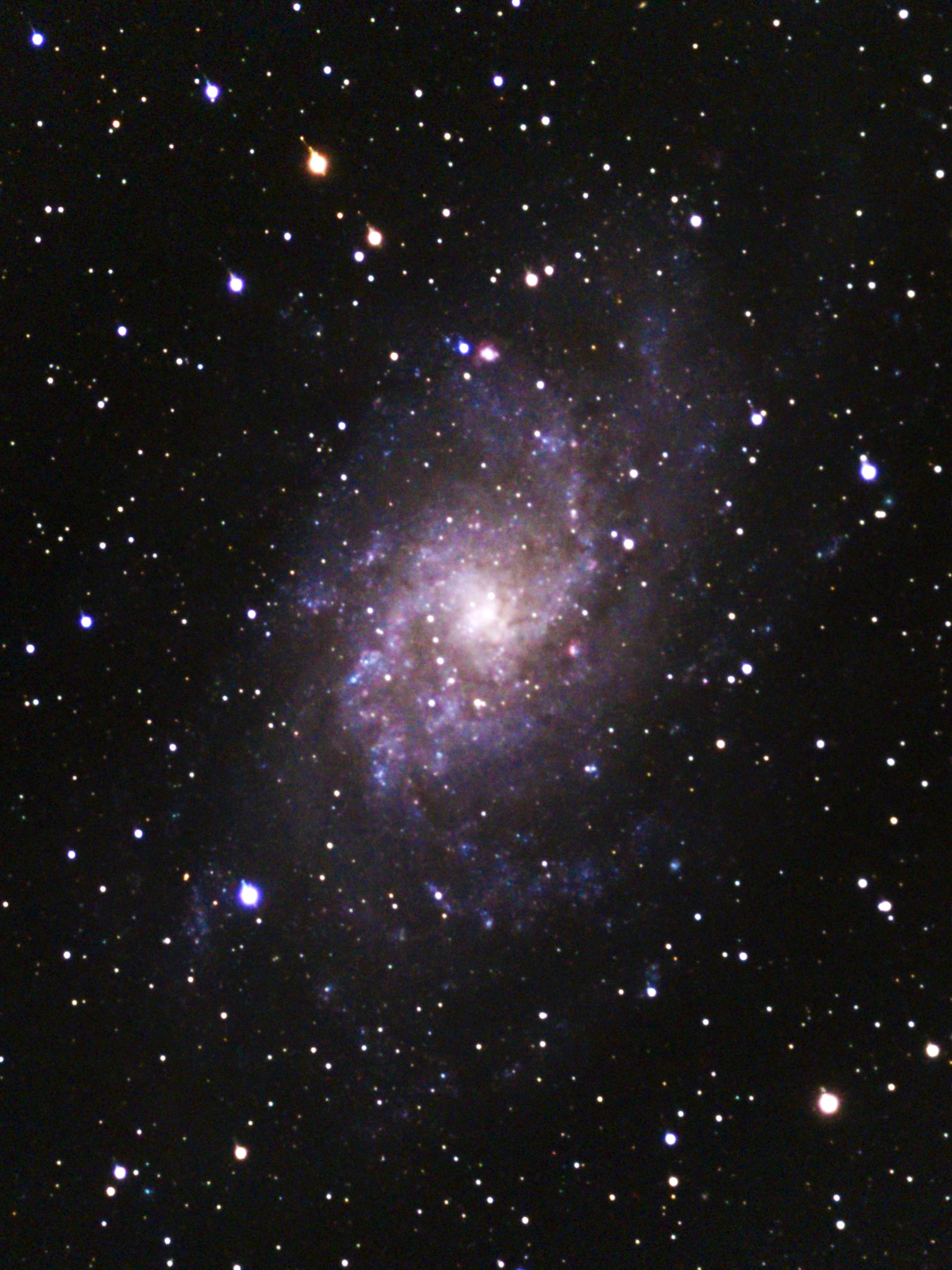
Image credit: JM (TRAC)
Above image: Observe the broad spiral structure of M33. Equipment: Seestar S50. F-stop: f/5. Exposure: 373 x 10 sec. Taken at 00:45 on 17 Oct 2026.
Lunar Observations
Full Moon - Hunter's Moon (25 Oct 2026)
Mineral Moon
Increasing the colour saturation in Krum’s photo of the October full Moon brings out subtle colour variations that reveal differences in the Moon's mineral composition.
You can see some brownish-orange and bluish hues.
Areas with a bluish color have a high concentration of heavy metals such as titanium and iron in the basalt rocks. The brownish-orange areas have a high iron content and are low in titanium.
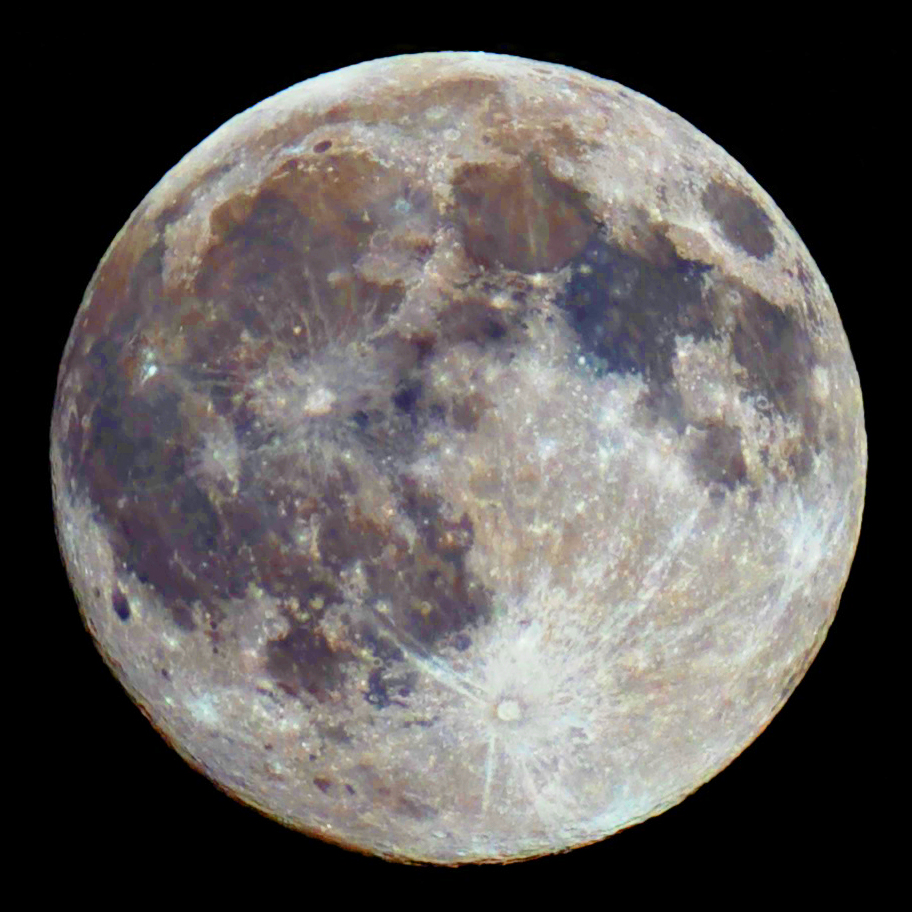
Image credit: KK (TRAC)
Above image: The October full Moon hinting at the differences in the Moon's mineral composition. Equipment: Seestar S50. F-stop: f/5. Exposure: 1/186 sec. Focal length: 250 mm. Taken at 19:24 on 25 Oct 2026.

Image credit: KD (TRAC)
Above image: Kacy D captured this photo of the waning gibbous Moon glowing with a soft, pale yellow hue. Taken at 18:56 on 27 Oct 2026.
Planets
Saturn
Saturn Opposition (04 Oct 2026)
TRAC members enjoyed exceptionally clear views of Saturn on the night of its opposition. The rings are beginning to open up again now, and the atmosphere was unusually steady. It was the best view of Saturn we'd had since December 2024.
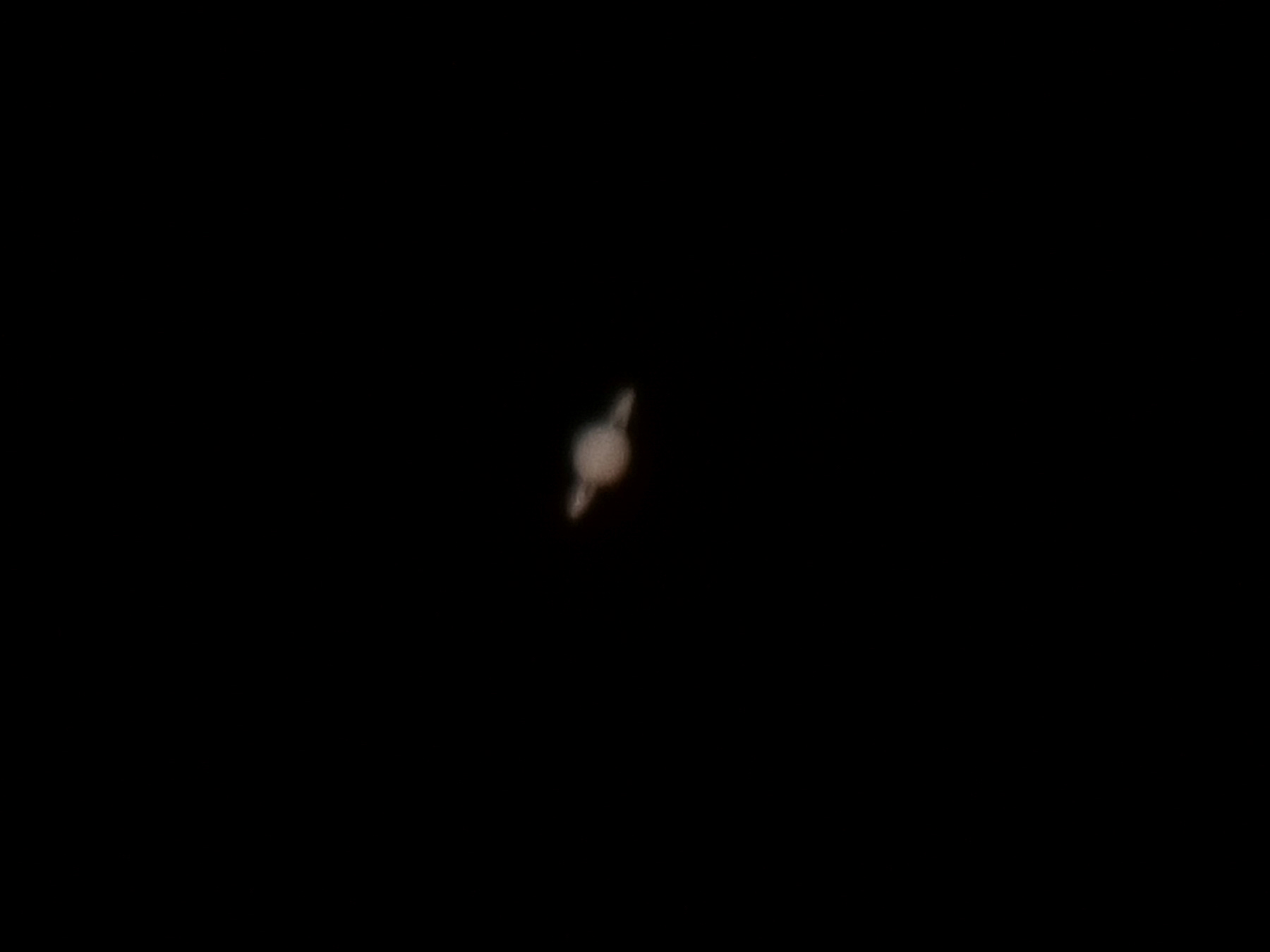
Image credit: JM (TRAC)
Above image: Saturn at opposition in 2026. Subtle banding across the planet’s atmosphere was visible to the naked eye at the time this photo was taken. Equipment: Samsung Phone / Celestron 127 mm SLT Mak. F-stop: f/1.8. Exposure: 1/33 sec. ISO: 400. Taken at 21:41 on 04 Oct 2026.
The photo below shows three of Saturn's moons – Titan, Rhea, and Dione – although Saturn itself is overexposed.
Image credit: JM (TRAC)
Above image: Saturn at opposition in 2026, with three of its moons visible from left to right: Titan, Rhea and Dione. Equipment: Seestar S50. F-stop: f/5. Exposure: 1/10 sec. Taken at 23:14 on 04 Oct 2026.
Neptune
Using Saturn as a starting point, Neptune wasn't too difficult to find by star-hopping with binoculars.
Neptune (Seestar S50 Test)
Neptune was photographed with the Seestar S50 on 05 Oct 2026. Remarkably, the image also captured Triton, the planet's largest moon.

Image credit: JM (TRAC)
Above image: Neptune and its largest moon, Triton, visible to the upper left of our Solar System's most distant planet. Equipment: Seestar S50. F-stop: f/5. Exposure: 60 x 10 sec. Taken at 21:54 on 05 Oct 2026.
Minor Planets
Pallas (2)
Along with Vesta (see below), Pallas is one of the largest asteroids in the Solar System.
Pallas reached magnitude +8.2 on 04 Oct 2026, the night of its opposition. It could be seen using binoculars from Rainham.
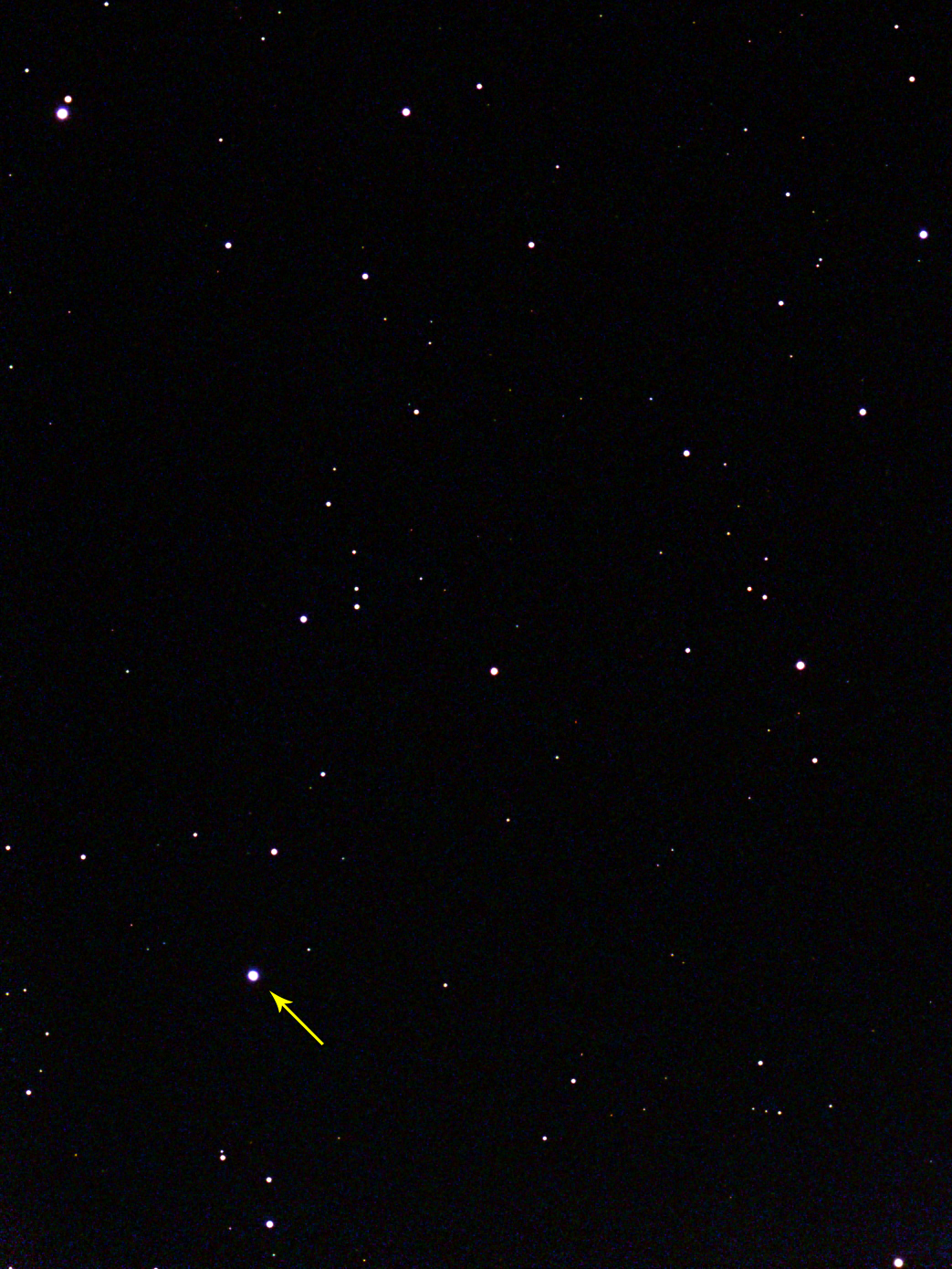
Image credit: JM (TRAC)
Above image: The asteroid, Pallas. Equipment: Seestar S50. F-stop: f/5. Exposure: 46 x 10 sec. Taken at 22:55 on 04 Oct 2026.
Vesta (4)
It was easy to locate Vesta (mag. +6.6) on 04 Oct 2026 using binoculars. Vesta was about as bright as it ever gets because it was close to its opposition (13 Oct 2026).
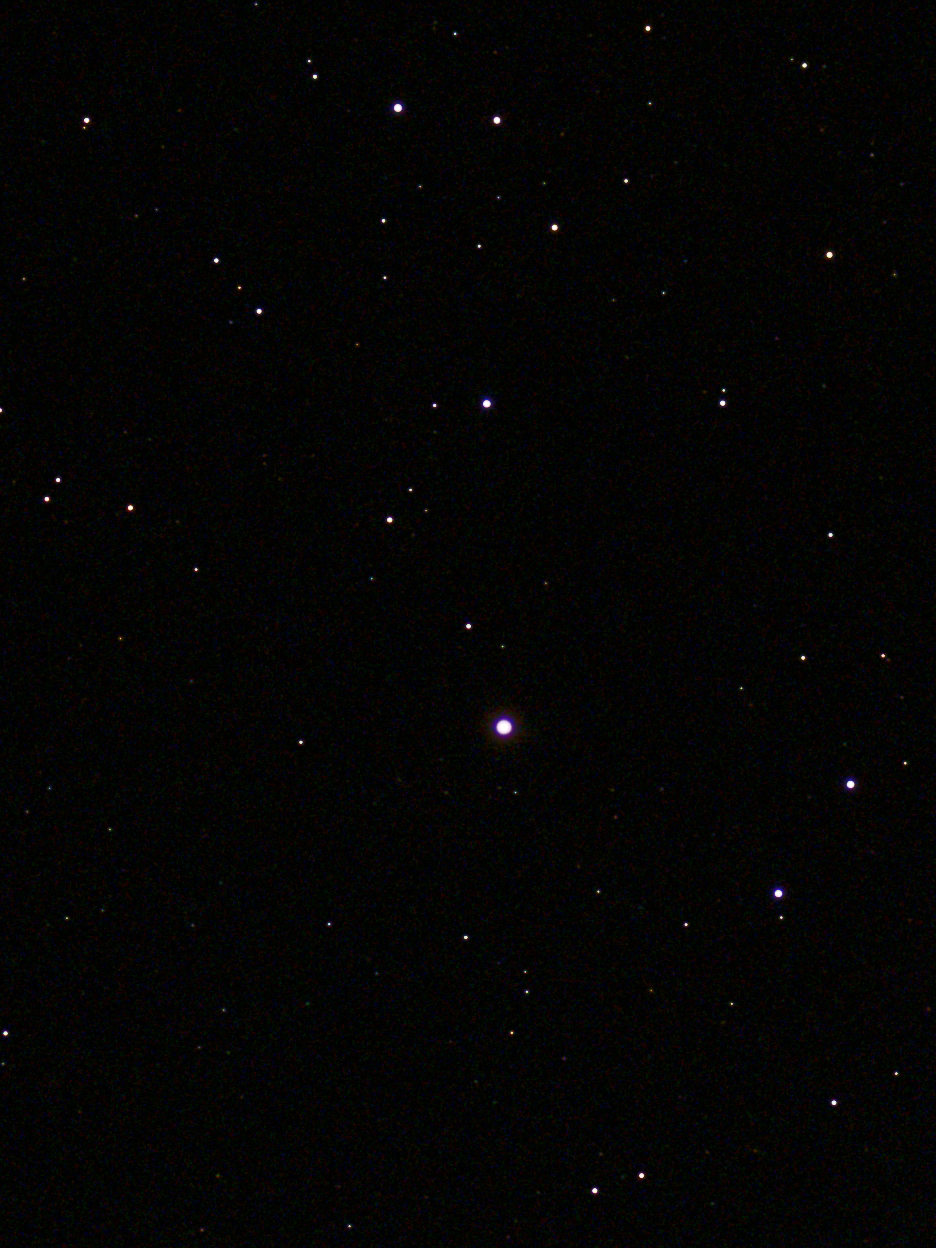
Image credit: JM (TRAC)
Above image: The asteroid, Vesta. Equipment: Seestar S50. F-stop: f/5. Exposure: 49 x 10 sec. Taken at 23:11 on 04 Oct 2026.
Pluto (Seestar S50)
Success! Despite being magnitude +15.5, dwarf planet Pluto was photographed with the Seestar S50 on 10 Oct 2026. Pluto is about the faintest object the camera is able to detect.
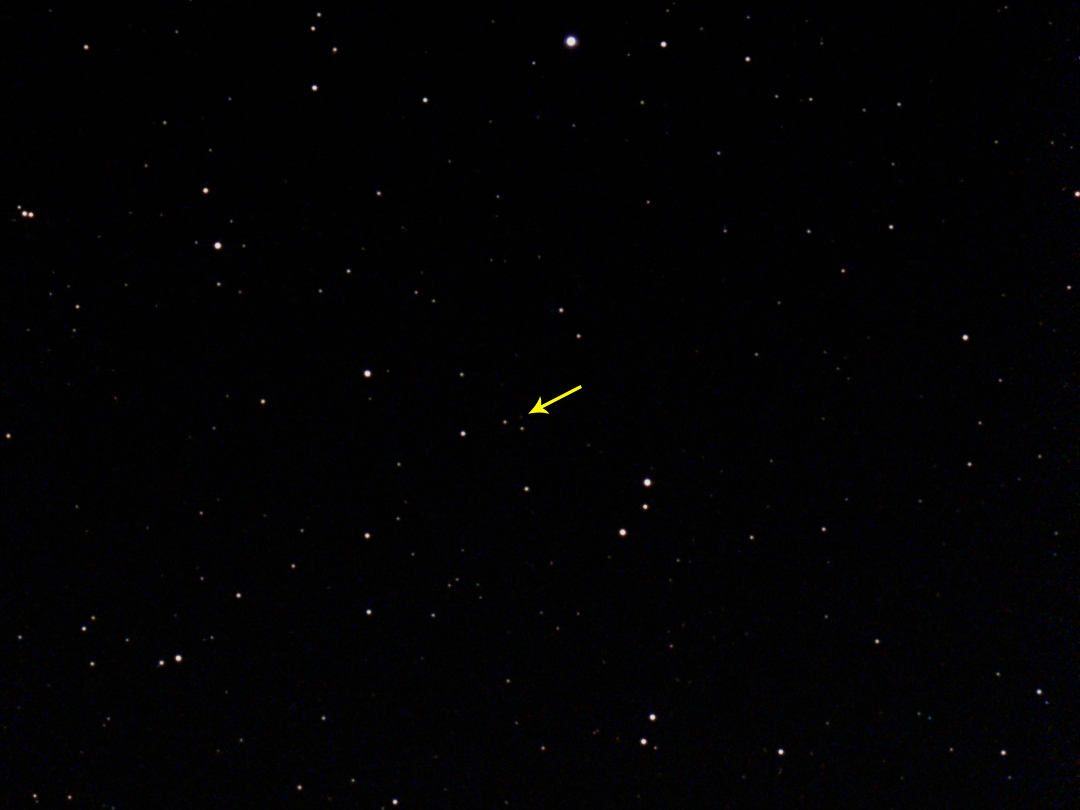
Image credit: JM (TRAC)
Above image: Tiny Pluto. Equipment: Seestar S50. F-stop: f/5. Exposure: 44 x 10 sec. Taken at 22:02 on 10 Oct 2026.
Summary
Seestar S50 Results
The little smart telescope served us well this month. As the photos above demonstrate, it is more than capable of capturing impressive images of tiny targets such as asteroids, distant worlds like Neptune and Pluto, and expansive galaxies such as the Triangulum Galaxy (M33).
On a clear night, with enough time, it's able to produce some impressive images.
Looking Ahead
October was a very productive month for those focussed on astronomy work.
The only target we missed from our October 2026 Action Plan was the Andromeda Galaxy. It's easy to locate with binoculars, and I'm confident we'll be able to capture an excellent image of it with the Seestar S50 in November. We'll also turn our attention to star clusters.
James M
TRAC Team Leader
01 Nov 2026 – Rainham, Kent

TRAC is an amateur astronomy group based in Rainham (Kent) in the United Kingdom.
On clear nights, you'll find us outside, observing stars, planets, moons, galaxies, satellites, meteors, and comets.
This monthly report is intended to keep club members informed of our observational activities, track progress towards the club's long-term goals, celebrate successes, and record memorable moments.
Unless stated otherwise, magnitude values refer to apparent magnitude and have usually been rounded to one decimal place; photos of deep-sky objects credited to TRAC were taken using a Seestar S50 smart telescope; our observations were made from Rainham, Kent; and times and dates are in the UK's local time zone (GMT or BST, depending on the time of year).
We welcome any questions, feedback, or suggestions you may have. Please let us know if anything is unclear or if you notice an error, inaccuracy, or typo. Contact us via email.
© 2026 Taverners Road Astronomy Club