TRAC Monthly Report: February 2026
- Category: Monthly Reports
- Author: JM
- Published: 04 Mar 2026
- Last updated: 06 Mar 2026
Stargazing
Sirius (Canis Major)
Sirius shines at mag. -1.5, making it the brightest star in the night sky.
It appears exceptionally bright due to both its high intrinsic luminosity and its proximity to our Solar System. Located about 8.6 light-years away, Sirius is among the nearest stars to Earth.
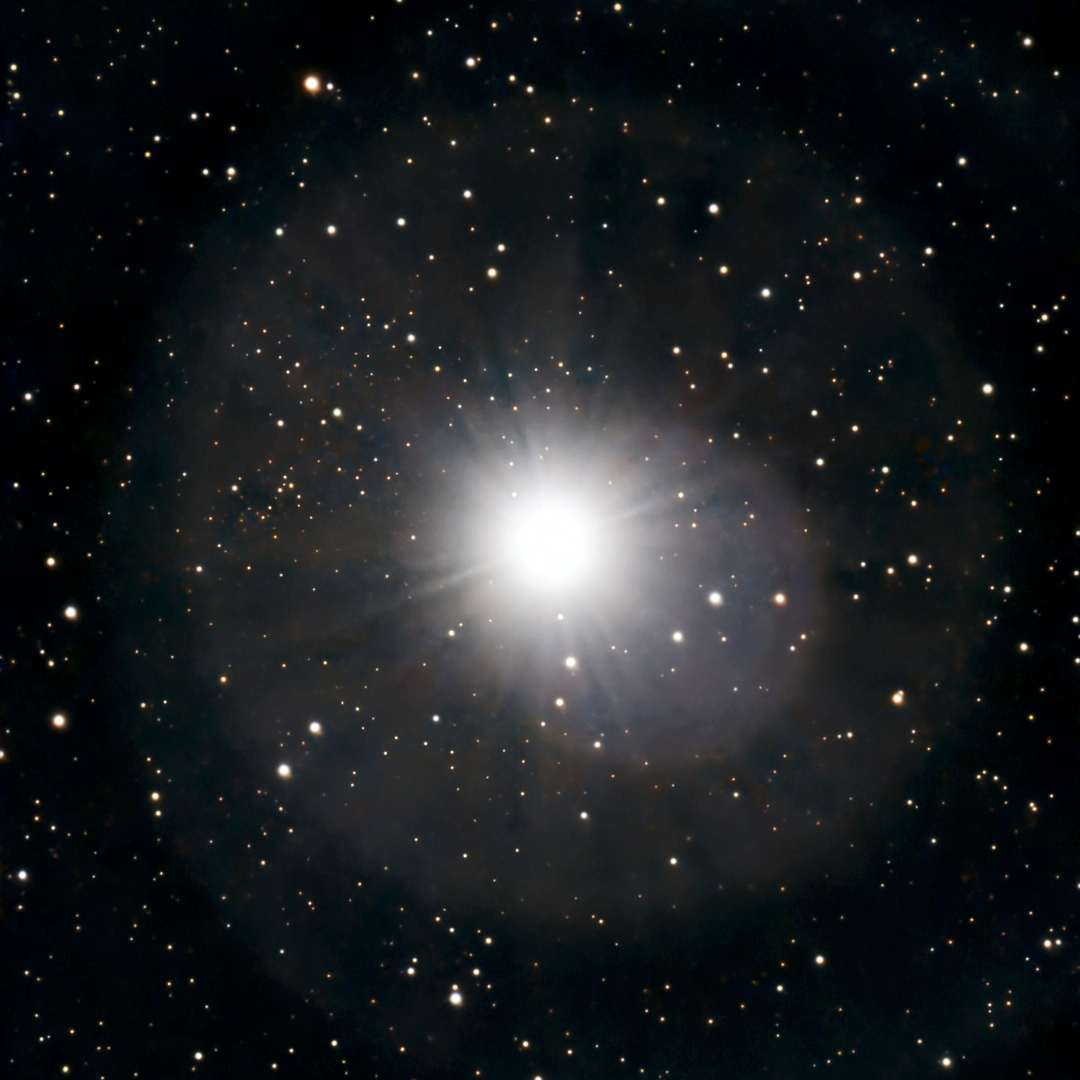
Image credit: JM (TRAC)
Above image: Sirius, the brightest star visible from Earth. Captured using a Seestar S50 smart telescope. Taken at 22:29 on 24 Feb 2026.
The hazy cloud around Sirius in the image is not a nebula. Extremely bright stars like Sirius can produce internal reflections in small telescopes like the SeeStar S50. It's also slightly overexposed, plus thin clouds in Earth's atmosphere can also create a faint glow around very bright stars.
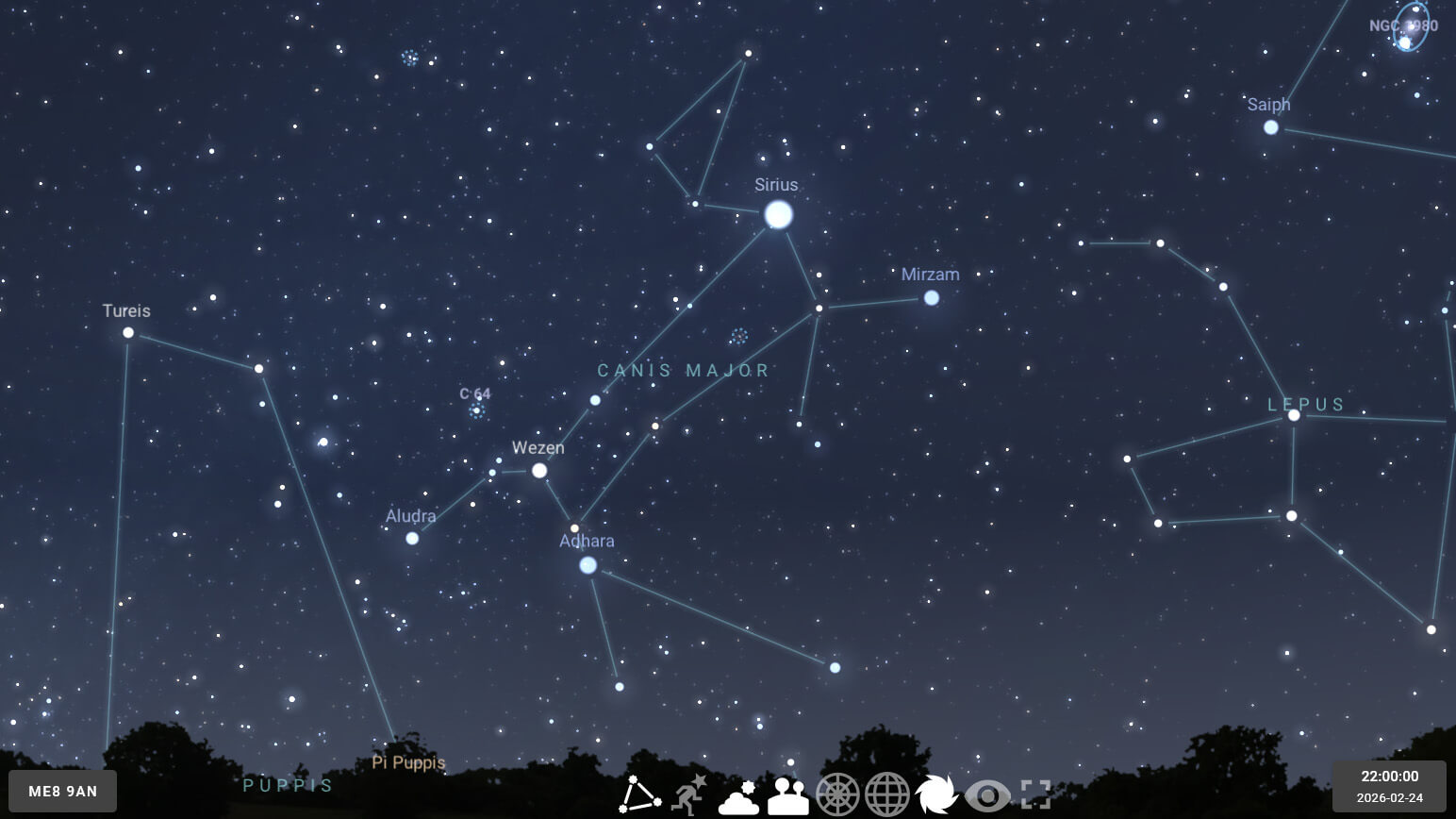
Image credit: Stellarium
Above image: The position of Sirius in the constellation of Canis Major, the Greater Dog. February is the best time of the year to see Canis Major from our location. All the stars except the lowest two (back legs) were visible on 24 Feb 2026.
Rigel & Betelgeuse (Orion)
Both stars are prominent members of the constellation Orion, yet they shine with strikingly different colours in the night sky. Rigel appears blue-white, while Betelgeuse has a distinctive reddish-orange hue.
The colour difference is due to their surface temperatures. Rigel, a blue supergiant, has a very high surface temperature of roughly 12,000 K, so it emits more blue and white light. In contrast, Betelgeuse is a red supergiant with a much cooler surface temperature of around 3,500 K, giving it a reddish colour.
This makes the pair an excellent visual example of how stellar colour is linked to temperature, with hotter stars appearing bluer and cooler stars appearing redder.
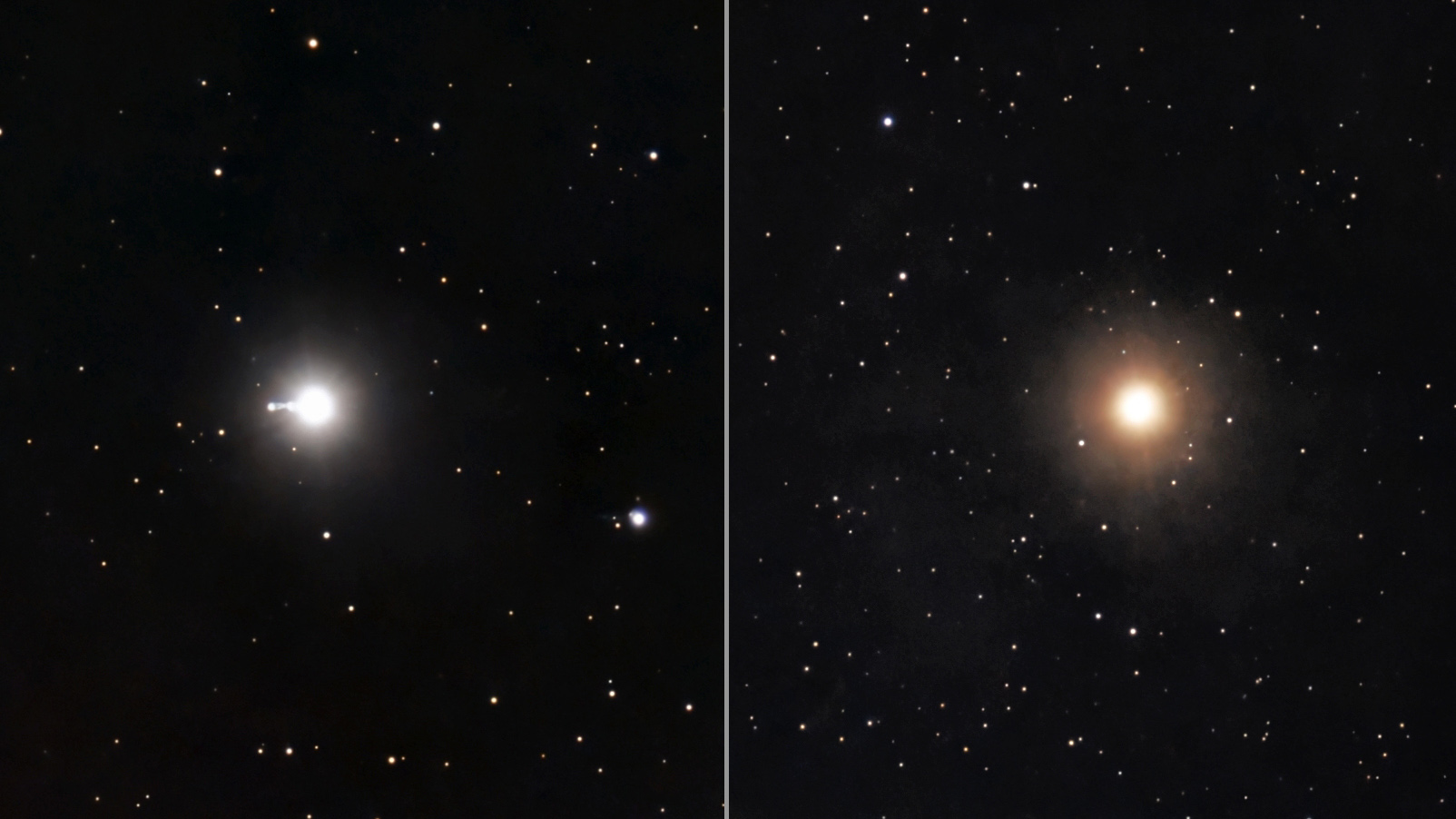
Image credit: JM (TRAC)
Above image: Comparison of the two bright stars Rigel (left) and Betelgeuse (right) in the constellation of Orion. Rigel's characteristic blue hue is less pronounced in this image, likely due to limitations of the Seestar camera. Exposure: 16 × 10s (Total: 160s). Taken at 22:40 on 24 Feb 2026.
Astrophotography (AP)
The Horsehead Nebula & Flame Nebula
The naked-eye visible Orion Nebula (M42) is not the only nebula in the constellation of Orion, the Hunter.
The Horsehead Nebula and Flame Nebula are two striking nebulae located near the bright star Alnitak in Orion's Belt.
The Horsehead Nebula is a dark nebula. It's a molecular cloud silhouetted against a bright background of glowing hydrogen gas. It's famous for its distinctive shape, which resembles a horse's head.
In contrast, the Flame Nebula is an emission nebula. Its bright regions are caused by intense ultraviolet radiation from nearby stars. The radiation ionises the surrounding gas, causing it to glow brightly.
The below images of these nebulae were captured from Rainham (Kent) on 24 Feb 2026 between 21:30 and 22:30 using a Seestar S50 smart telescope (50 mm aperture).
The Seestar S50 was able to fit both nebulae in a single frame.

Image credit: JM (TRAC)
Above image: The Flame Nebula (top left) shines above the bright star Alnitak, while the Horsehead Nebula appears as a dark silhouette against the red glowing background lower down.

Image credit: JM (TRAC)
Above image: A rotated copy of the previous photo. The horse's head is now in the orientation of a normal horse's head – like the nice friendly horses you see in the fields towards Newington.

Image credit: JM (TRAC)
Above image: Zoomed in closer to take a better look at the horsehead shape of the nebula. It's not hard to see how it got its name. This recolourised version is also somewhat closer to the colour obtained from professional astrophotography setups.
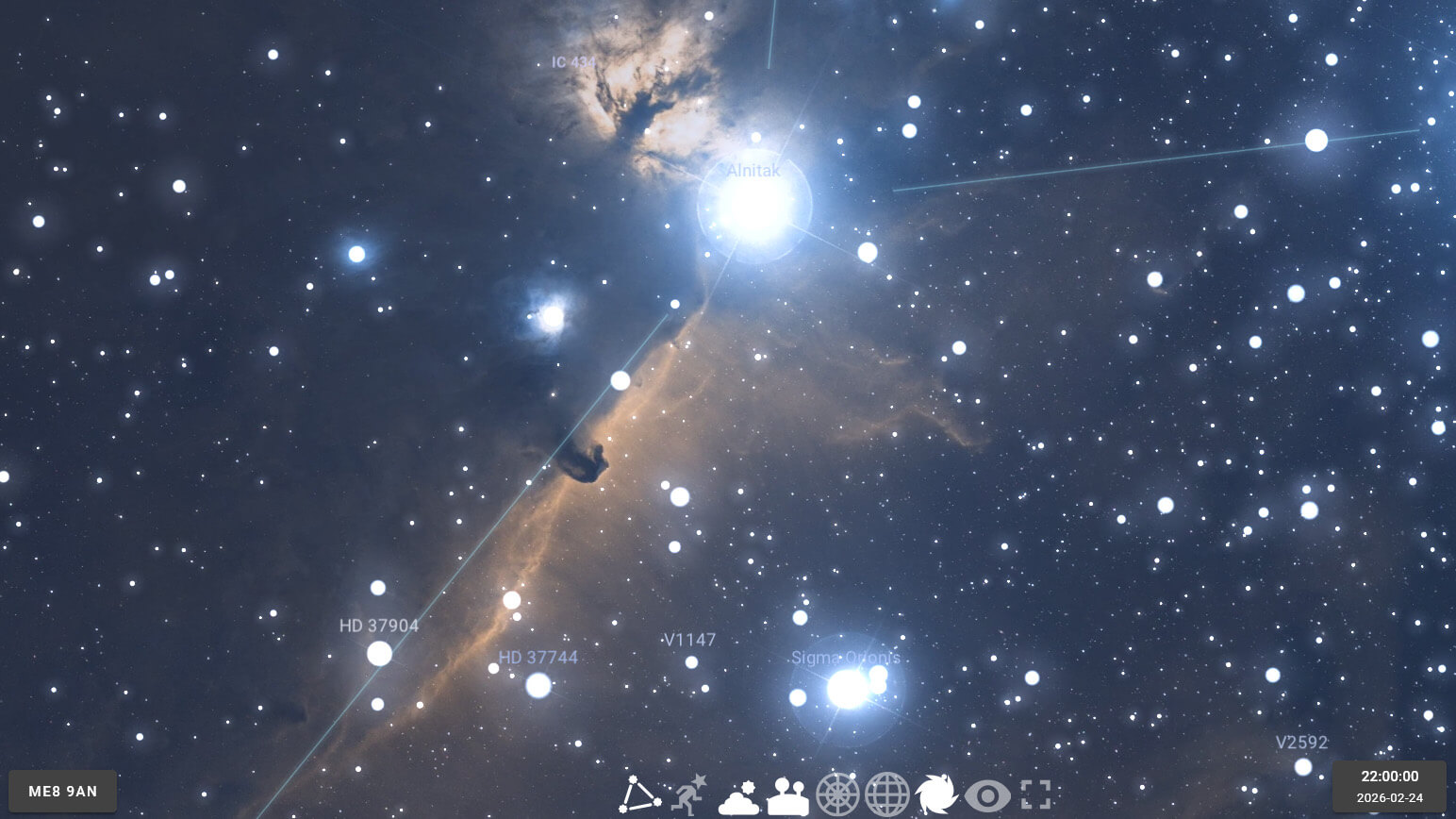
Image credit: Stellarium
Above image: A simulated view of the Horsehead Nebula and Flame Nebula and nearby stars in Orion. The darkness of space is washed out by the glare from the Moon, which was just west of Orion at the time the nebula photos were taken.
Lunar Observations
Quarter Moon (24 Feb 2026)
The little Seestar S50 performed well when imaging the Moon in its first-quarter phase on 24 Feb 2026. As expected, it produced a better quality image than the Lumix point-and-shoot camera at 30× optical zoom. The colour balance was improved, and the lunar craters appeared noticeably sharper.

Image credit: JM (TRAC)
Above image: A rotated photo of the Moon at its first quarter phase. Photographed using a Seestar S50. Taken at 22:32 on 24 Feb 2026.
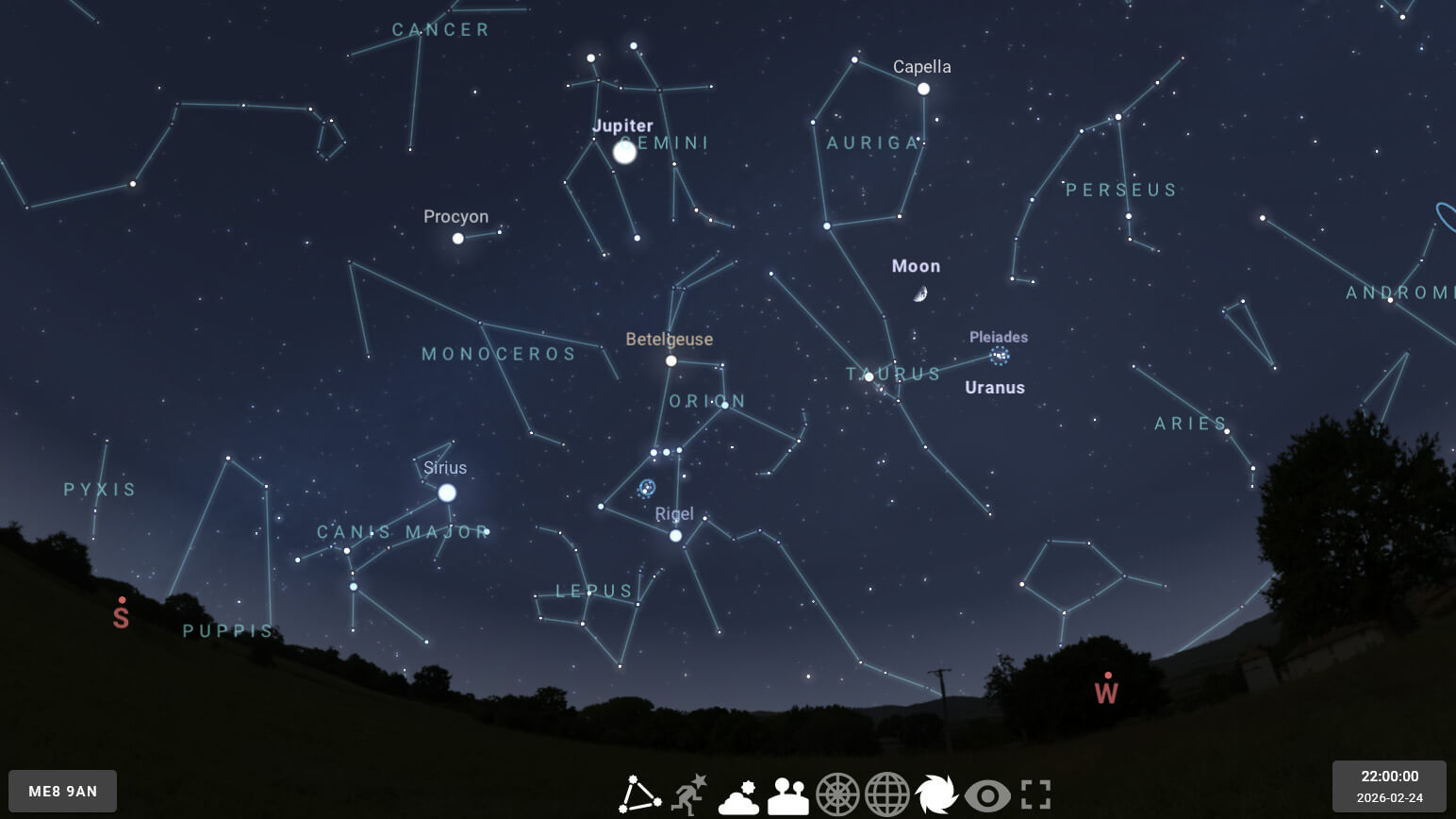
Image credit: Stellarium
Above image: The Moon's position in the night sky at 22:00 on 24 Feb 2026. Its bright glare significantly degraded the quality of the nebula images taken later that night.
Planets
2026 Planetary Parade
TRAC team members who were out about one hour after sunset on clear evenings at the end of the month were able to see three naked-eye planets in the 2026 planetary parade: Mercury, Saturn, and Jupiter.
By the time the western sky was dark enough for Mercury and Saturn to become visible, Venus was too low down to be seen.
We'll aim to spot Venus close to Mercury at the start of March.
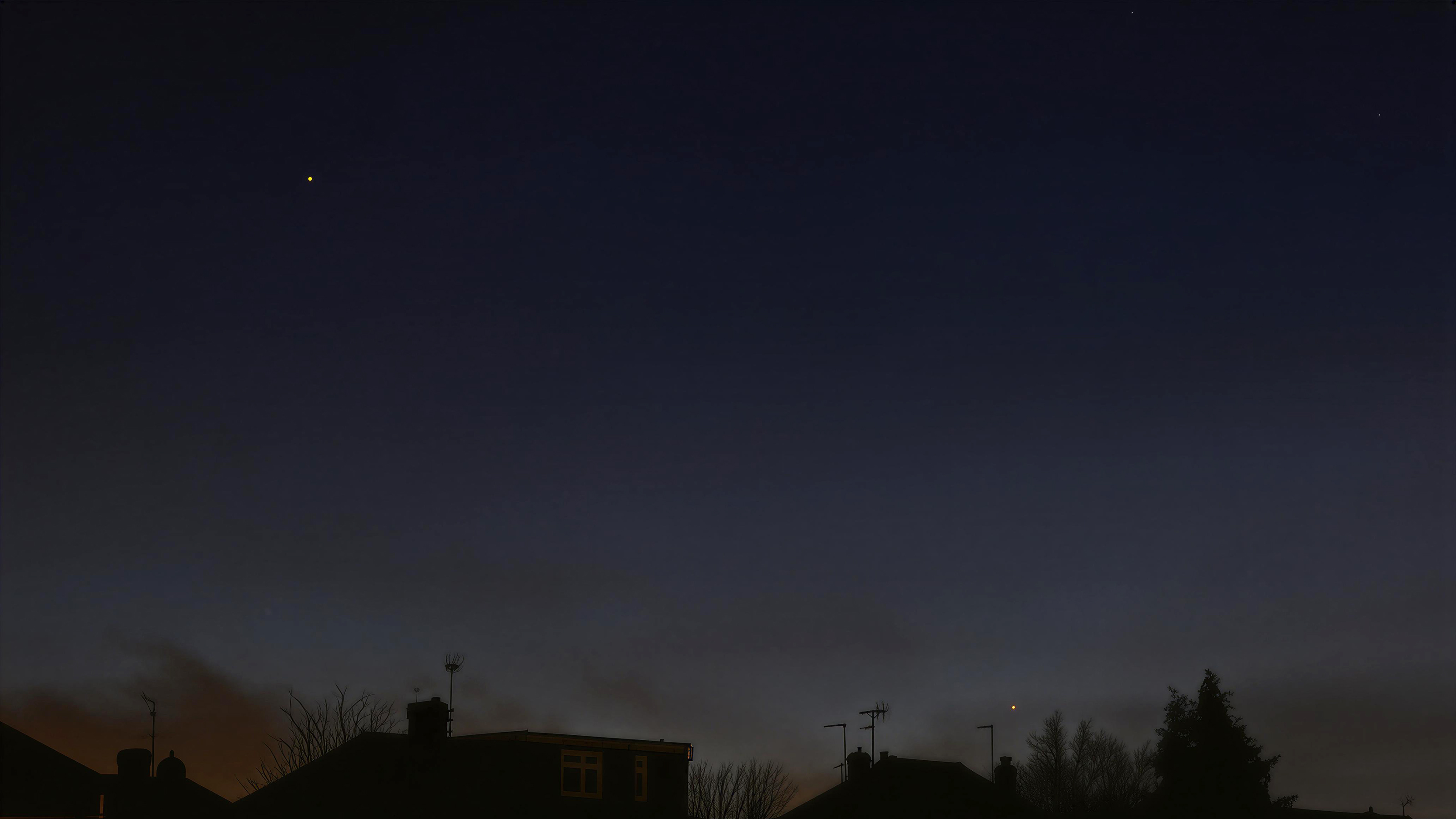
Image credit: JM (TRAC)
Above image: Mercury was spotted hanging just above the roofs with Saturn higher in the sky slightly to the south. This photo was used in an online article about the Feb 2026 planetary alignment. Taken at 18:31 on 22 Feb 2026.
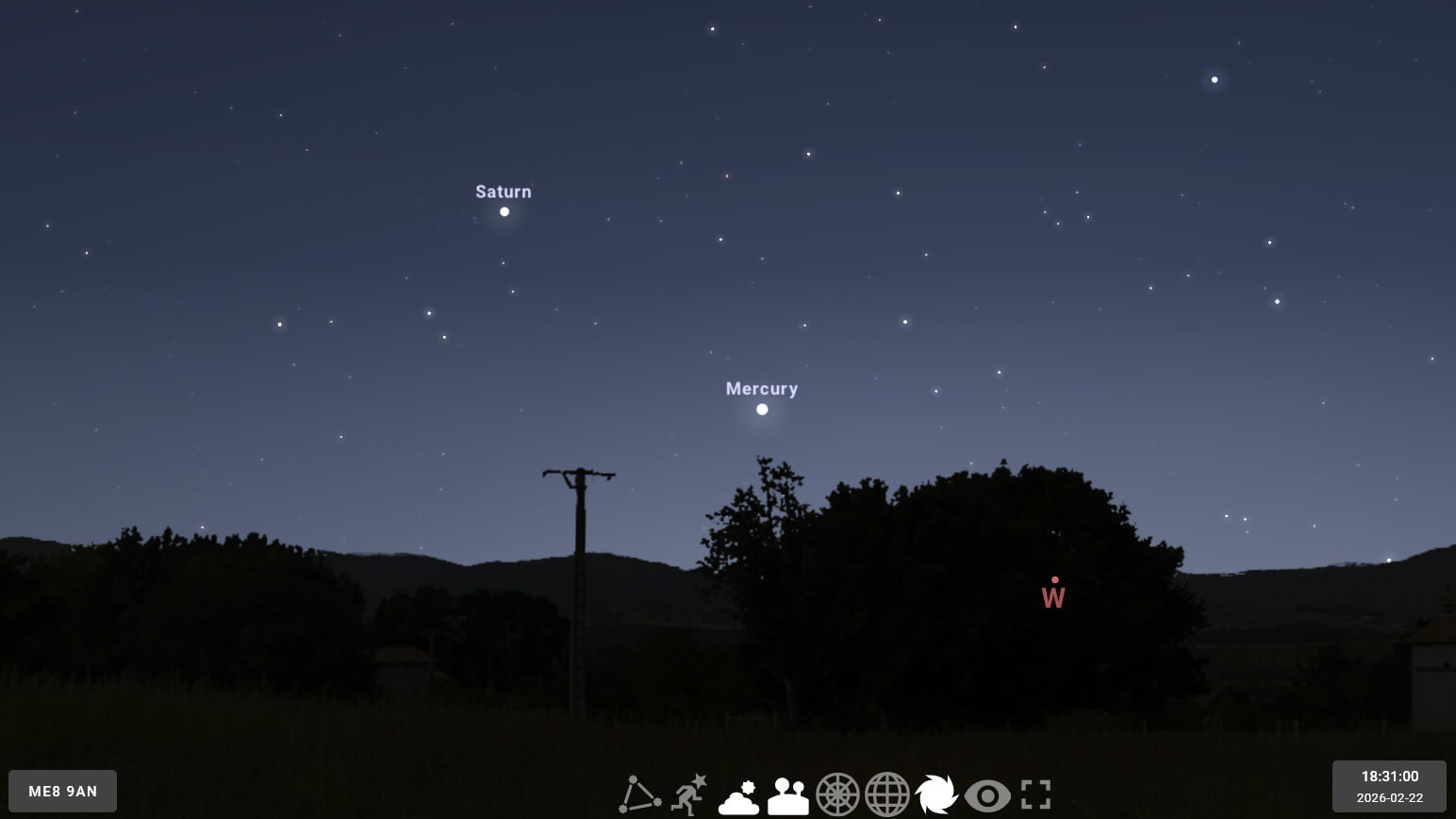
Image credit: Stellarium
Above image: A simulated view of the scene in the previous image. Mercury was only visible from places with a clear view to the west.
TRAC member Charlie L observed four planets – Jupiter, Saturn, Mercury, and Venus – from the top of Bluebell Hill between Maidstone and Rochester. This vantage point offers a clearer view towards the western horizon from is possible from the park.
Summary
Cloudy at New Moon (Again)
We experienced cloudy skies around the time of the new moon. On the few clear nights, the Moon's glare significantly affected the quality of the Seestar images.
I suggest we return to the nebula targets in Orion later this year (Nov/Dec).
Looking Ahead
Next month, we'll continue to monitor the movements of Mercury and Venus after sunset and point the Seestar towards the spring constellation of Leo for some galaxy hunting.
James M
TRAC Team Leader
04 Mar 2026 – Rainham, Kent

TRAC is an amateur astronomy group based in Rainham (Kent) in the United Kingdom.
On clear nights, you'll find us outside, observing stars, planets, moons, galaxies, satellites, meteors, and comets.
This monthly report is intended to keep club members informed of our observational activities, track progress towards the club's long-term goals, celebrate successes, and record memorable moments.
Unless stated otherwise, magnitude values refer to apparent magnitude and have usually been rounded to one decimal place; photos of deep-sky objects credited to TRAC were taken using a Seestar S50 smart telescope; our observations were made from Rainham, Kent; and times and dates are in the UK's local time zone (GMT or BST, depending on the time of year).
We welcome any questions, feedback, or suggestions you may have. Please let us know if anything is unclear or if you notice an error, inaccuracy, or typo. Contact us via email.
© 2026 Taverners Road Astronomy Club