Observe the Moon Night 2026
Date: Saturday, 19 September 2026
Time: 19:30 – 21:30
Venue: Ryetop Park, Rainham (Kent)

We aim to run events for the public whenever there's a major astronomical event such as an eclipse. Everyone is welcome to come along to our family-friendly events. No prior experience or knowledge is required. We hope you have a fun and memorable experience!
To contact us about our events, please email us at [email protected].
Please note: Our observational events depend on clear skies. Events will be cancelled if it's too cloudy. Timings may be ammended at short notice. Check before heading out!
Attended our last event? Send your photos to [email protected] and we'll add the best ones to our monthly newsletter.
No public events are currently scheduled. Check back soon!

Date: Saturday, 19 September 2026
Time: 19:30 – 21:30
Venue: Ryetop Park, Rainham (Kent)
The Taverners Road Astronomy Club invites the local community to a free stargazing event in celebration of NASA's International Observe the Moon Night 2026.
International Observe the Moon Night is a worldwide public event that encourages observation, appreciation and understanding of our Moon and its connection to space science, exploration, and human culture.
Join us in Ryetop Park to see the Moon in stunning detail through a powerful telescope and capture your very own detailed image of the lunar surface using the latest smart telescope technology.
Date: Friday, 28 August 2026
Time: 04:30 – 05:30
Venue: Ryetop Park, Rainham (Kent)
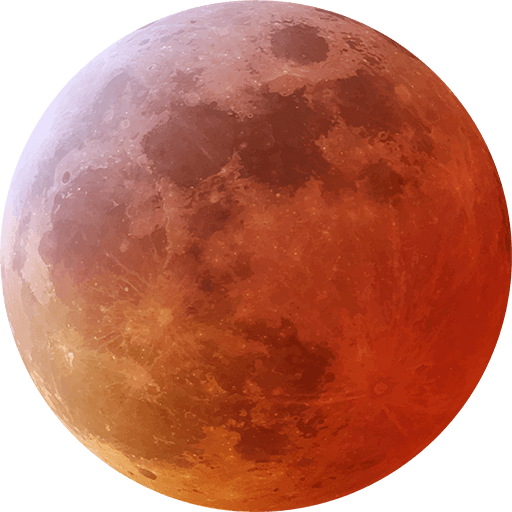
On 28 August 2026, the Moon will pass through part of Earth's shadow, creating a stunning partial lunar eclipse. Join us early in the morning to witness this incredible celestial event.
During the eclipse, a large part of the Moon's surface will darken as some of the light from the Sun is blocked. The Moon will appear reddish since light reaching it has passed through the Earth's atmosphere.
If you're interested in joining us to view the lunar eclipse, please email [email protected] by 8 PM on 27 August. We'll then be in touch with details of the meeting point and other arrangements for this early morning astro meetup.
Date: Wednesday, 12 August 2026
Time: 18:00 – 20:00
Venue: Ryetop Park, Rainham (Kent)
ECLIPSE GLASSES ARE SOLD OUT!!!
On 12 August 2026, the Moon will pass between Earth and the Sun, creating a breathtaking partial solar eclipse. From Kent, over 90% of the Sun's disc will be covered by the Moon during this spectacular astronomical event.
Join us and experience this rare celestial event as the Moon, Earth, and Sun align.
Don't miss this once-in-a-lifetime occurence. A similar alignment will not be visible from Kent for decades or maybe not in any of our lifetimes!
The eclipse begins at 18:18, peaks at 19:14, and ends as the sun sets at 20:07.
Attended our eclipse event? Send your photos to [email protected] and we'll add the best ones to our monthly newsletter.
Parents can download a printable Certificate of Achievement for children who watched the eclipse with us from the park on 12 August 2026.
Date: Saturday, 04 October 2025
Time: 19:30 – 21:30
Venue: Ryetop Park, Rainham (Kent)
Join us for NASA's annual International Observe the Moon Night on Saturday, 04 October in the park from 19:30 onwards.
Observe the Moon Night is a worldwide public event that encourages observation, appreciation and understanding of our Moon. See the Moon through a powerful telescope and explore its craters at high magnification.
Date: Sunday, 07 September 2025
Time: 19:30 – 20:30
Venue: Ryetop Park, Rainham (Kent)
Witness a rare total lunar eclipse from Rainham! Watch this month's Full Moon as it rises in the east after sunset. The Earth's shadow will be cast across the surface of the Moon, turning it a dark red colour – hence the name "Blood Moon".

Date: Saturday, 29 March 2025
Time: 10:00 – 12:00
Venue: Ryetop Park, Rainham (Kent)
Come and see a spectacular partial solar eclipse. The Earth, Moon, and Sun will be lined up in space. Part of the Moon will cover part of the Sun in the middle of the day.
We're planning to watch the eclipse from start to finish from the park. This eclipse will be the most exciting astronomical event of 2025 (if the weather's good!)
Date: Sunday, 24 March 2024
Time: 18:30 – 19:30
Venue: Ryetop Park, Rainham (Kent)
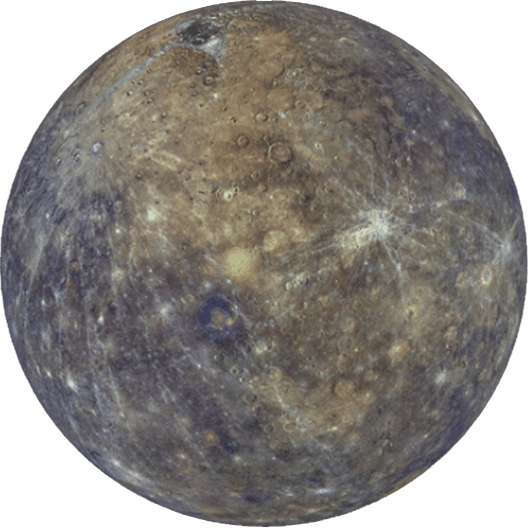
The planet Mercury reaches greatest eastern elongation on 24 Mar 2024. This is the point in its orbit where it's furthest from the Sun. It should be visible low in the west after sunset.
Our aim is to find Mercury in the twilight sky and observe it through our telescope.
As a bonus, the International Space Station is due to pass over us at about 18:50. The ISS will fly directly overhead and will be exceptionally bright!
Did you know: Most people have never seen Mercury – and that includes many amateur astronomers with years of experience.