TRAC Monthly Report: December 2025
- Category: Monthly Reports
- Author: JM
- Published: 01 Jan 2026
- Last updated: 01 Jan 2026
Stargazing
Winter Constellations
We're now experts at navigating the winter night sky. Astronomy club members should be able to identify the main constellations and name the brightest stars visible during the winter months.
Astrophotography (AP)
We used our Seestar S50 smart telescope for the first time on the evening of 19 Dec 2025. We chose the Andromeda Galaxy (M31) and the Orion Nebula (M31) as our first targets.
Andromeda Galaxy (M31)
The Andromeda Galaxy is the nearest major galaxy to the Milky Way. It was positioned high above us at 21:45, so we chose it as our first target.
The light from Andromeda had been travelling for around 2.5 million years before it reached us and hit the camera sensor!
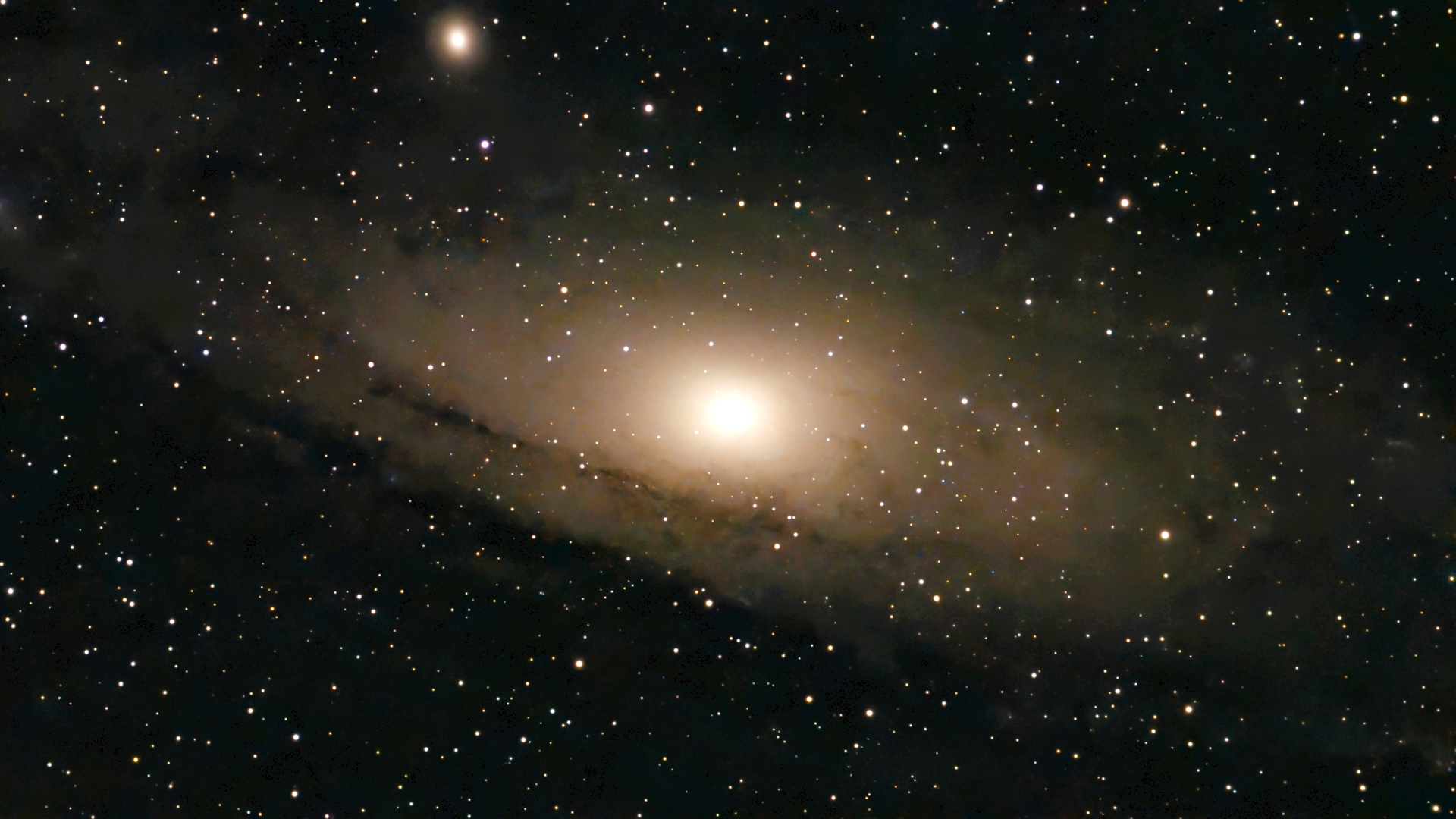
Image credit: JM/MK (TRAC)
Above image: The Andromeda Galaxy (M31), captured with a total integration time of 290 seconds from 29 individual 10-second exposures. Its companion galaxy (M32) is visible as the bright object near the top of the frame. Taken at 22:00 on 19 Dec 2025.
Orion Nebula (M42)
The Orion Nebula is roughly 1,300 light-years from Earth and is visible to the naked eye under dark skies.
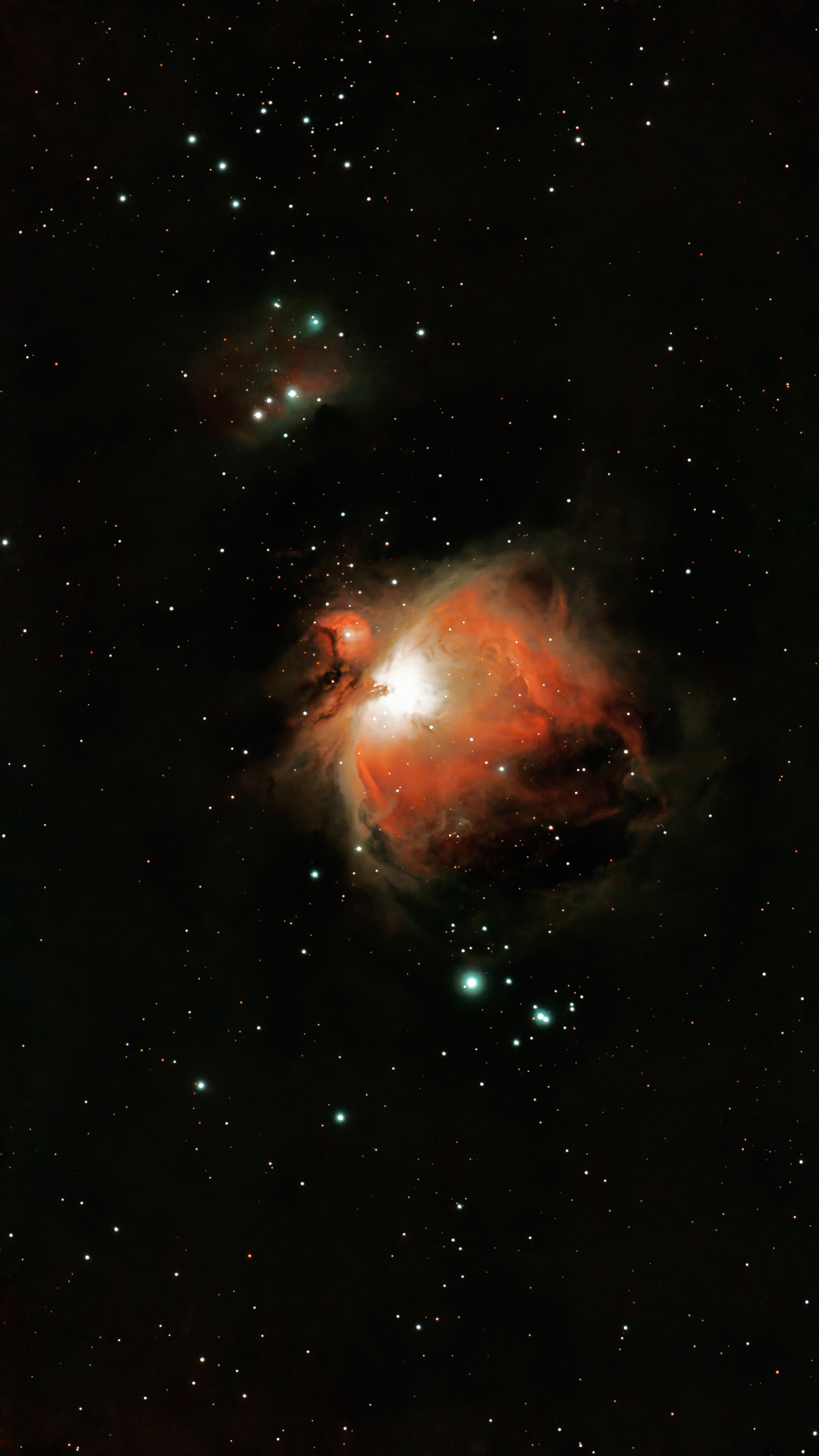
Image credit: JM/MK (TRAC)
Above image: The Orion Nebula (M42) after a total exposure time of 23 minutes (135 × 10-second exposures), captured at 22:20 on 19 Dec 2025.

Image credit: JM/MK (TRAC)
Above image: A cropped image highlighting the luminous core of the Orion Nebula, where dense gas and dust glow brightly.
Seestar AP Review
I'm really pleased with how our first attempts turned out. It was surprising how much the image quality improved after only a few 10-second shots, and the Seestar did a great job of dealing with the light pollution.
One of our main astrophotography projects for 2026 will be to capture images of the other stars and deep-sky objects in the Orion constellation.
Lunar Observations
"Supermoon" (04 Dec 2025)
Team TRAC was out on the evening of 04 Dec 2025 to see the Cold Moon. It was a good chance to test out new 15x70 binoculars.
We also tested the Celestron PowerSeeker 80EQ telescope for the first time. It produced a stunning view of the Moon through the 40 mm eyepiece. The telescope was difficult to move and align. We need to research how to use the equatorial mount correctly.
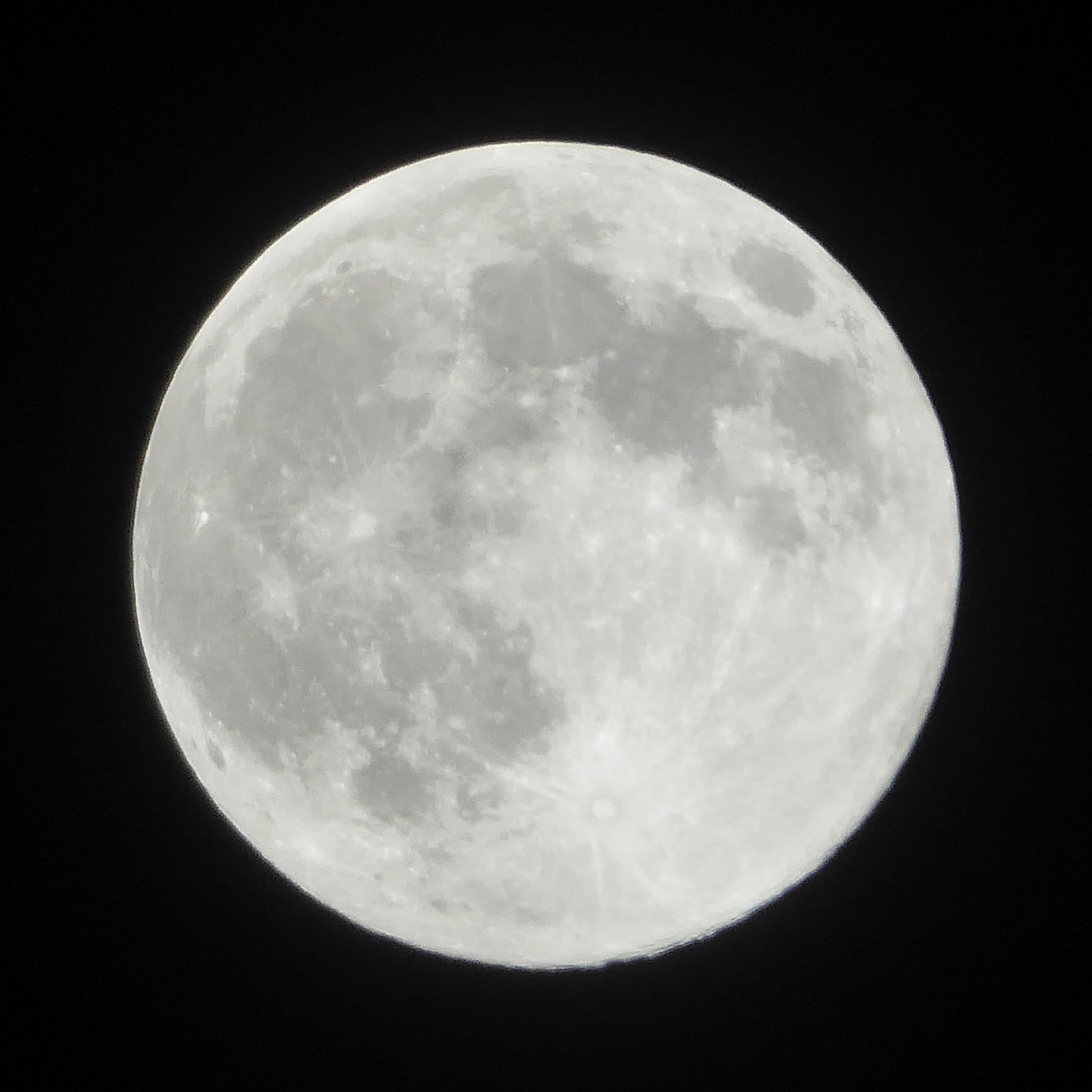
Image credit: JM (TRAC)
Above image: We enjoyed a fantastic view of the final "Supermooon" of 2025. Taken at 21:13 on 04 Dec 2025.
Moon–Jupiter Conjunctions (07-08 Dec 2025)
Observant astronomy club members will have spotted the Moon in conjunction with Jupiter. Photos were taken, but the results were poor. This is why we need to invest in proper camera equipment next year!
Planets
Jupiter
Jupiter was observed in conjunction with the Moon and the bright stars Castor and Pollux in Gemini. Several images of the Galilean moons were taken, but the results were not very successful. We plan to image Jupiter again with the Seestar in January, when the planet reaches opposition.
Yet again, another month goes by without us observing the GRS! Hope we have better luck in 2026.
Summary
Meteor Flyby
While looking south with the Seestar on 19 Dec 2025, Matey saw a bright yellow, slow-moving meteor below Orion and heading east. As it descended, it fragmented and looked like a small firework.
Looking Ahead
We captured some excellent first images with our Seestar S50, and it will be exciting to continue experimenting with it in January.
James M
TRAC Team Leader
01 Jan 2026 – Rainham, Kent

TRAC is an amateur astronomy group based in Rainham (Kent) in the United Kingdom.
On clear nights, you'll find us outside, observing stars, planets, moons, galaxies, satellites, meteors, and comets.
This monthly report is intended to keep club members informed of our observational activities, track progress towards the club's long-term goals, celebrate successes, and record memorable moments.
Unless stated otherwise, magnitude values refer to apparent magnitude and have usually been rounded to one decimal place; photos of deep-sky objects credited to TRAC were taken using a Seestar S50 smart telescope; our observations were made from Rainham, Kent; and times and dates are in the UK's local time zone (GMT or BST, depending on the time of year).
We welcome any questions, feedback, or suggestions you may have. Please let us know if anything is unclear or if you notice an error, inaccuracy, or typo. Contact us via email.
© 2026 Taverners Road Astronomy Club