TRAC Monthly Report: May 2026
- Category: Monthly Reports
- Author: JM
- Published: 01 Jun 2026
- Last updated: 07 Jun 2026
Astrophotography (AP)
We focused on three galaxies high overhead in the constellations of Ursa Major and Canes Venatici:
The Vacuum Cleaner Galaxy (M109)
Messier 109, known as the Vacuum Cleaner Galaxy, is a magnitude +9.8 barred spiral galaxy located 60 million light-years away in the constellation Ursa Major.
Matey K set up the Seestar S50 in the back garden on 08 May 2026 and chose M109 as his target. The sky conditions were poor; cloud cover was around 40%, with clouds high above us, exactly where we didn't want them.
We also spotted lots of satellites passing over the Plough. They were likely to pass close to M109, thereby spoiling the photo. The satellites were edited out of the final image.

Image credit: MK (TRAC)
Above image: Our best galaxy photo of the month. The spiral structure can be seen as well as the galaxy's central bar. Total exposure time: 2 hrs 23 mins (858 x 10 secs). Taken at 02:03 on 08 May 2026.
Cigar Galaxy (M82)
Messier 82, known as the "Cigar Galaxy", is a magnitude +8.4 spiral galaxy located 12 million light-years away. It's located in the constellation Ursa Major.
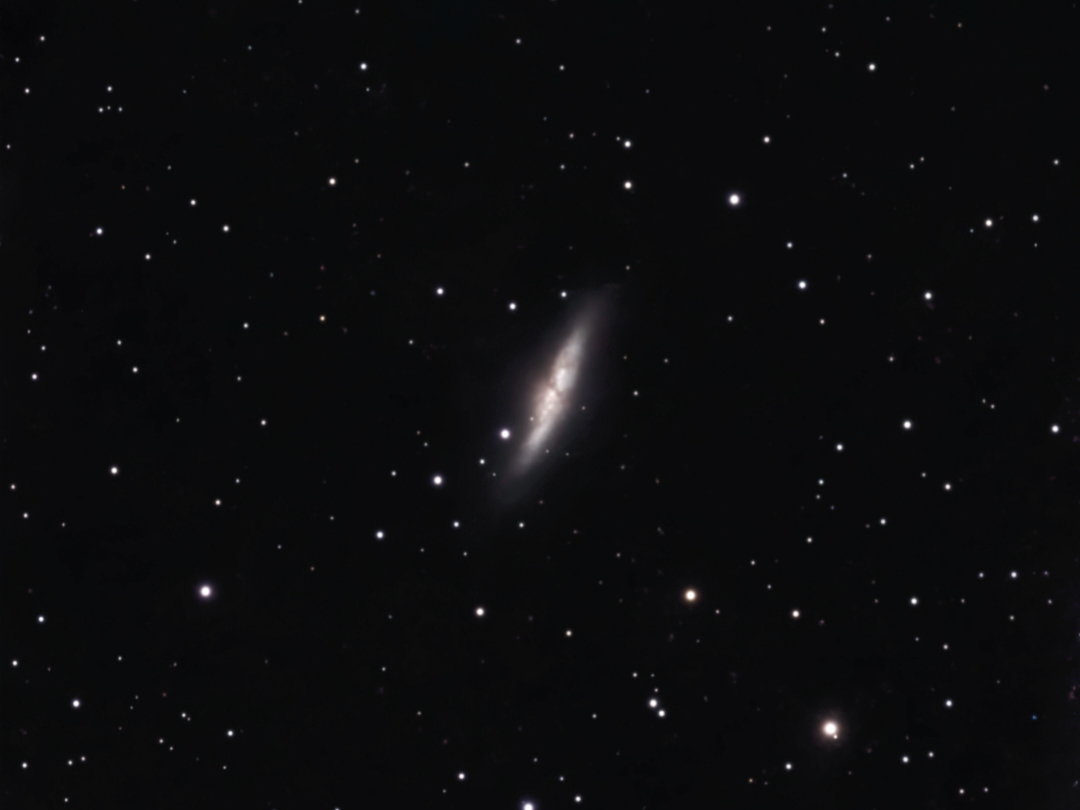
Image credit: MK (TRAC)
Above image: The photo captures some of the structure around the galactic nucleus. Total exposure time: 1 hr 25 mins (509 x 10 secs). Taken at 01:19 on 23 May 2026.
Croc's Eye Galaxy (M94)
Messier 94, known as "Croc's Eye Galaxy", is a magnitude +9.0 spiral galaxy located 16 million light-years away. It's located in the constellation Canes Venatici.
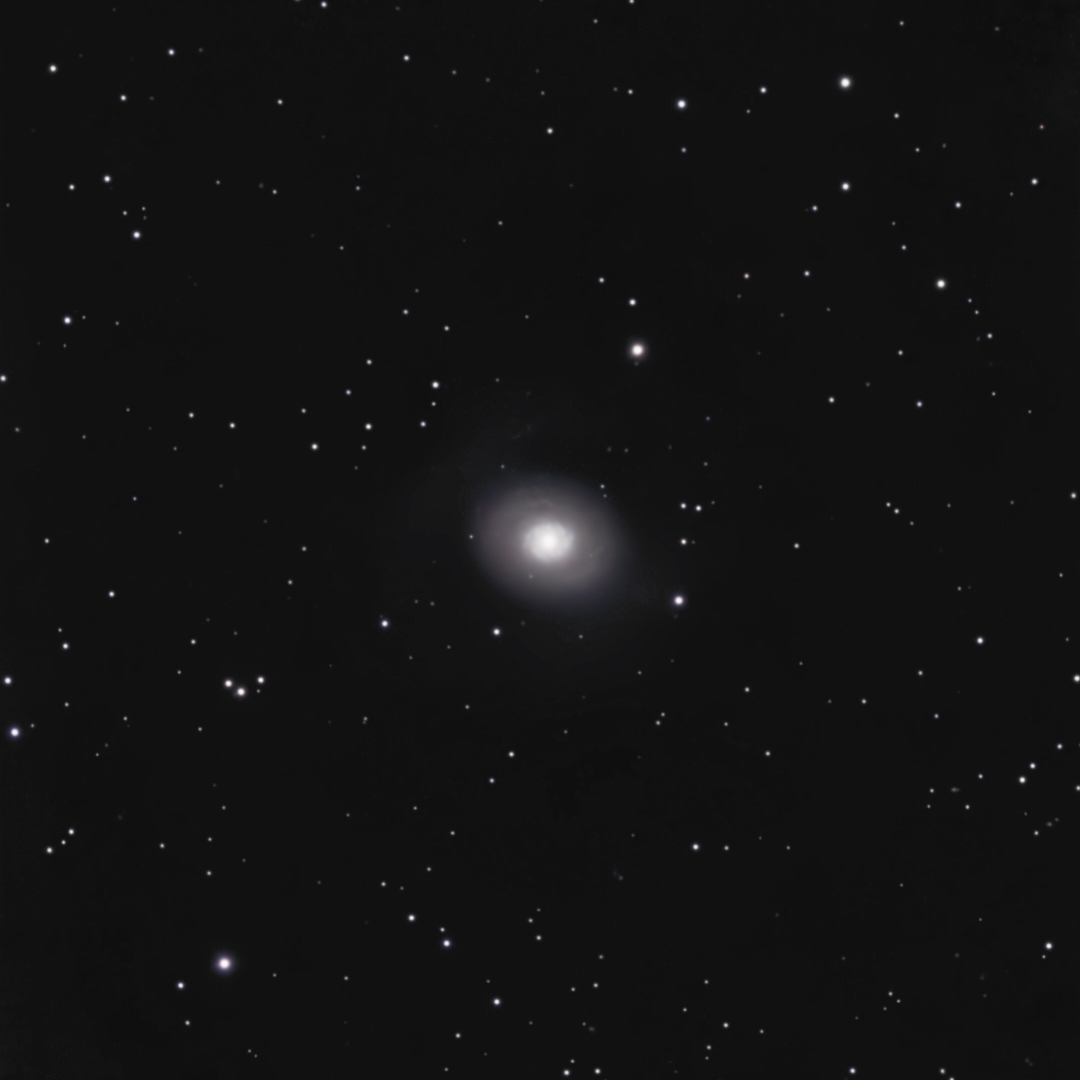
Image credit: KK (TRAC)
Above image: The shape and dense core of the Croc's Eye Galaxy can be seen. Total exposure time: 1 hr 29 mins (535 x 10 secs). Taken at 00:51 on 26 May 2026.
Lunar Observations
Full Moon - Blue Moon (31 May 2026)
May's first Full Moon on 01 May 2026 was obscured by clouds. The second Full Moon on the month on 31 May 2026 was visible as it rose at 22:15. The weather conditions improved slightly after midnight. The Moon didn't actually look blue.
TRAC members went for a walk in the park to try to see the Moon on 30 May 2026. When Krum K started walking backwards, we asked him what he was doing, and he said he was "moonwalking", which is by far the best joke at the astronomy club this year. Nice one, Krum!
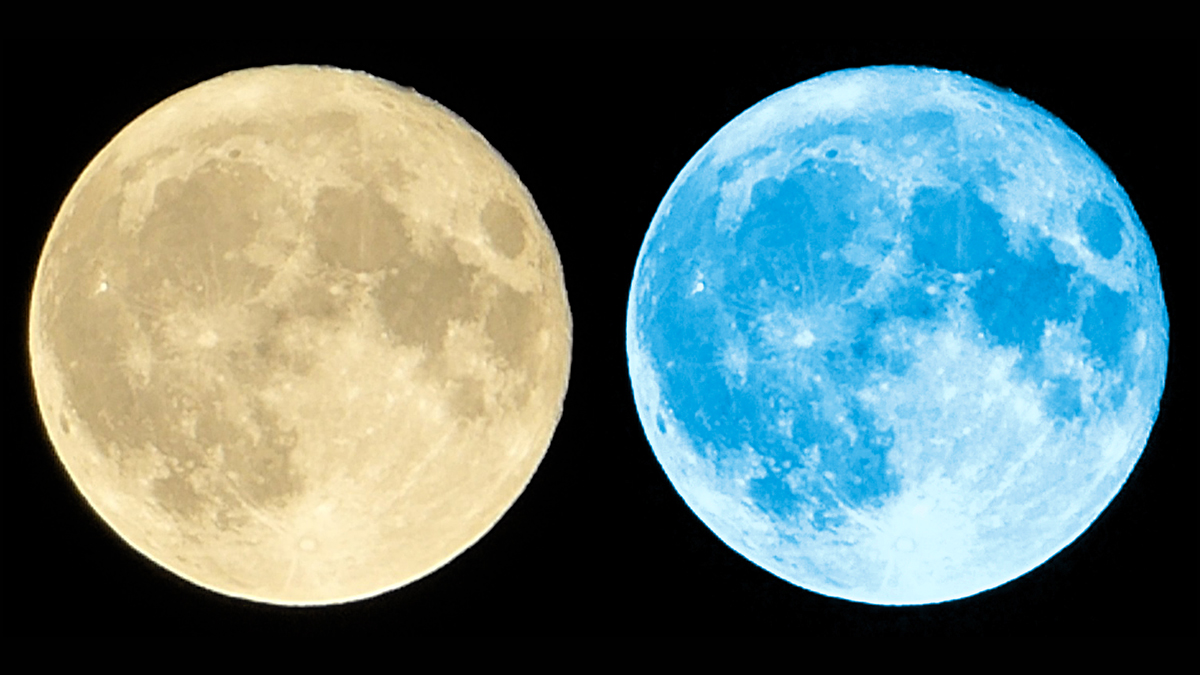
Image credit: JM (TRAC)
Above image: The "Blue Moon" of May 2026. The blue version is just for fun. This photo was featured in a BBC Sky at Night Magazine article. Camera: Panasonic DMC-TZ60. Exposure: f/6.4, 1/250s, ISO-800. Taken at 00:32 on 01 Jun 2026.
Moon Photos (22-25 May 2026)
TRAC members were out every night over the spring bank holiday. Along with viewing Venus, the Moon around its first quarter phase was the main astrophotography target.
For all of our Moon photos, we attached the Nikon D80 SLR camera to our Celestron NexStar SLT 127mm (5"). The telescope tube acted as a 1500 mm lens.

Image credit: MK (TRAC)
Above image: Matey K photographed the 44%-lit Moon. The telescope was aimed low over houses after a very hot day during a heat wave. This setup will have negatively affected the quality of the resulting photos. Exposure: 1/40 sec. ISO-320. Taken at 22:08 on 22 May 2026.
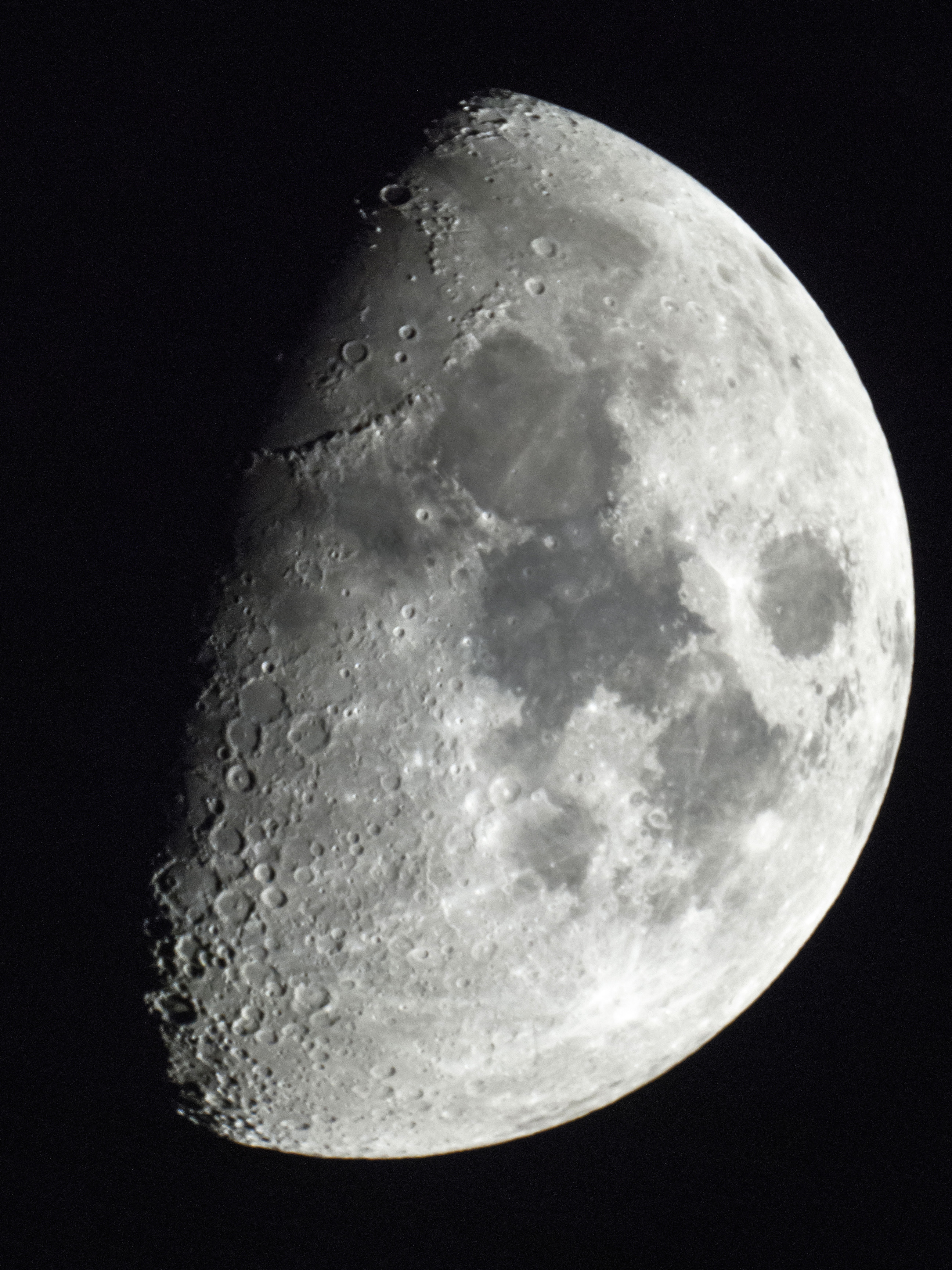
Image credit: KK (TRAC)
Above image: Krum K captured the Moon at 65% illumination in this excellent photo. Notice how textured the lunar surface appears in this photo compared with our Full Moon photos. Exposure: 1/100 sec. ISO-800. Taken at 22:42 on 24 May 2026.
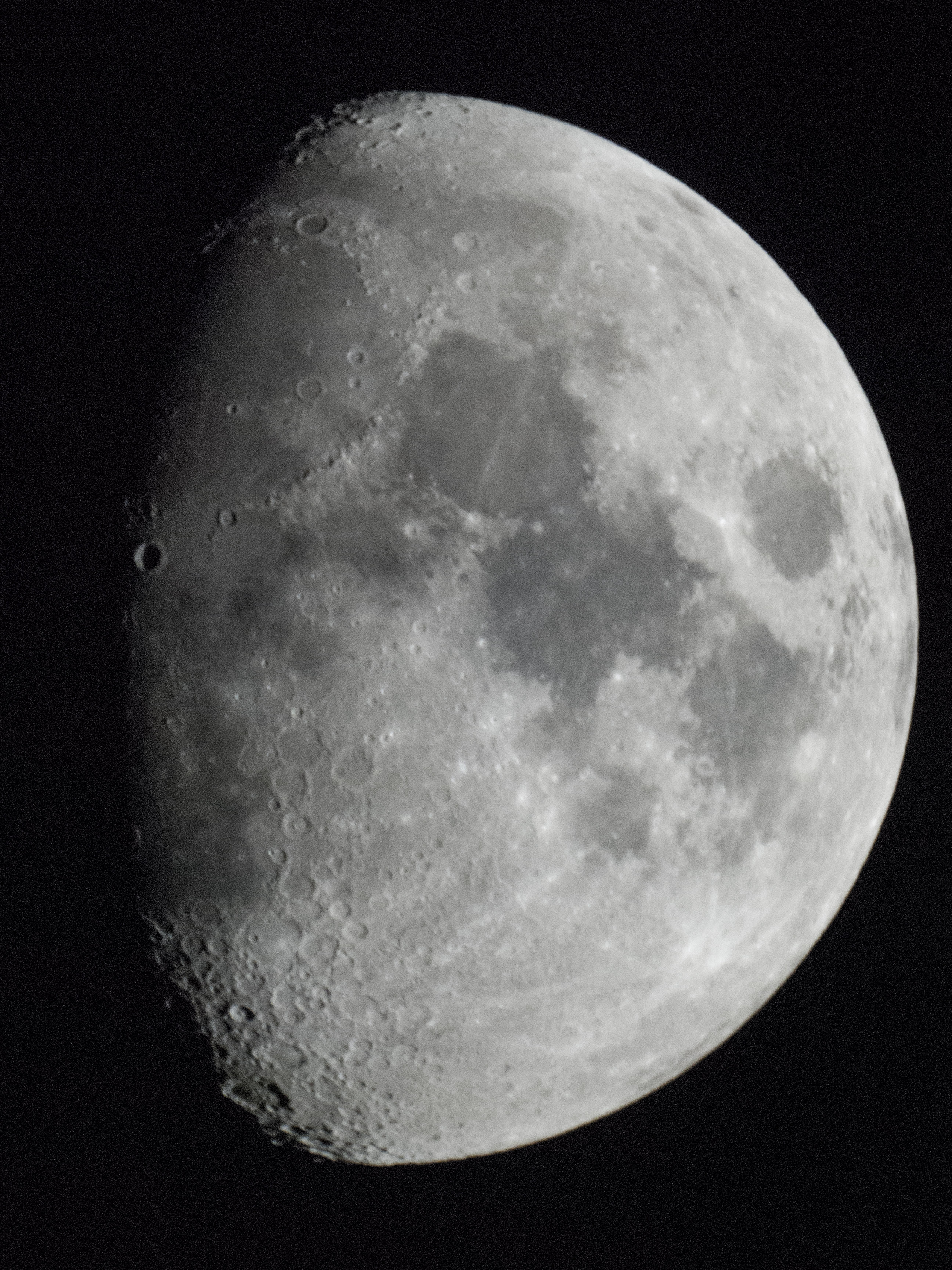
Image credit: KK (TRAC)
Above image: Krum K took this photo showing the Moon at 74% illumination. The photo has a high level of grain, probably due to the high ISO setting. Exposure: 1/200 sec. ISO-1250. Taken at 22:20 on 25 May 2026.
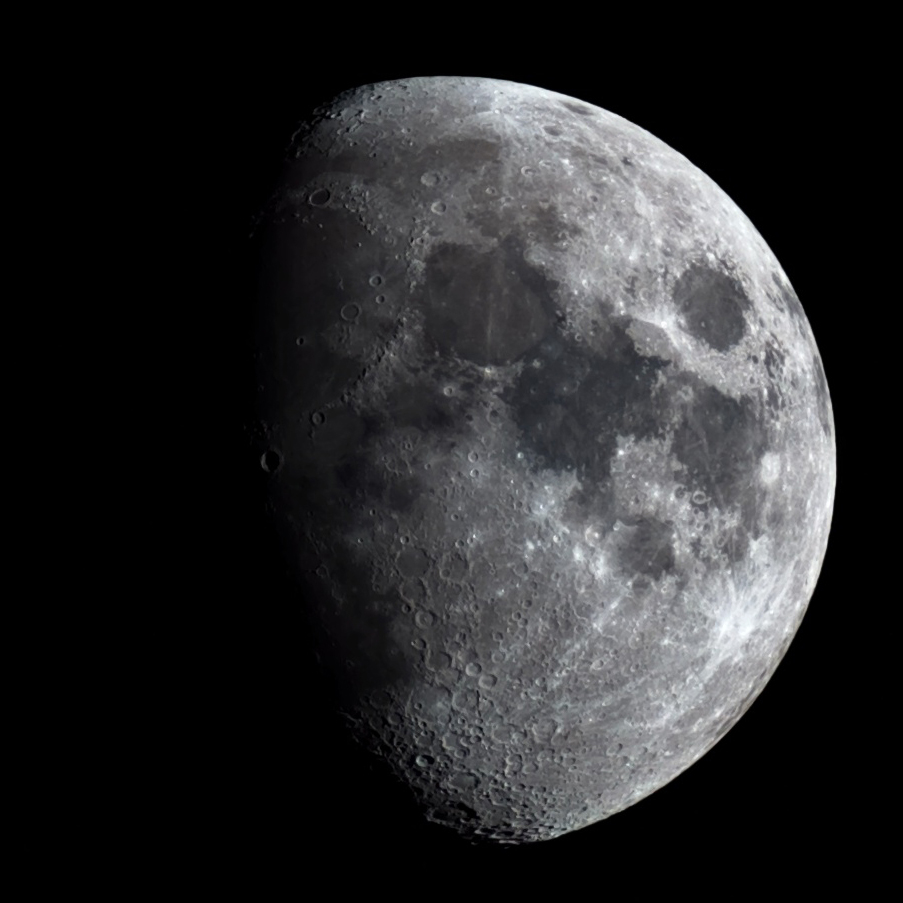
Image credit: JM (TRAC)
Above image: This is how the Seestar S50 shot the Moon at 74% illumination. Taken at 22:08 on 22 May 2026.
Jupiter–Moon Conjunction (20 May 2026)
Clouds obscured the Venus–Jupiter–Moon conjunction on 20 May 2026, but the Moon's close proximity to Jupiter provided a good opportunity for us to experiment with various SLR camera settings.
The Nikon D80 captured this conjunction in better detail than we had previously achieved with the Panasonic point-and-shoot camera.

Image credit: JM (TRAC)
Above image: Jupiter below the 23%-lit waxing crescent Moon with Castor and Pollux to its north west. Camera: Nikon D80. F-stop: f/3.2. Exposure: 1/1.3 sec. ISO-320. Focal length: 50mm. Taken at 22:07 on 20 May 2026.
Solar Observations
The Sun - Seestar S50 (23 May 2026)
TRAC team members Krum K and Matei M set up the Seestar on the sunny afternoon of 23 May 2026. This was our first time testing the Seestar S50 on the Sun.
As soon as Krum installed the solar filter, the sky became cloudy. Everyone was annoyed but remained patient. Their perseverance paid off when they got a decent photo of the Sun during a brief gap in the clouds at 17:35.
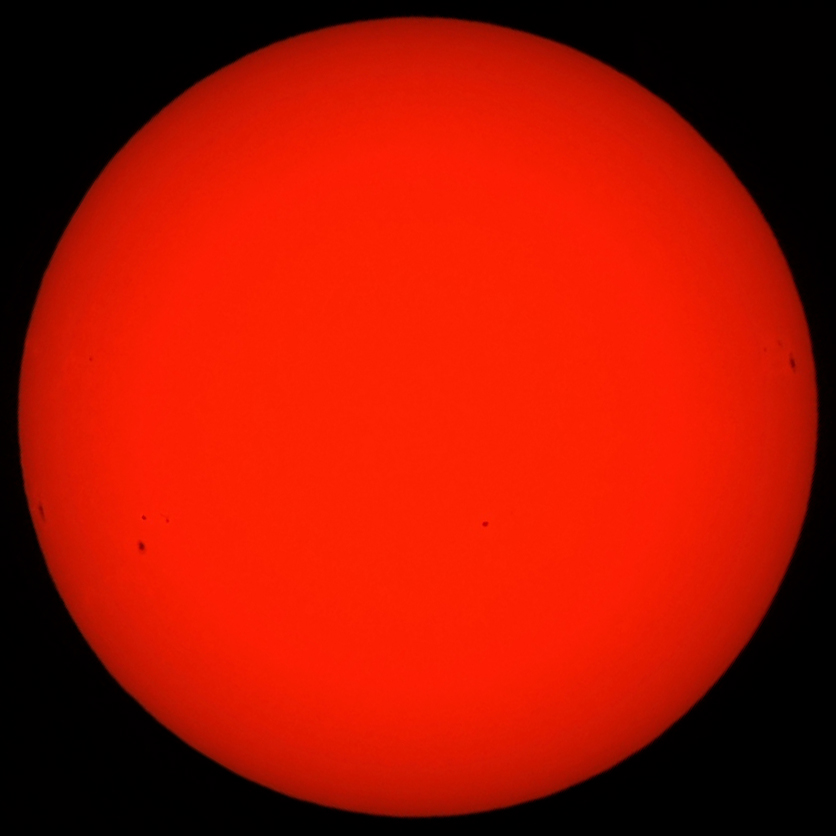
Image credit: KK/MM (TRAC)
Above image: A photo of the Sun taken with TRAC's Seestar S50. Several large sunspots can be seen on the Sun's photosphere. Each one is larger than the Earth! Taken at 17:35 on 23 May 2026.

Image credit: NASA (SDO) + TRAC
Above image: A comparison of TRAC's Seestar S50 photo of the Sun with one taken by NASA's Solar Dynamics Observatory at 17:30 on 23 May 2026. The S50 picked up the largest sunspots, but the smaller ones went undetected. We will be contacting Mastercard to see if they're interested in sponsoring our Solar Observations.
Planets
Venus
Phase of Venus
Our aim with Venus was to view the planet's phase. Currently, around 80% of Venus is lit by the Sun. Venus is so bright; the best time to view it is at sunset when it's easy to spot and the background sky isn't too dark. Once the sky gets darker, Venus is so powerfully bright that it just looks like a large white disc.
Venus with a Seestar S50
The Seestar was unable to locate Venus at sunset. The scope uses the background stars to correctly plate solve to know where it's pointed. It failed to do this until around 21:30, by which time the sky was dark.
Venus with an SLR camera
We also had no luck using the Nikon D80 paired with a 127 mm telescope. The photos came out blurred. Experimenting with various ISO settings did not improve the results.
Venus with a phone camera
Success! The phase was captured perfectly at 50x magnification (32 mm eyepiece) using a Samsung Galaxy phone. The photo taken by the phone's camera shows the top left (north east) part of the disc is 'missing', i.e. is not illuminated by the Sun. This is what we set out to achieve.

Image credit: JM (TRAC)
Above image: Venus showing the planet's phase, roughly 80% illuminated. Please ignore the chromatic aberation. Camera: Samsung Phone SM-A226B. F-stop: f/1.8. Exposure: 1/33 sec. ISO-100. Focal length: 5mm. Taken at 21:17 on 26 May 2026.
Summary
Summer Arrives
Now that summer has arrived, the sky doesn't become fully dark until after 23:00, which limits what we can achieve. That means no more deep-sky astrophotography targets until the darker nights return in September.
Looking Ahead
Next month, we'll focus on our solar observations and start preparing for the upcoming partial solar eclipse in August 2026.
James M
TRAC Team Leader
01 Jun 2026 – Rainham, Kent

TRAC is an amateur astronomy group based in Rainham (Kent) in the United Kingdom.
On clear nights, you'll find us outside, observing stars, planets, moons, galaxies, satellites, meteors, and comets.
This monthly report is intended to keep club members informed of our observational activities, track progress towards the club's long-term goals, celebrate successes, and record memorable moments.
Unless stated otherwise, magnitude values refer to apparent magnitude and have usually been rounded to one decimal place; photos of deep-sky objects credited to TRAC were taken using a Seestar S50 smart telescope; our observations were made from Rainham, Kent; and times and dates are in the UK's local time zone (GMT or BST, depending on the time of year).
We welcome any questions, feedback, or suggestions you may have. Please let us know if anything is unclear or if you notice an error, inaccuracy, or typo. Contact us via email.
© 2026 Taverners Road Astronomy Club