TRAC Monthly Report: March 2025
- Category: Monthly Reports
- Author: JM
- Published: 02 Apr 2025
- Last updated: 15 Jun 2025
Winter–Spring Stargazing
While out viewing the Full Moon, we saw Leo, the Lion; Boötes, the Herdsman; Auriga and its brightest star Capella; the Plough; and Corona Borealis.
We concentrated our efforts on viewing the Moon and Sun as part of our preparations for the partial solar eclipse at the end of the month. More work will be needed in April/May with regards to the spring constellations.
Lunar Observations
Imaging the Moon
The first half of March offered many clear nights for Moon photography.
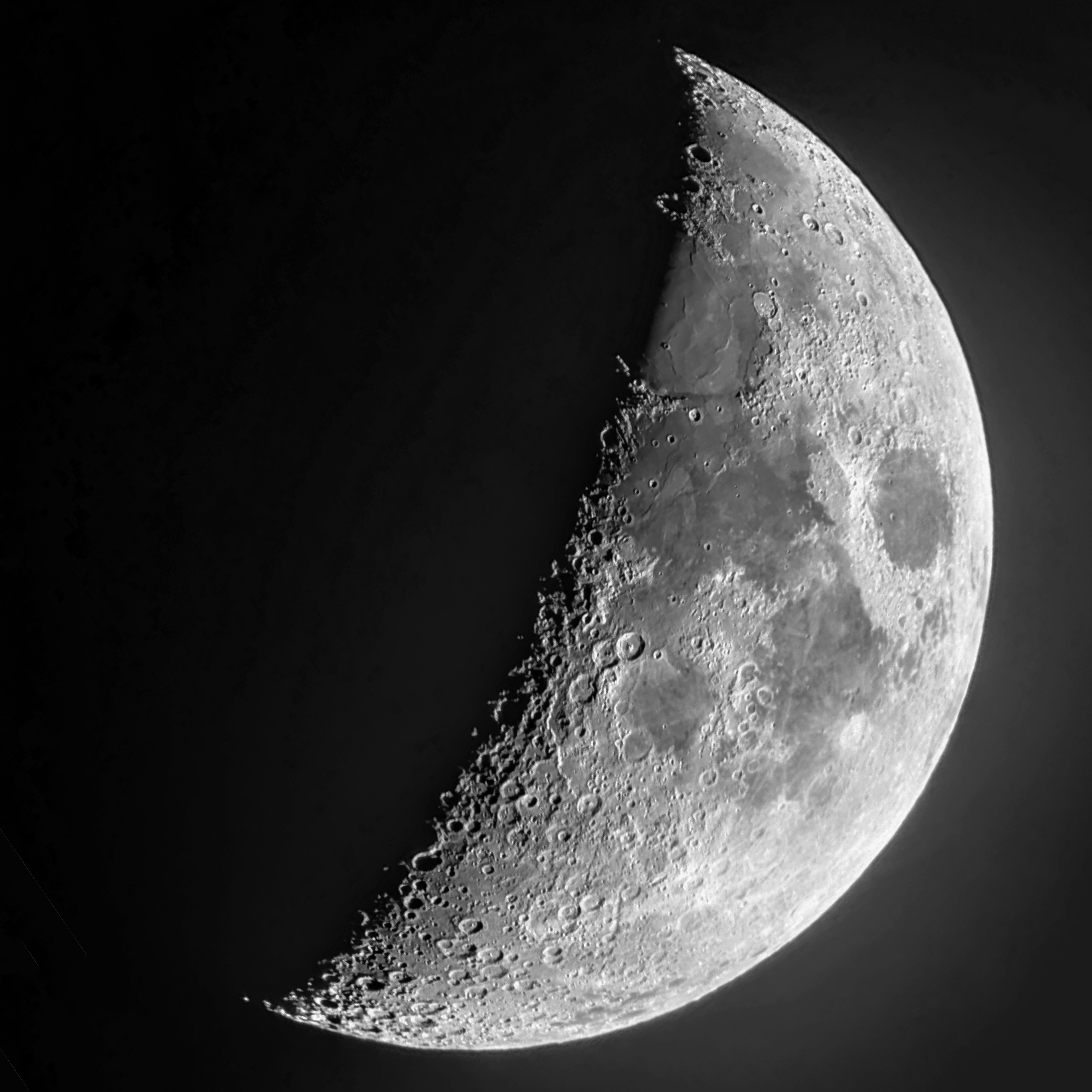
Image credit: CL (TRAC)
Above image: Charlie L captured this crisp image of the Moon on 05 Mar 2025 using a Google Pixel 7. The level of detail and sharpness of this photo places it amongst the best photos of the Moon we've taken so far at TRAC.
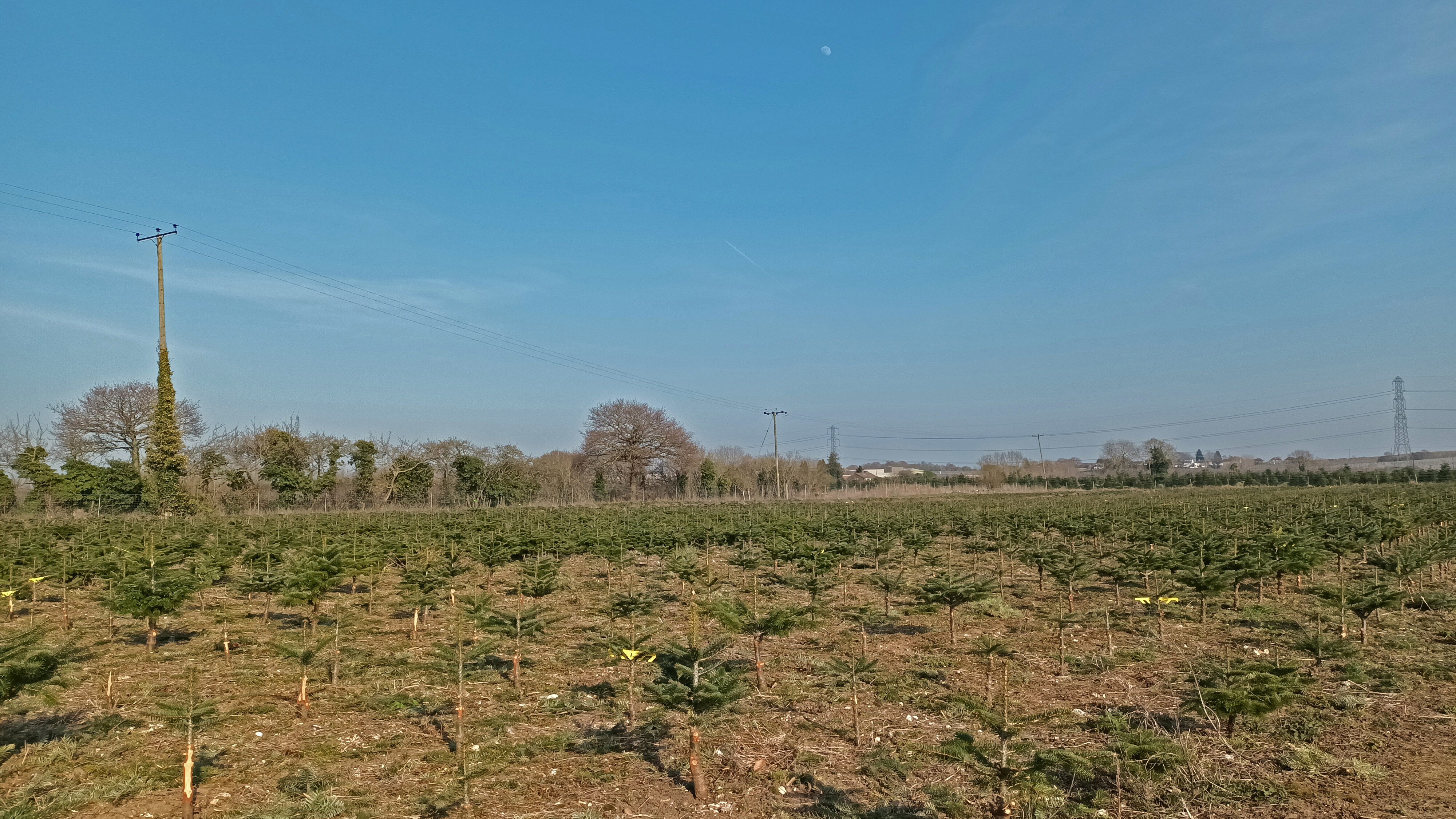
Image credit: JM (TRAC)
Above image: The Moon hanging high above a field of recently planted Christmas trees to the east of Rainham.
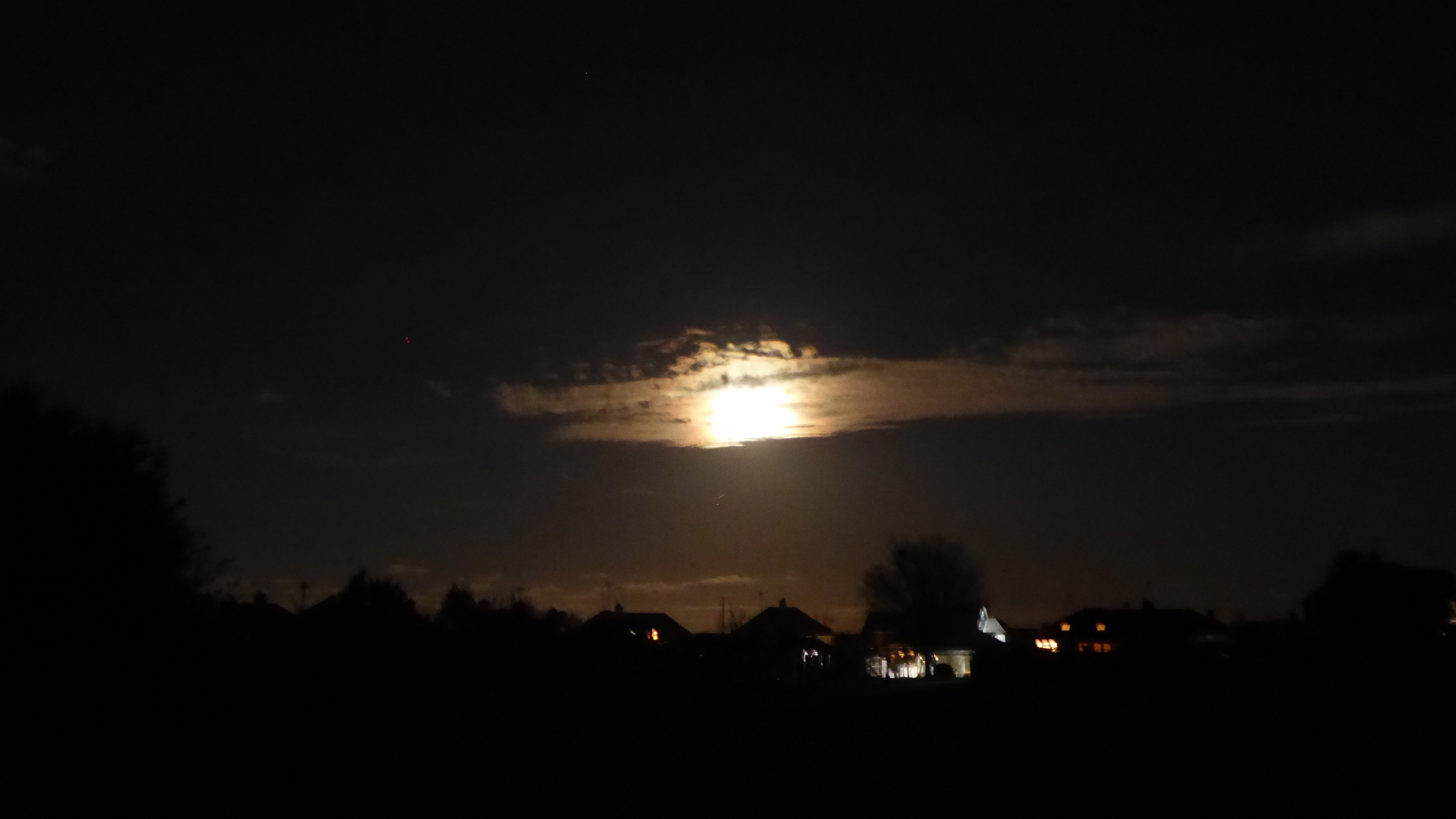
Image credit: JM (TRAC)
Above image: The rising Moon brightens wispy clouds in the east.
One-Day-Old Moon
A few of us caught a glimpse of the one-day-old Moon on the evening of 30 Mar 2025, a day after the partial solar eclipse.
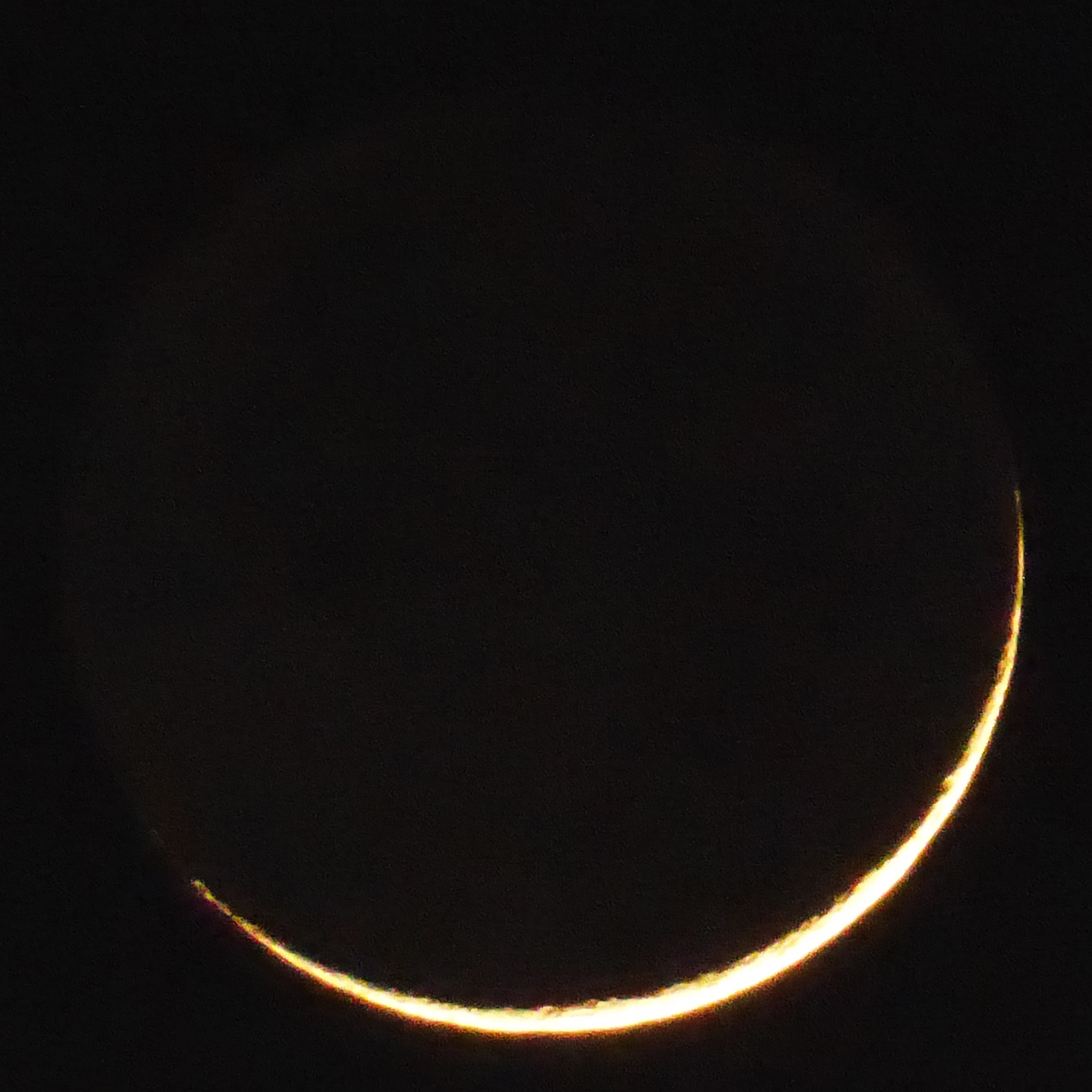
Image credit: JM (TRAC)
Above image: The Moon in its thinnest possible crescent phase, one day after the New Moon.
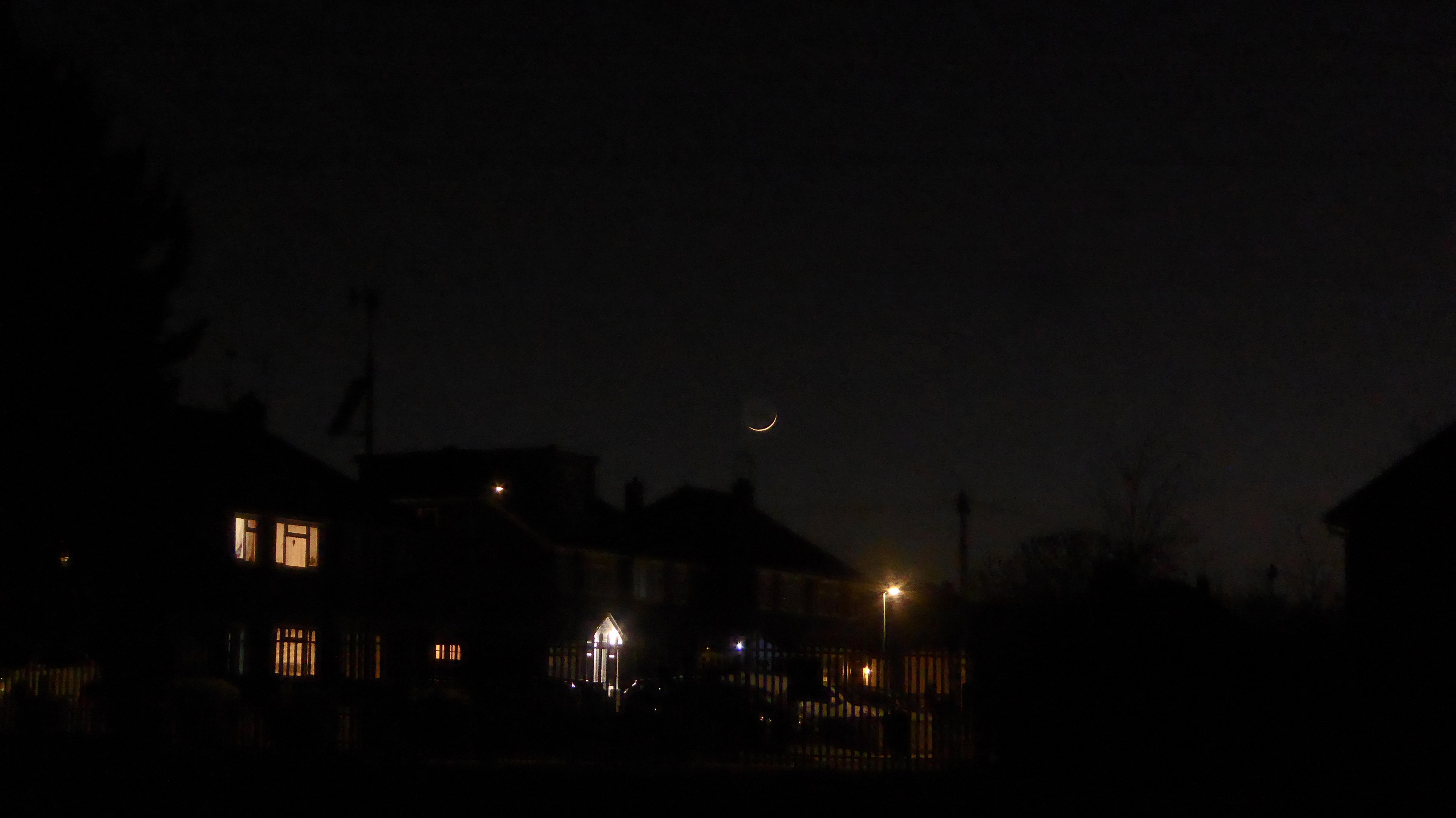
Image credit: JM (TRAC)
Above image: How the wafer-thin crescent Moon appeared in the sky on 30 Mar 2025 at 19:30, one hour after sunset.
Two-Day-Old Moon (31 Mar 2025)
The following evening was also clear. By comparing the photos, you can get an idea of how the portion of the Moon that's illuminated by the Sun changes early in the lunar cycle.
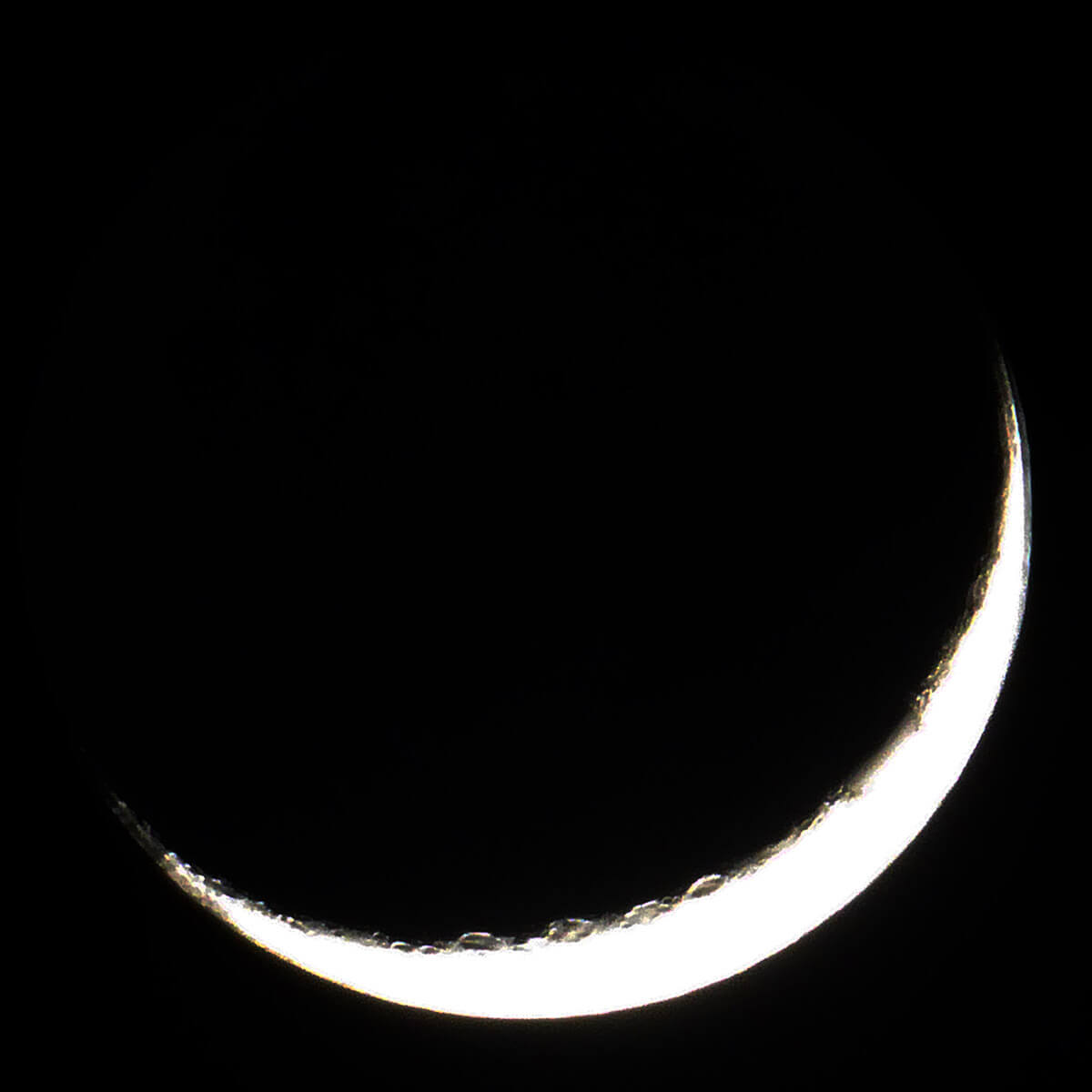
Image credit: JM (TRAC)
Above image: Although the photo is blurred, it's still possible to see how the appearance of the Moon has changed from the previous evening.
Video credit: JM (TRAC)
Above video: An aeroplane passes in front of the two-day-old crescent Moon. The scattering of the moonlight by the jet engines' exhaust gases can be seen.
Solar Observations
Eclipse Rehearsals
It was very important for us to practice setting up the telescope and cameras for viewing the Sun ahead of the eclipse on 29 Mar 2025.
We tested the pinhole cameras – they both worked well. Everyone used the solar eclipse glasses sensibly and learnt how to demonstrate to others how to view the Sun safely.
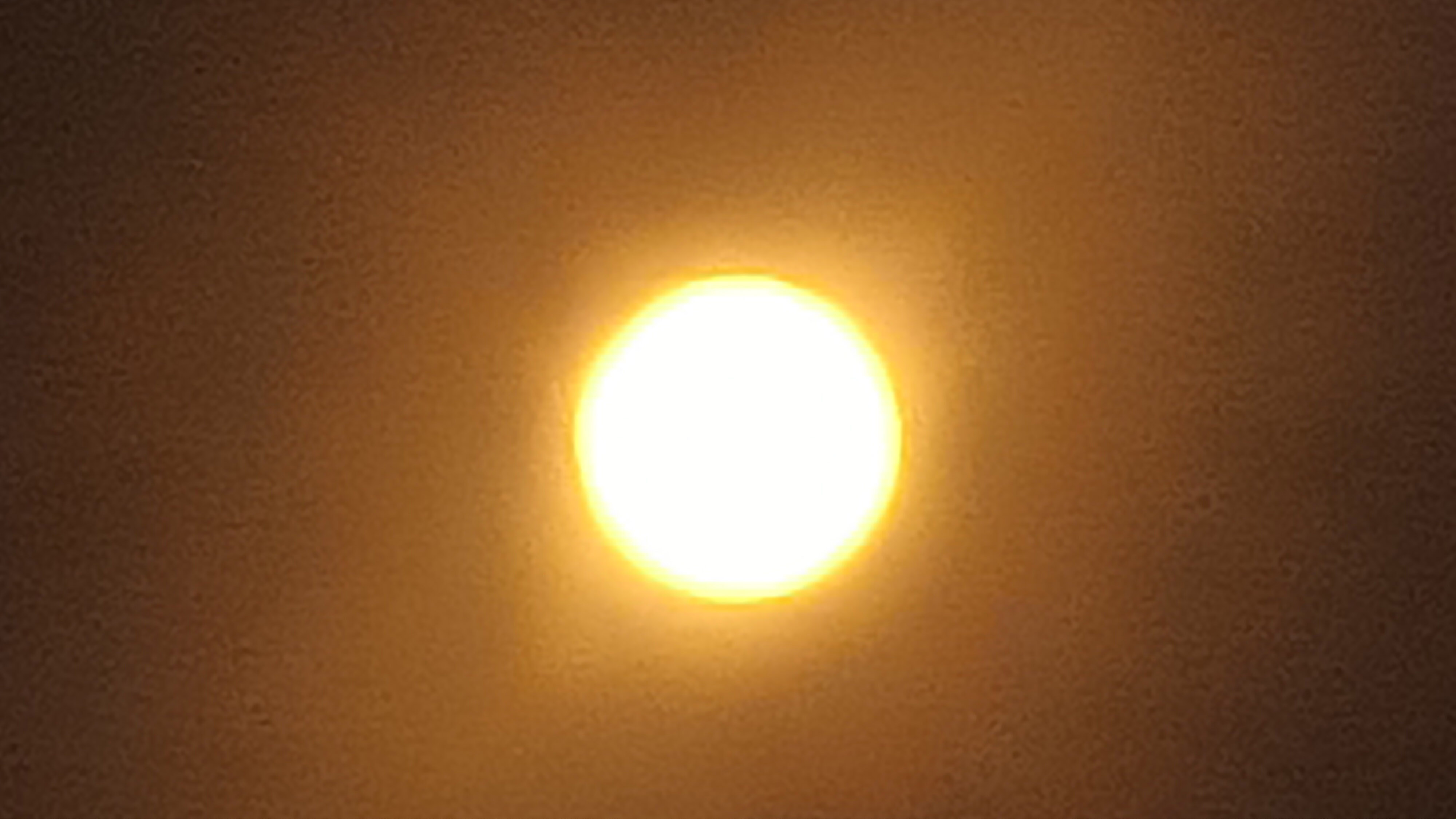
Image credit: JM (TRAC)
Above image: If you take a photo of the Sun using a phone camera and the filter from a pair of eclipse glasses, this is the kind of result you could expect.
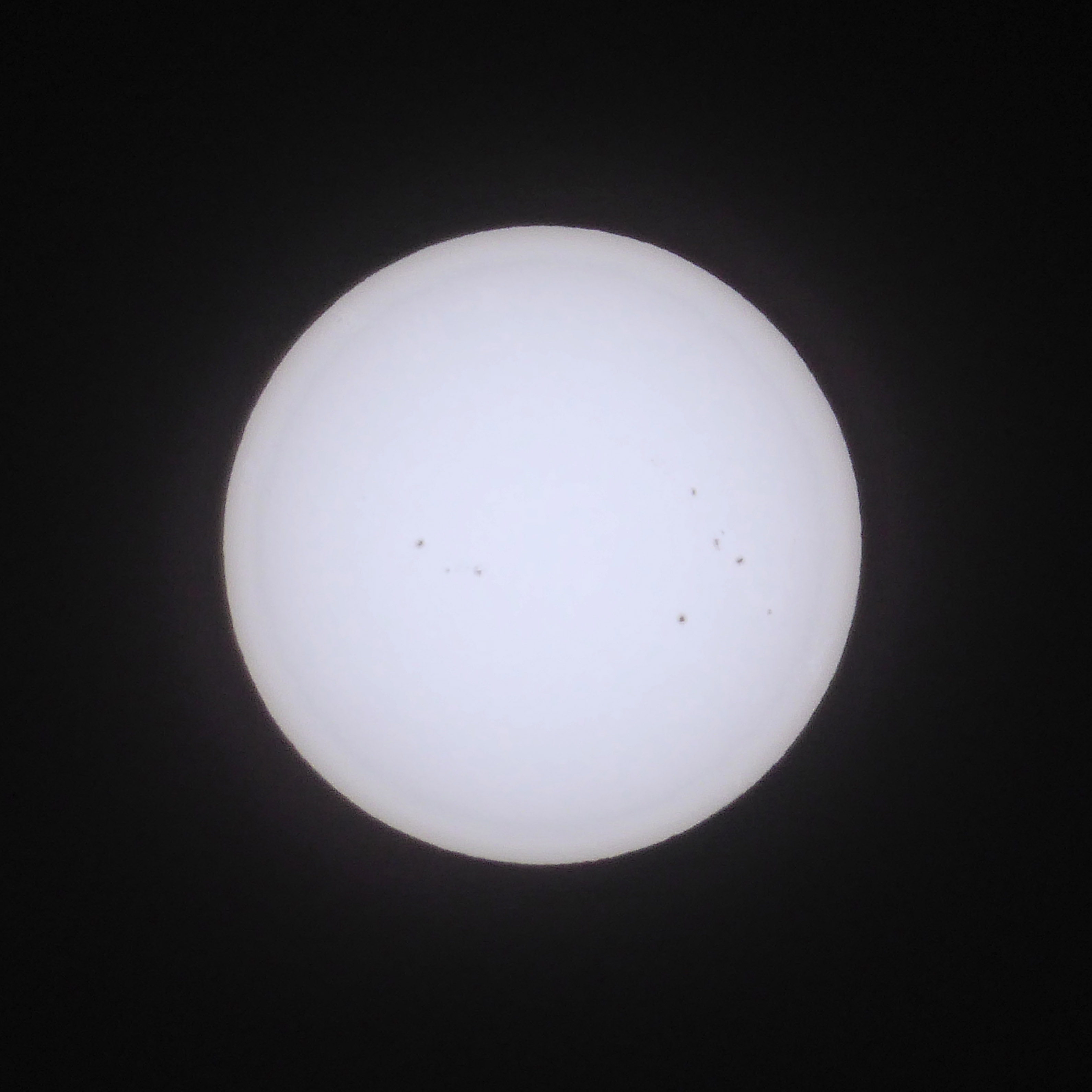
Image credit: JM (TRAC)
Above image: A photo of the Sun, taken using a digital camera, showing clusters of sunspots and a hint of limb darkening around the edge of the Sun's disc.
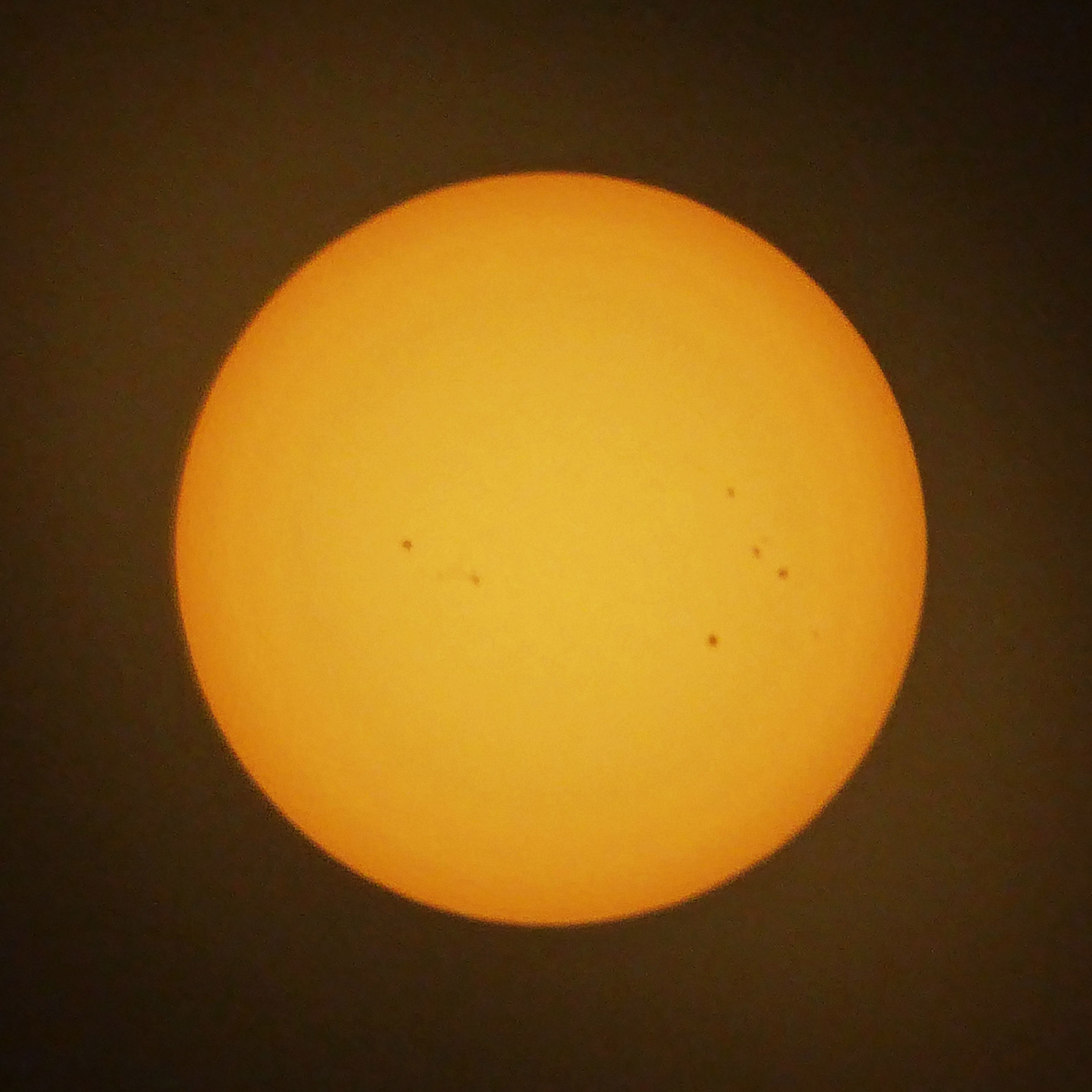
Image credit: JM (TRAC)
Above image: An artificially coloured version of the previous photo.
Partial Solar Eclipse
A Rare Eclipse & Perfect Conditions
The partial solar eclipse on Saturday, 29 March 2025, was the astronomical highlight of the year – and it didn't disappoint! Everyone was looking forward to it, and we were really lucky with the weather on the day – the conditions were perfect!
An eclipse is a rare and truly spectacular sight to witness in person – one of those moments that really sticks with you. I'm sure everyone who was there will remember it for a long time to come.
Full details of this event can be found on our events page.
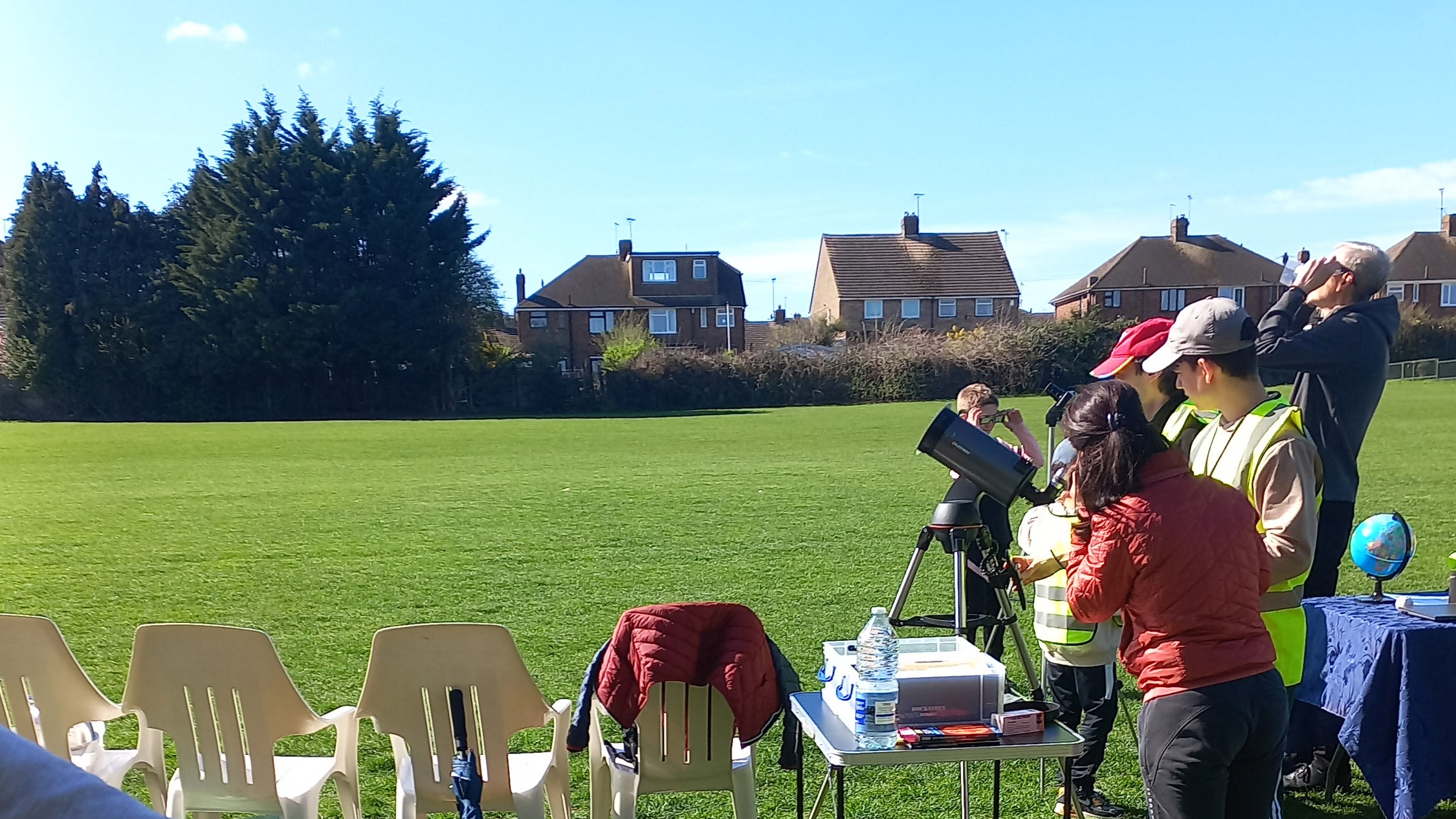
Image credit: DM (TRAC)
Above image: TRAC team members and visitors view the 29 March 2025 partial solar eclipse from Ryetop Park in Rainham, Kent.
Maximum Eclipse at 11:05
Roughly 30% of the Sun's diameter was covered by the Moon from our location at the point of maximum eclipse, which occurred at around 11:05.
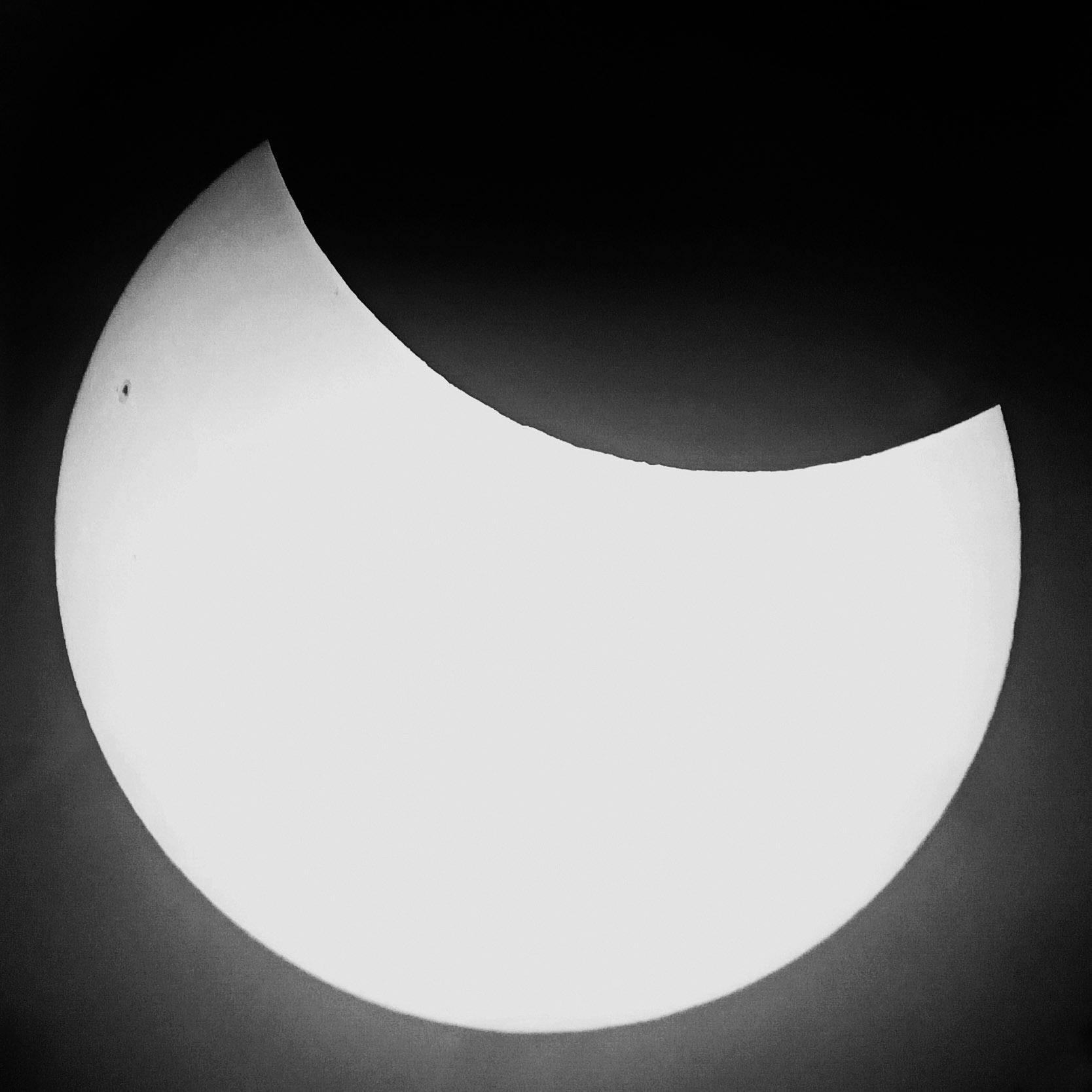
Image credit: MK/JM (TRAC)
Above image: A photo taken through the telescope showing the eclipse at its maximum. While we didn't capture much detail on the Sun's photosphere, the camera clearly picked up the large sunspot on the eastern edge of the Sun (left-hand side).
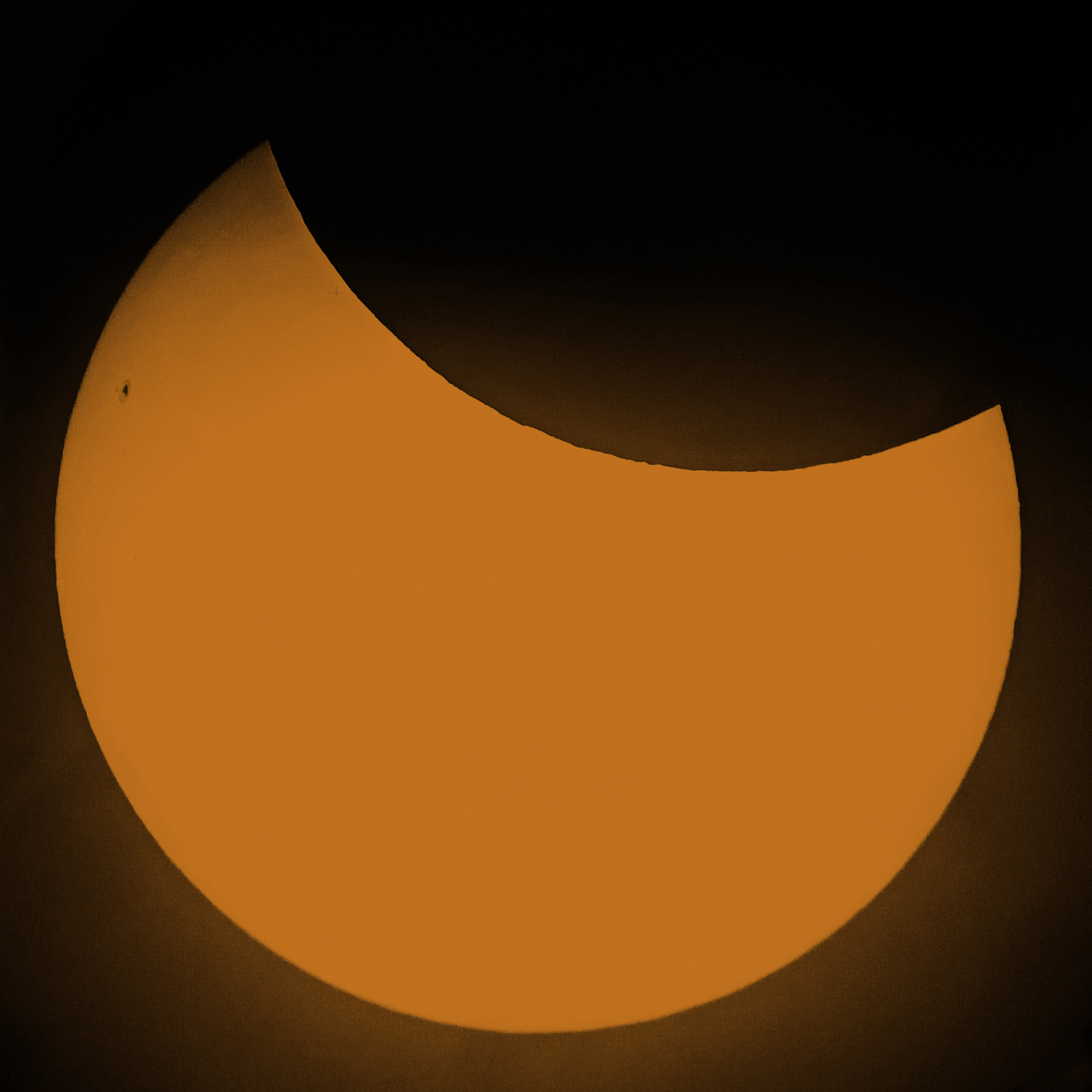
Image credit: MK/JM (TRAC)
Above image: A colourised version of the previous image. While the Sun’s true colour is white, many people enjoy seeing it in orange for a more dramatic effect. Both this photo and the original were featured in the photo gallery of the BBC Sky at Night Magazine article covering the March 2025 Partial Solar Eclipse.
Video credit: NASA SDO
Above video: NASA's view of the Sun on the day of the eclipse. Notice the large sunspot (dark spot to the left of the frame).

Image credit: KK/HX/JM (TRAC)
Above image: Krum and Harry used a small point-and-shoot camera to take photos as the eclipse unfolded. This mosaic of their best photos shows the Moon gradually moving across the Sun between 10:16 and 11:56.

Image credit: JM (TRAC)
Above image: In the evening, the partial eclipse made a delicious return – this time recreated in pancake form!
The next partial solar eclipse visible from Rainham will occur on the evening of 12 Aug 2026.
Planets
The "Planetary Parade"
The TRAC Team was able to see five planets (Mercury, Venus, Mars, Jupiter, and Uranus) during the 2025 planetary parade. This was a good effort – so well done to everyone who saw all five.
Saturn was far too close to the Sun and therefore lost in the twilight, and Neptune was far too faint to be spotted from our light-polluted location.
Mercury
Mercury was visible after 18:05 in the south-west sky on 01 Mar 2025. The planet was first spotted with binoculars, then seen with the naked eye, but it was in and out of clouds every few minutes. It became easier to see as the sky got darker.
Compare the positions of the planets Mercury and Venus in the two photos below. You can get a sense of how the two inferior planets move relative to Earth and one another over the space of a week. Mercury does not hang around for long before moving back towards the Sun from our perspective.
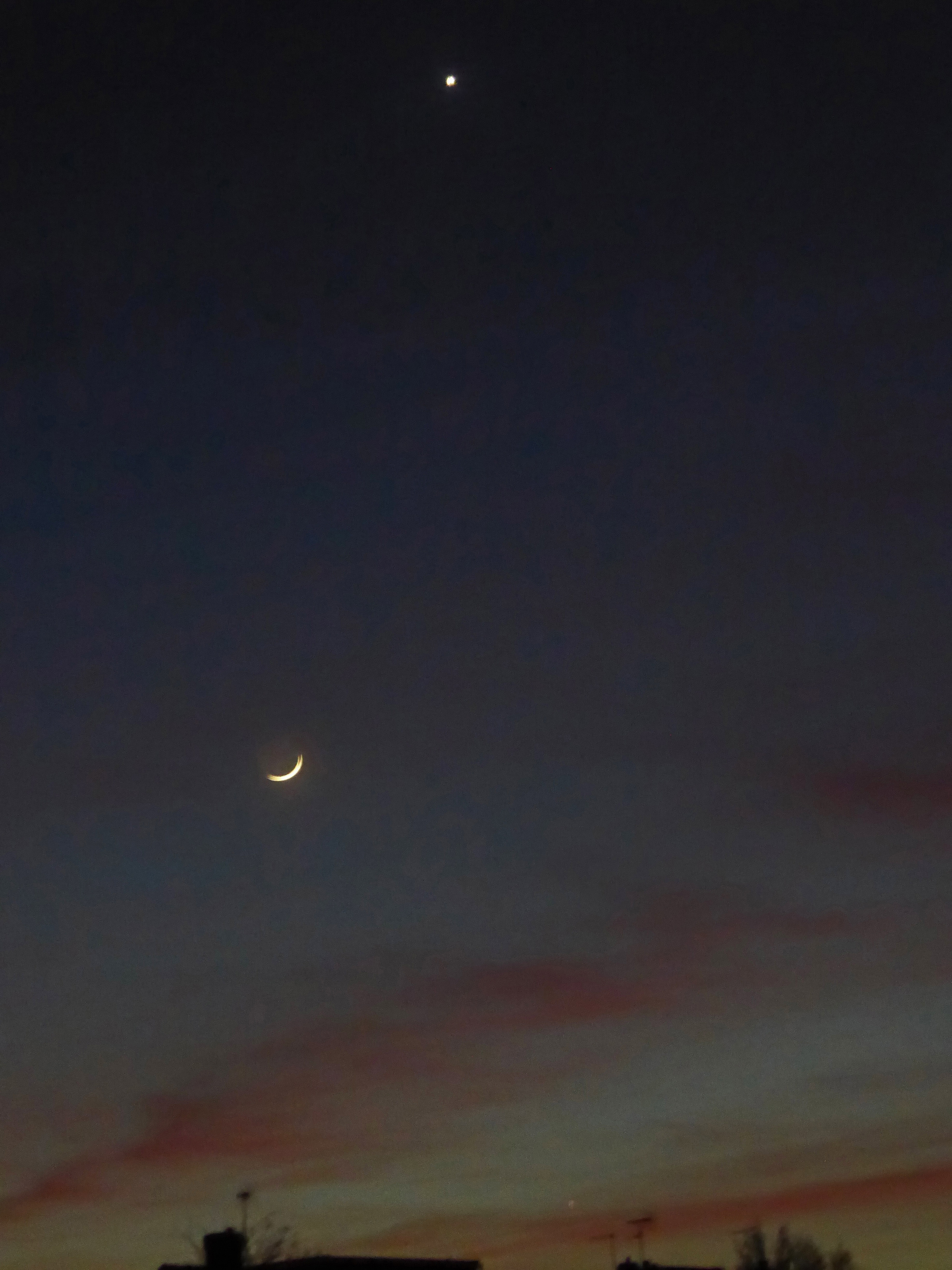
Image credit:MK (TRAC)
Above image: Venus shining bright high above the crescent Moon on the evening of 01 Mar 2025. The faint orange dot above the TV aerials is the small planet Mercury. This photo, taken by Matey, was featured in a BBC Sky at Night Magazine article about the 2025 Planetary Alignment and on the magazine's Instagram page.
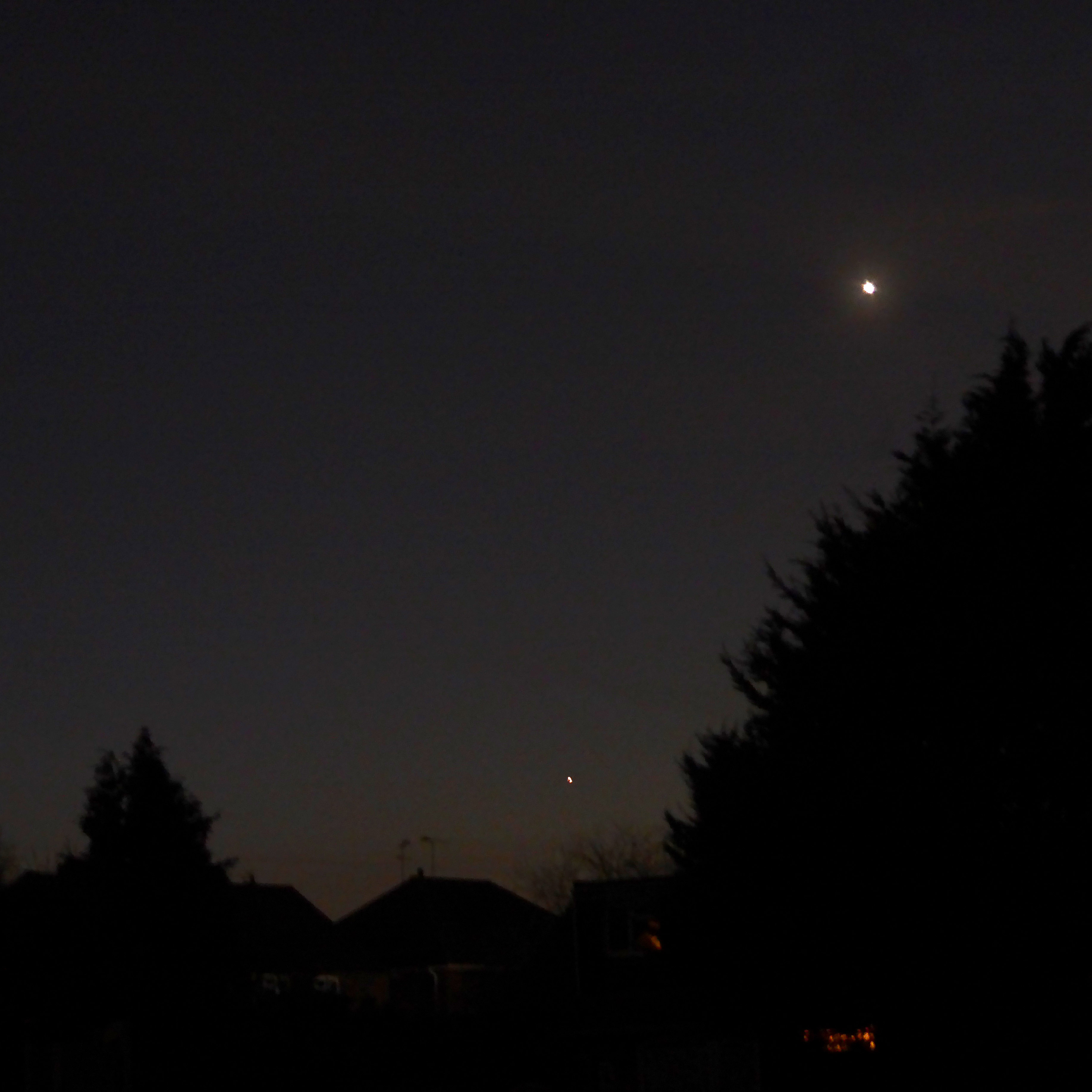
Image credit: KK (TRAC)
Above image: Krum took this photo of Venus and Mercury in the south-western sky on 08 Mar 2025. Notice the change from the previous weekend.
Venus
We saw the dazzlingly bright planet Venus in its crescent phase using binoculars over the first few evenings of March. Venus had disappeared from view by the end of the month.
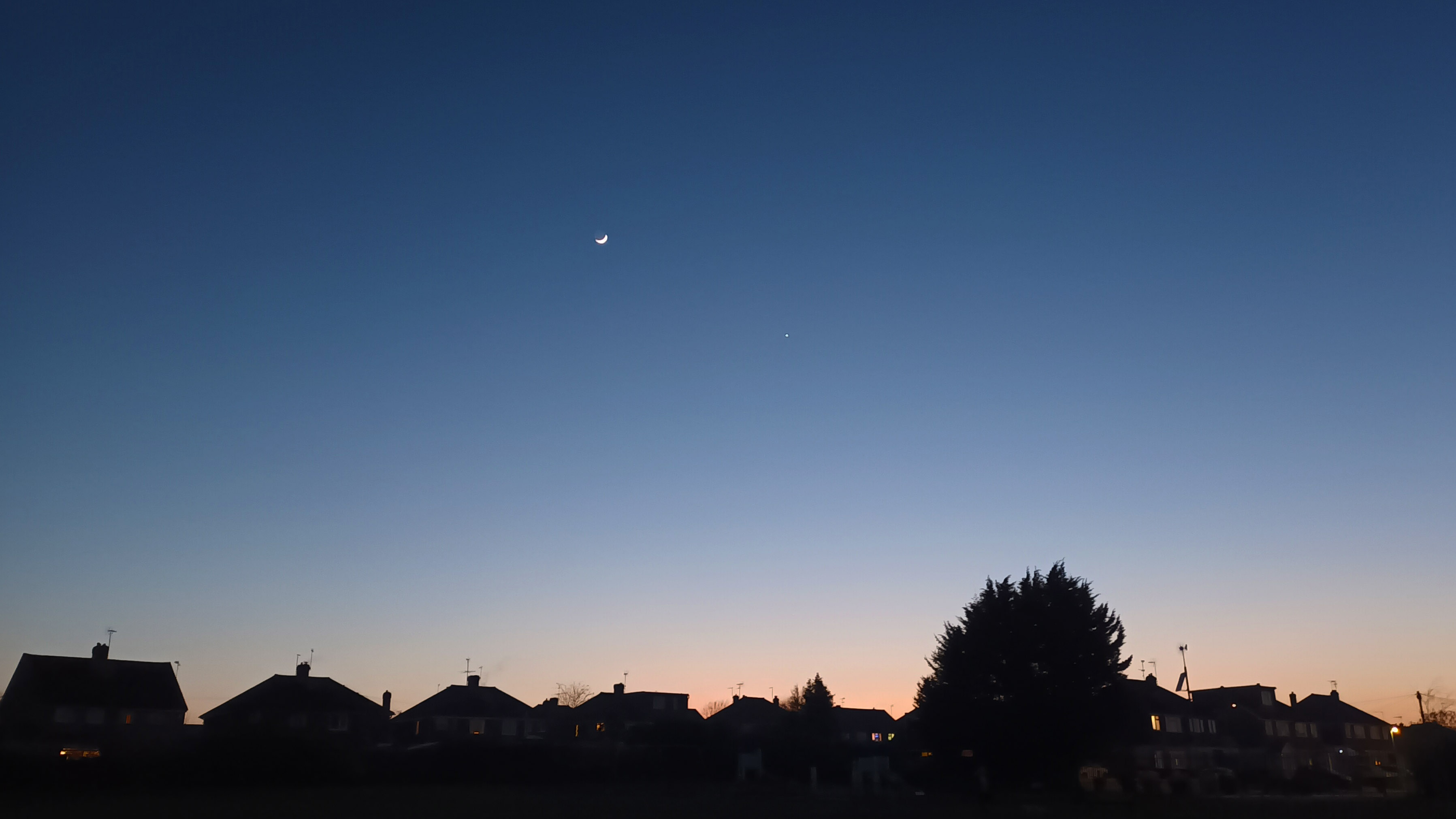
Image credit: JM (TRAC)
Above image: The Moon close to Venus at twilight on 02 Mar 2025.
Mars
We saw Mars after 21:30 on 08 Mar 2025, but the red planet only appeared as an orange-red disc through the telescope. The conditions were too poor for us to see any surface details.
Jupiter
We took a quick look at Jupiter, Hyades, Pleiades and surrounding stars on 05 Mar 2025 around the time of Callisto's closest approach to the gas giant.
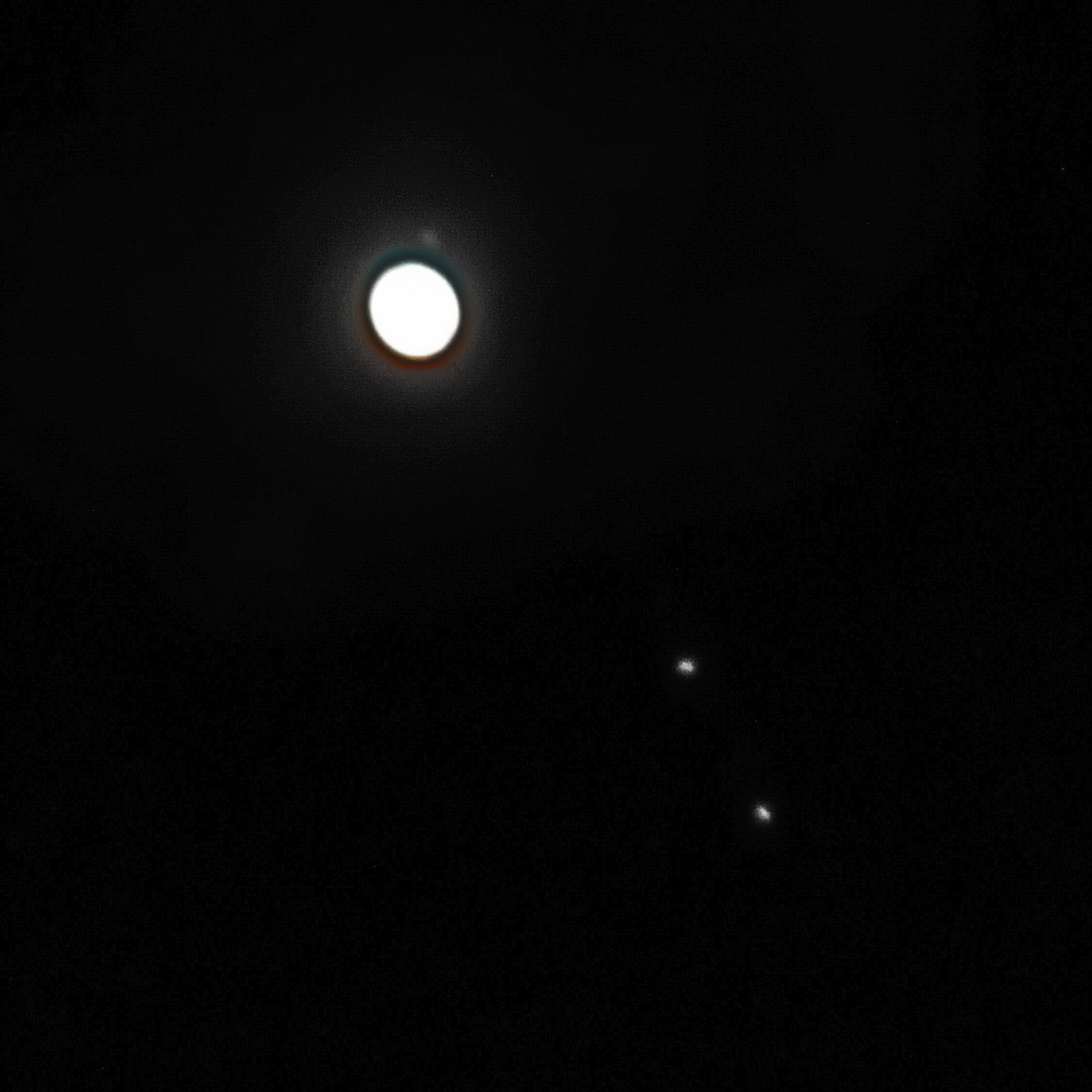
Image credit: JM (TRAC)
Above image: Callisto close to the north-western edge of Jupiter with Europa and Ganymede to the east of the planet. Io was positioned directly in front of Jupiter but was too small to be seen through our 127mm telescope.
Other Planets
Saturn was too close to the Sun to be seen. Uranus was briefly visible in binoculars on 05 Mar 2025, but the conditions were poor, and the planet was only seen by those who had seen it before and had remembered exactly where to look. No attempts were made to see Neptune.
Astrophotography
What We Learnt
- It's possible for us to take detailed photos of the Sun's photosphere through the telescope.
- Even a point-and-shoot camera with a high optical zoom can take impressive photos of the Sun through the Baader Solar Film.
- It's crucial that the phone's camera is precisely aligned with the telescope, and this should be checked regularly.
Summary
Binoculars – Lost & Found
I accidentally left the binoculars on a park bench late one evening – oops! A huge thanks to all our fantastic neighbours who swooped in like a search-and-rescue team to help track them down and returned them with such speed and finesse. Special shout-out to Mark, Sue, Ross, Emma, and Charlie!
Eclipse Success
I'm really pleased that we were able to get a good view of the Sun through the telescope on the morning of the eclipse. Previously we had a lot of trouble getting the telescope lined up with the Sun! It felt like a small victory to see everything come together just in time.
Thank you to everyone who helped carry the equipment to the park and get everything set up for the solar eclipse – it was a real team effort. Extra thanks to Nadia for keeping us all fuelled with food and drinks. You're a star!
TRAC members will soon begin planning for the Lunar Eclipse on 07 Sep 2025!
James M
TRAC Team Leader
02 Apr 2025 – Rainham, Kent

TRAC is an amateur astronomy group based in Rainham (Kent) in the United Kingdom.
On clear nights, you'll find us outside, observing stars, planets, moons, galaxies, satellites, meteors, and comets.
This monthly report is intended to keep club members informed of our observational activities, track progress towards the club's long-term goals, celebrate successes, and record memorable moments.
Unless stated otherwise, magnitude values refer to apparent magnitude and have usually been rounded to one decimal place; photos of deep-sky objects credited to TRAC were taken using a Seestar S50 smart telescope; our observations were made from Rainham, Kent; and times and dates are in the UK's local time zone (GMT or BST, depending on the time of year).
We welcome any questions, feedback, or suggestions you may have. Please let us know if anything is unclear or if you notice an error, inaccuracy, or typo. Contact us via email.
© 2025 Taverners Road Astronomy Club