TRAC Monthly Report: January 2025
- Category: Monthly Reports
- Author: JM
- Published: 01 Feb 2025
- Last updated: 02 Feb 2025
Winter Night Sky
Sirius: The Brightest Star in the Sky
We took a closer look at Sirius on 07 Jan 2025. The image below gives you an idea of how the brightest star in the sky (mag. -1.46) appears through the telescope.
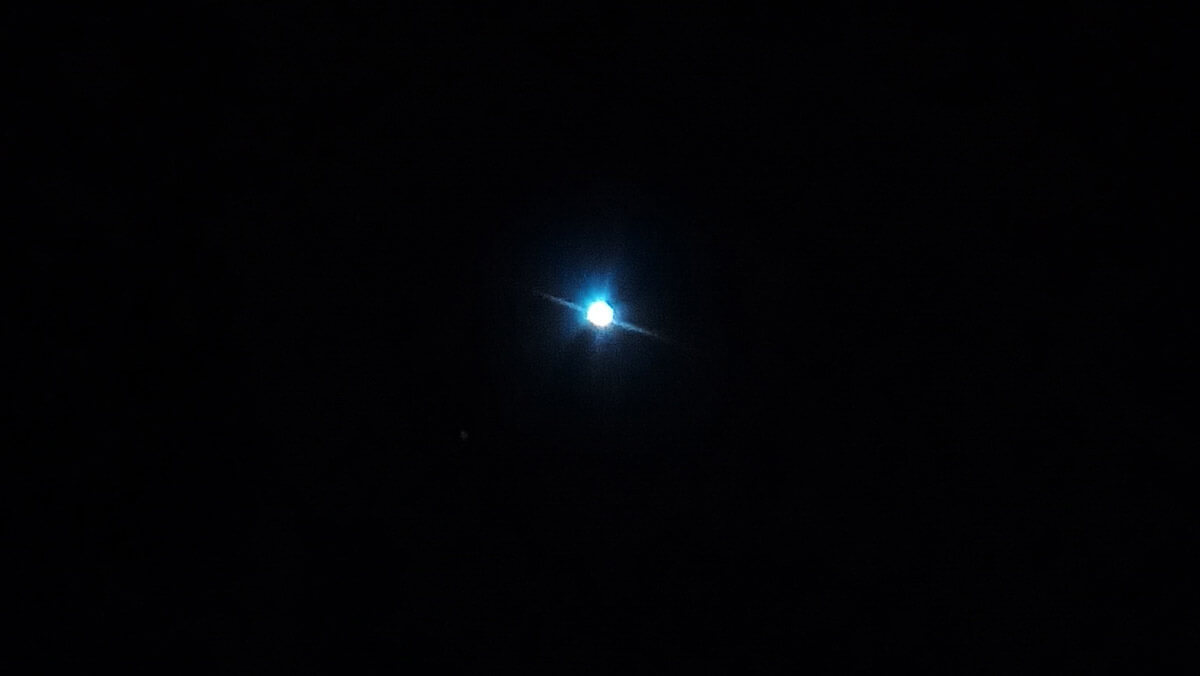
Image credit: JM (TRAC)
The video below was taken through the telescope at 60x magnification. It shows how Sirius appears to twinkle or flash bright colours. The effect, known as scintillation, is caused by turbulence in Earth's atmosphere.
Video credit: JM (TRAC)
The Winter Triangle
This large equilateral triangle is now a familiar sight in the winter sky. In the middle of the triangle lies the large, faint modern constellation of Monoceros, the Unicorn, which we can try to see from the park on a very clear night.
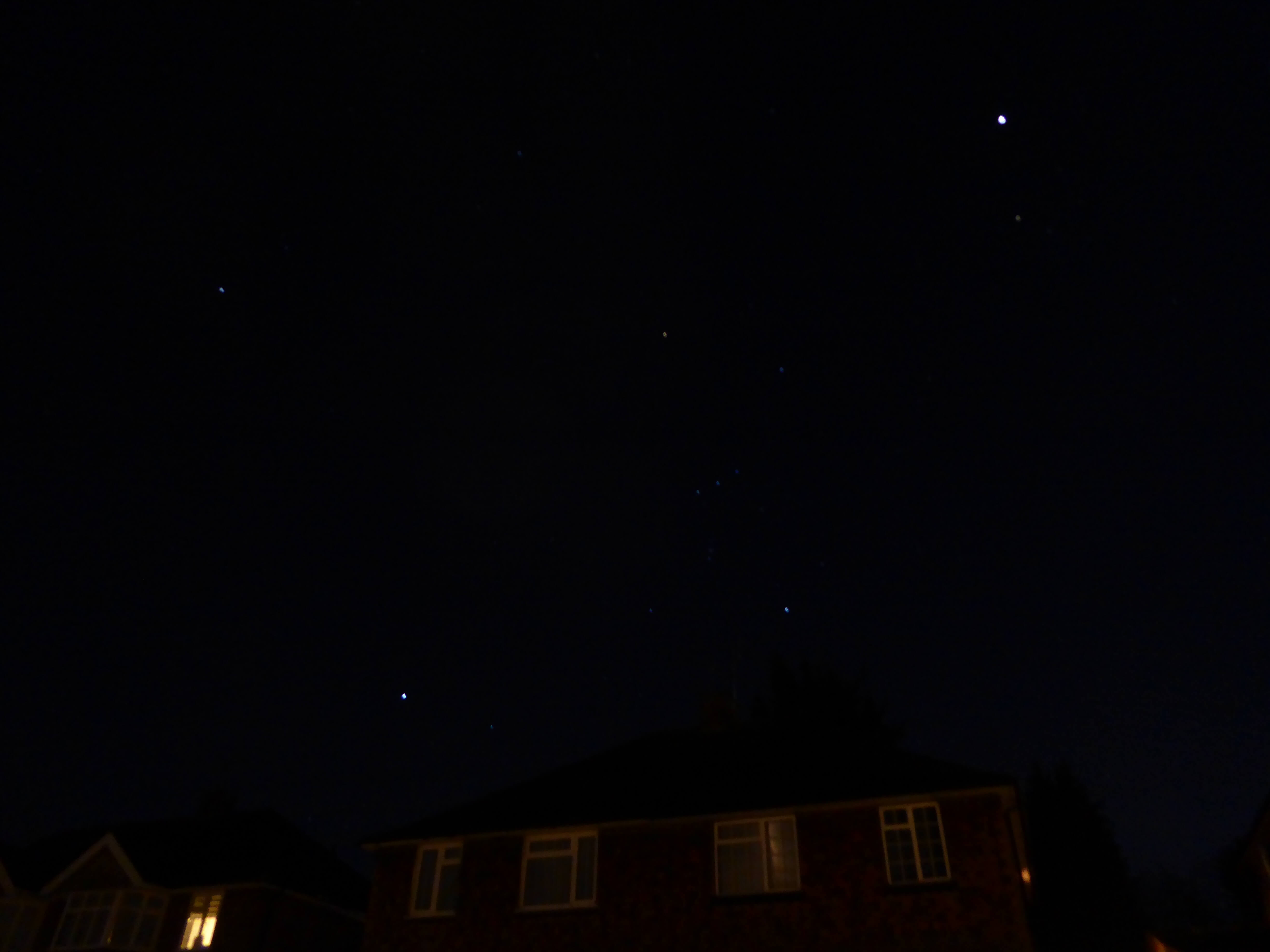
Image credit: JM (TRAC)
Above image: The Winter Triangle viewed over houses in Taverners Road on 07 Jan 2025. Sirius is bright white, Betelguese is dark orange, and Rigel is blue. In Orion, Belatrix and the three belt stars are also visible. Jupiter is the bright ojbect to the top right of the photo.
The Winter Hexagon
Extending above the Winter Triangle, the Winter Hexagon was easy to point out. We don't have any photos because it is too large to fit in the camera's field of view! I think the winter night sky is the best you get all year round. Do you agree?
The Orion Nebula
We saw the Orion Nebula with the naked eye, in binoculars, and through the telescope on 07 Jan 2025 and again on 10 Jan 2025. The view was poor due to the glare from the Moon.
We got a clearer view at 21:30 on 30 Jan 2025, when the moonless night provided better conditions. With his acute eyesight, Matey could detect a slight greenish tint to the Orion Nebula when he viewed it through binoculars at a magnification of 10x.

Image credit: JM (TRAC)
Above image: The Orion Nebula at roughly 100x magnification, taken on 07 Jan 2025 at 22:30. The large gas cloud is illuminated by the light passing through it from nearby stars. I think this photo turned out quite well, given the weather conditions and nearby light pollution.
Winter Constellations
We got excellent views of the main winter constellations, including Auriga, Orion, Taurus, Gemini, and Aries.
Only the top part of Canis Major was visible during our observations. We'll try again in February 2025 when the other stars in this constellation will be higher in the sky earlier in the evening.
Lunar Observations
Moon‐Venus Conjunction (03 Jan 2025)
There was an incredibly beautiful pairing of the Moon and Venus on the evening of 03 Jan 2025.
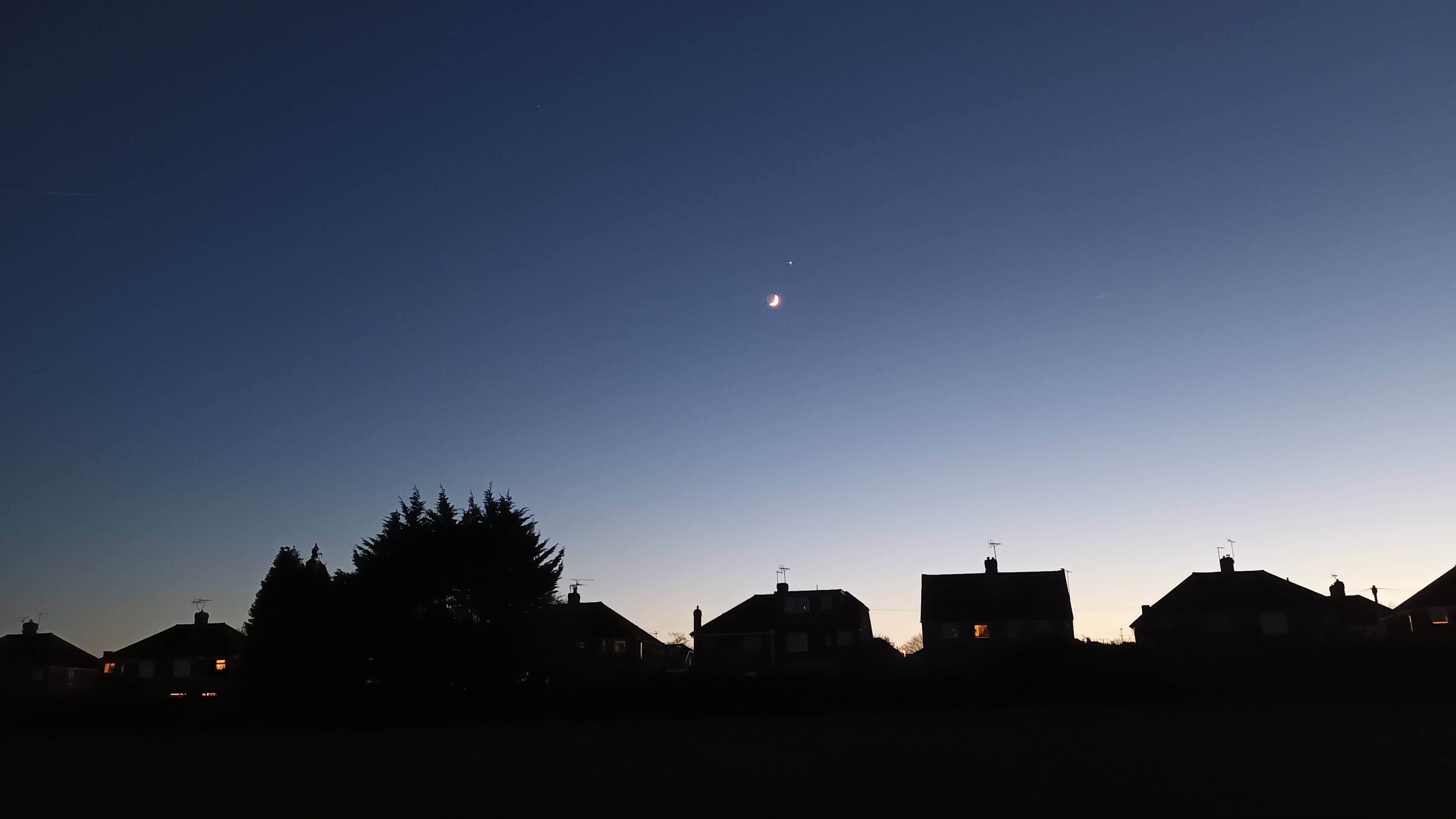
Image credit: JM (TRAC)
Above image: The conjunction, as seen from the park at twilight. The photo is no substitute for seeing a sight like this firsthand.
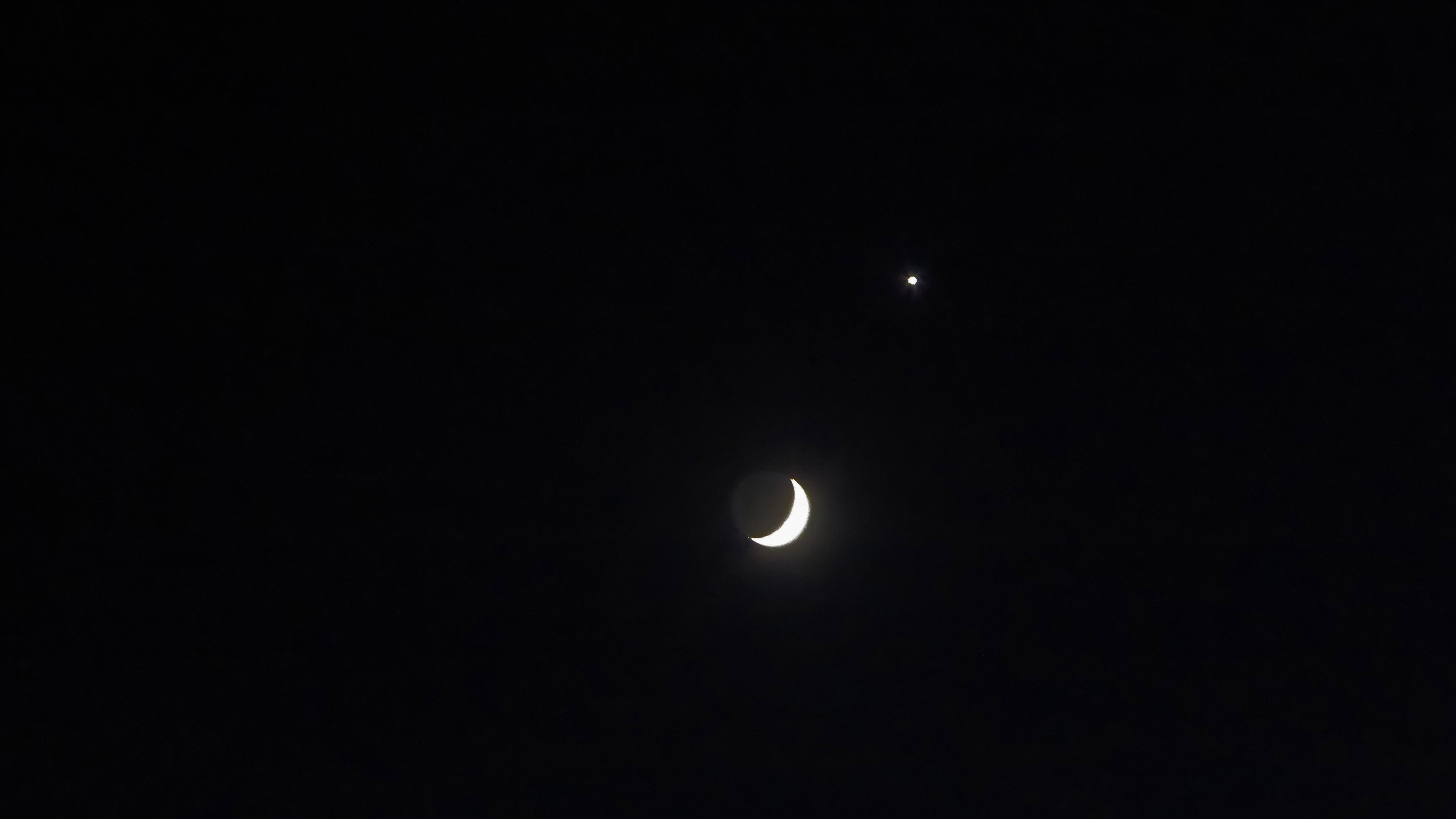
Image credit: JM (TRAC)
Above image: The conjunction two hours later. The camera was able to capture the earthshine and gives you an impression of the brightness of Venus.
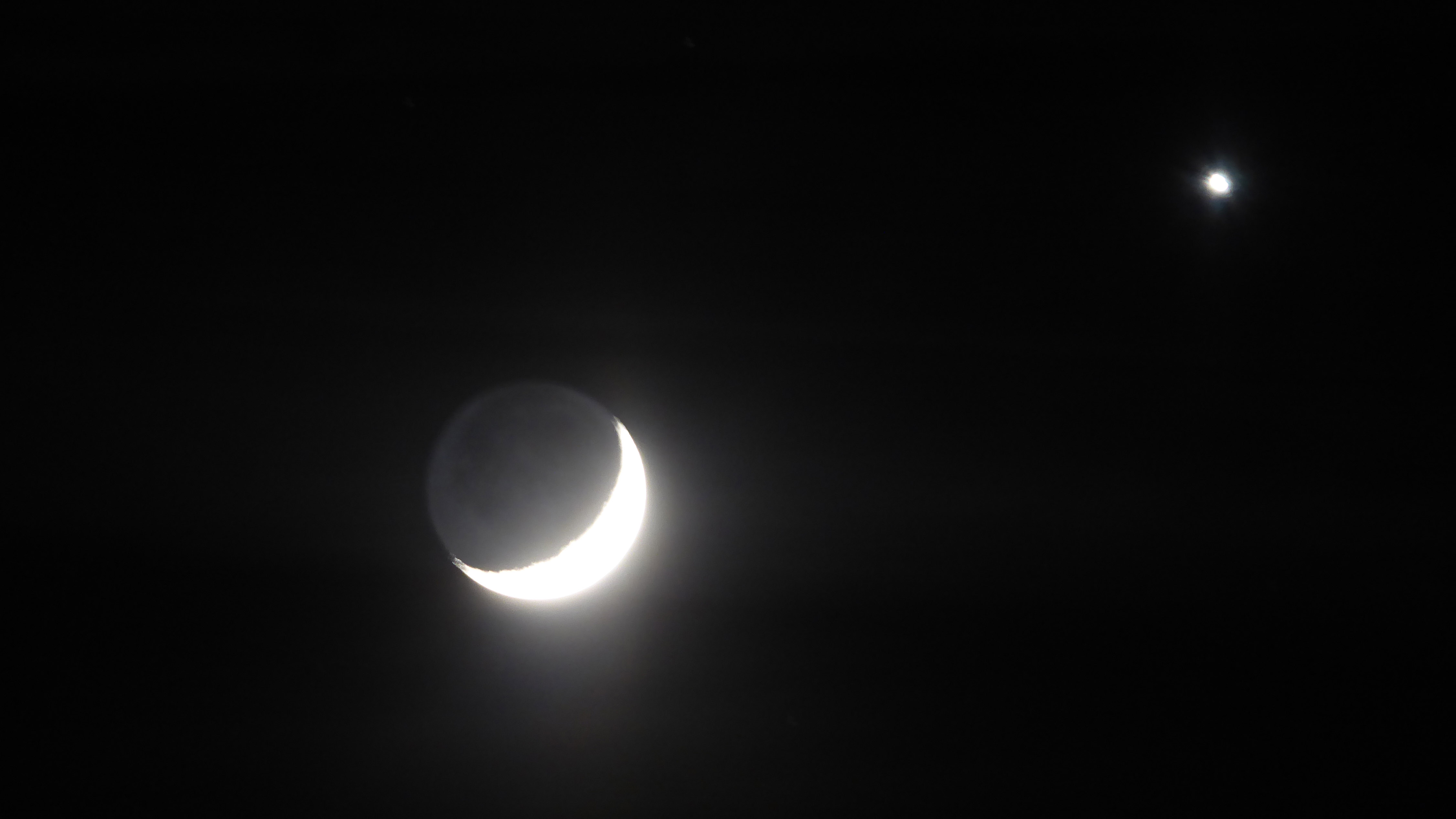
Image credit: JM (TRAC)
Above image: A closer view of the earthshine effect. At a magnification of 30x, details on the Moon's surface can be seen.
The Moon at First Quarter
Large craters and maria on the Moon can be seen at its first quarter phase.
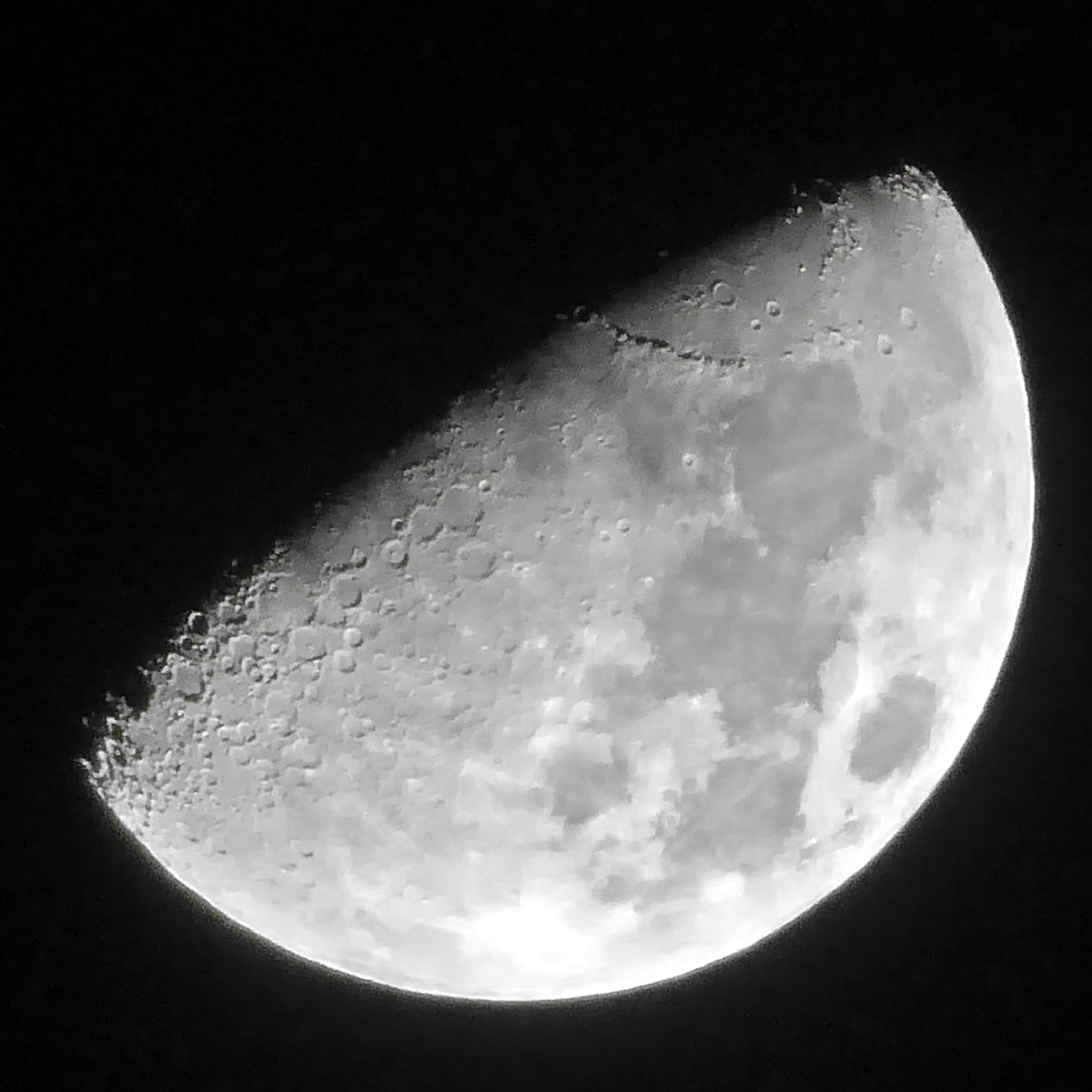
Image credit: JM (TRAC)
Above image: The lunar surface as seen on 07 Jan 2025 at 21:30.
Full Moon & Mars
Mars was positioned close to the Moon on the evening of 13 Jan 2025, coinciding with this month's Full Moon, the 2025 Wolf Moon.
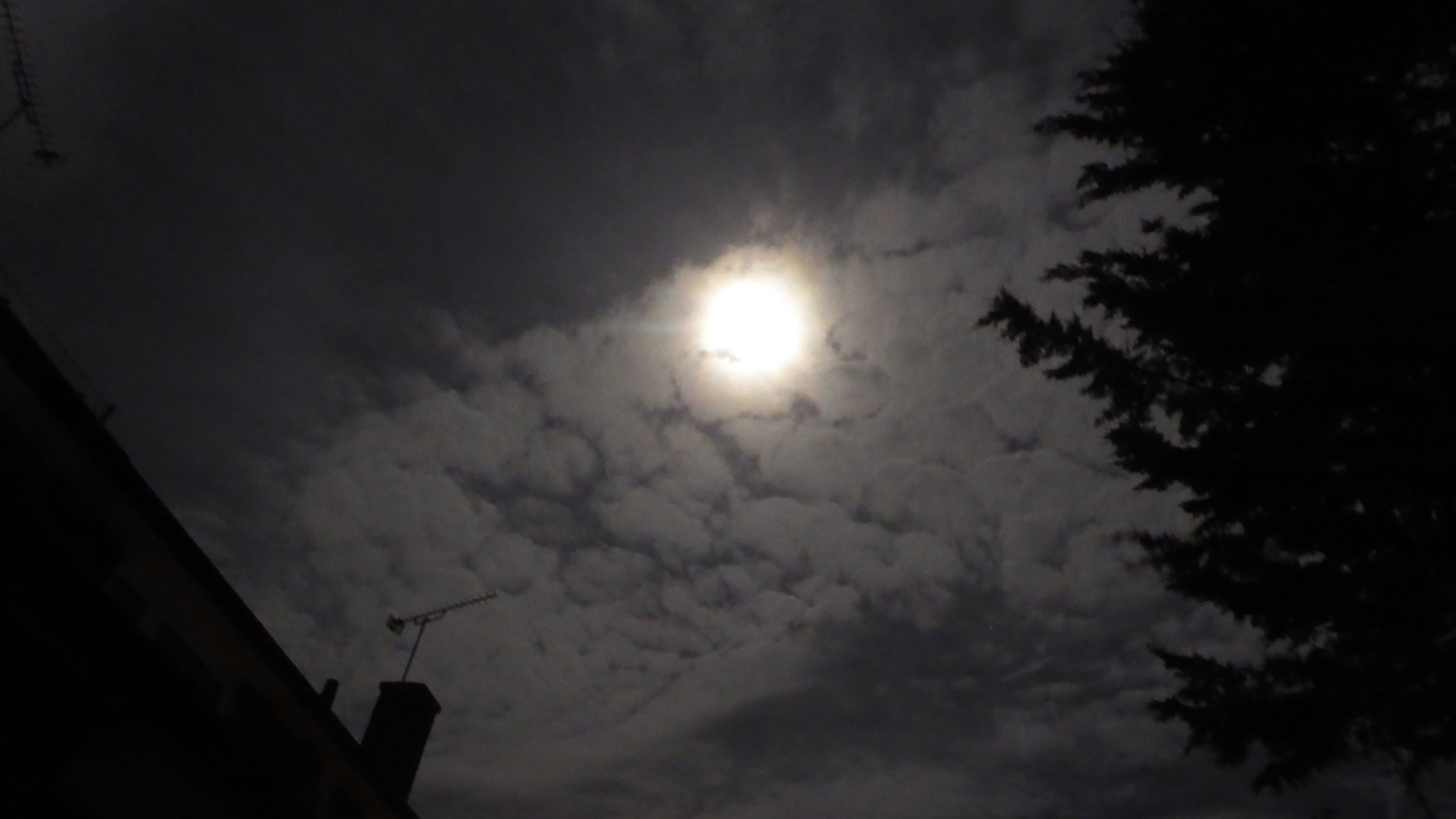
Image credit: JM (TRAC)
Above image: The entire evening was marred by cloud cover, which obscured the view of Mars.
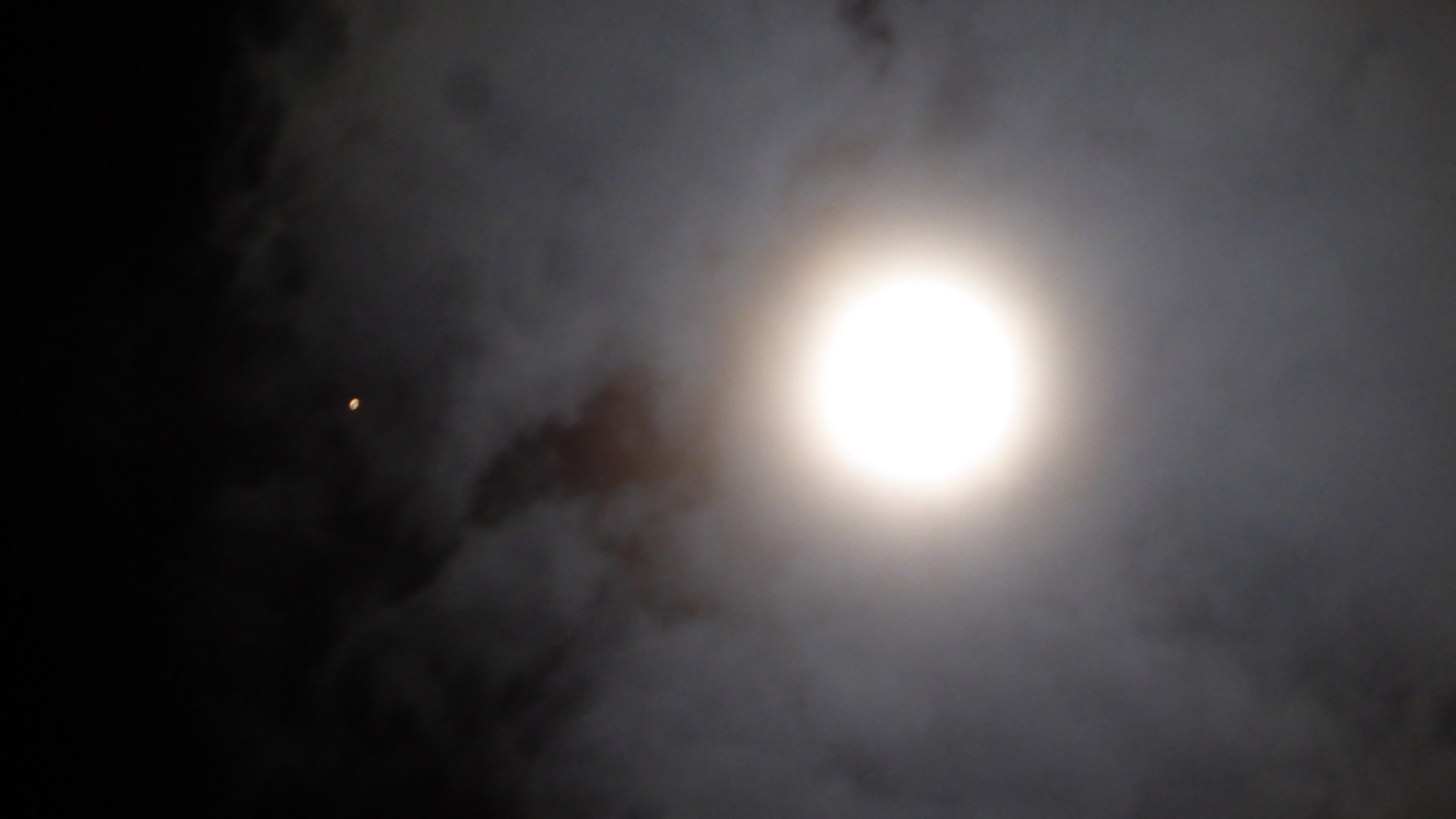
Image credit: JM (TRAC)
Above image: Mars could be seen during a brief gap in the clouds shortly after midnight as the conditions improved ever so slightly.
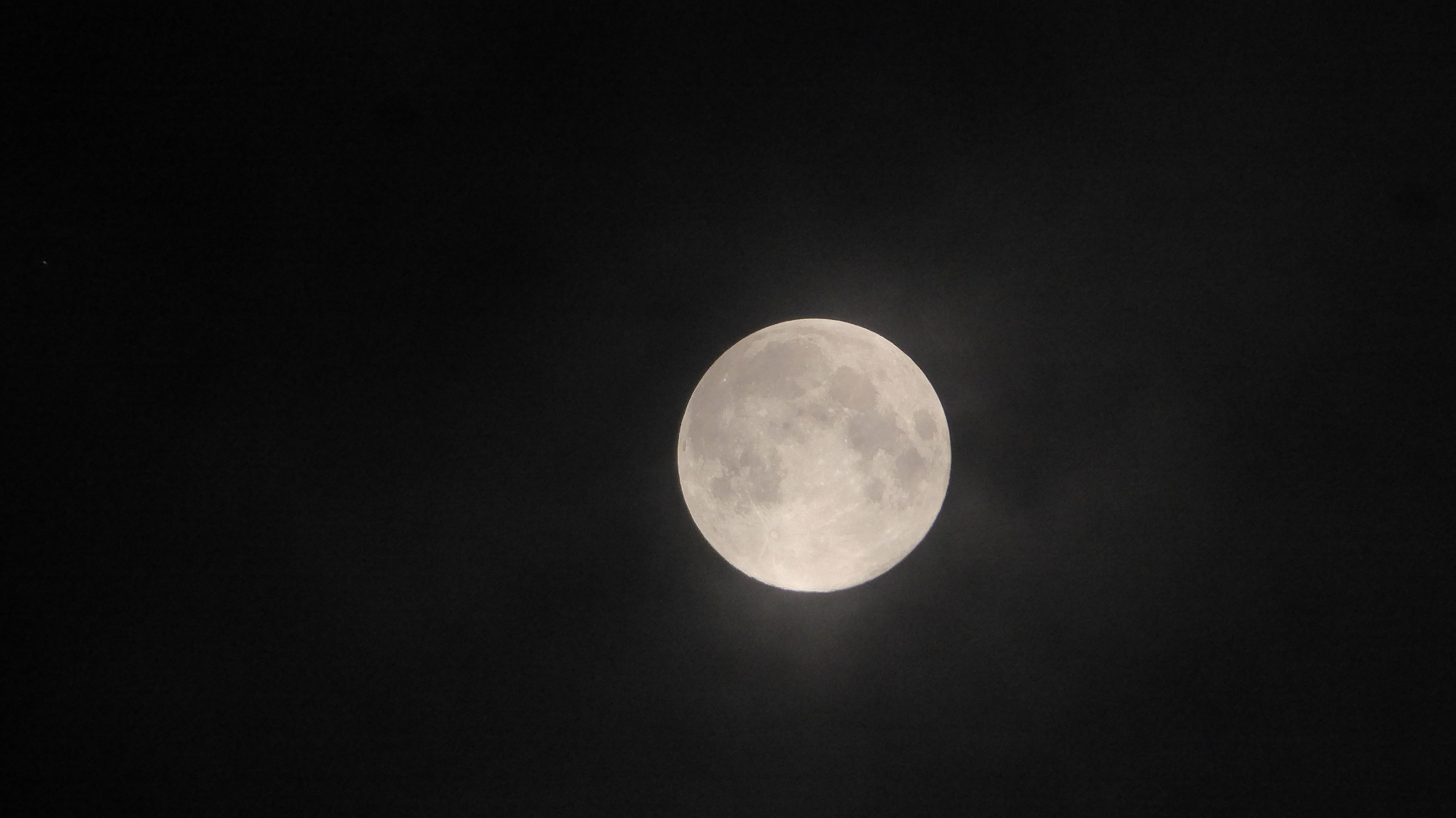
Image credit: JM (TRAC)
Above image: The Full Moon behind clouds with Mars, the tiny orange dot to the far left of the photo. Due to the fast-moving clouds, this was the best photo I could get showing both Mars and the Moon together. It was sent to BBC Sky at Night Magazine, and they selected it for their "Mars and the 2025 Wolf Moon" article.
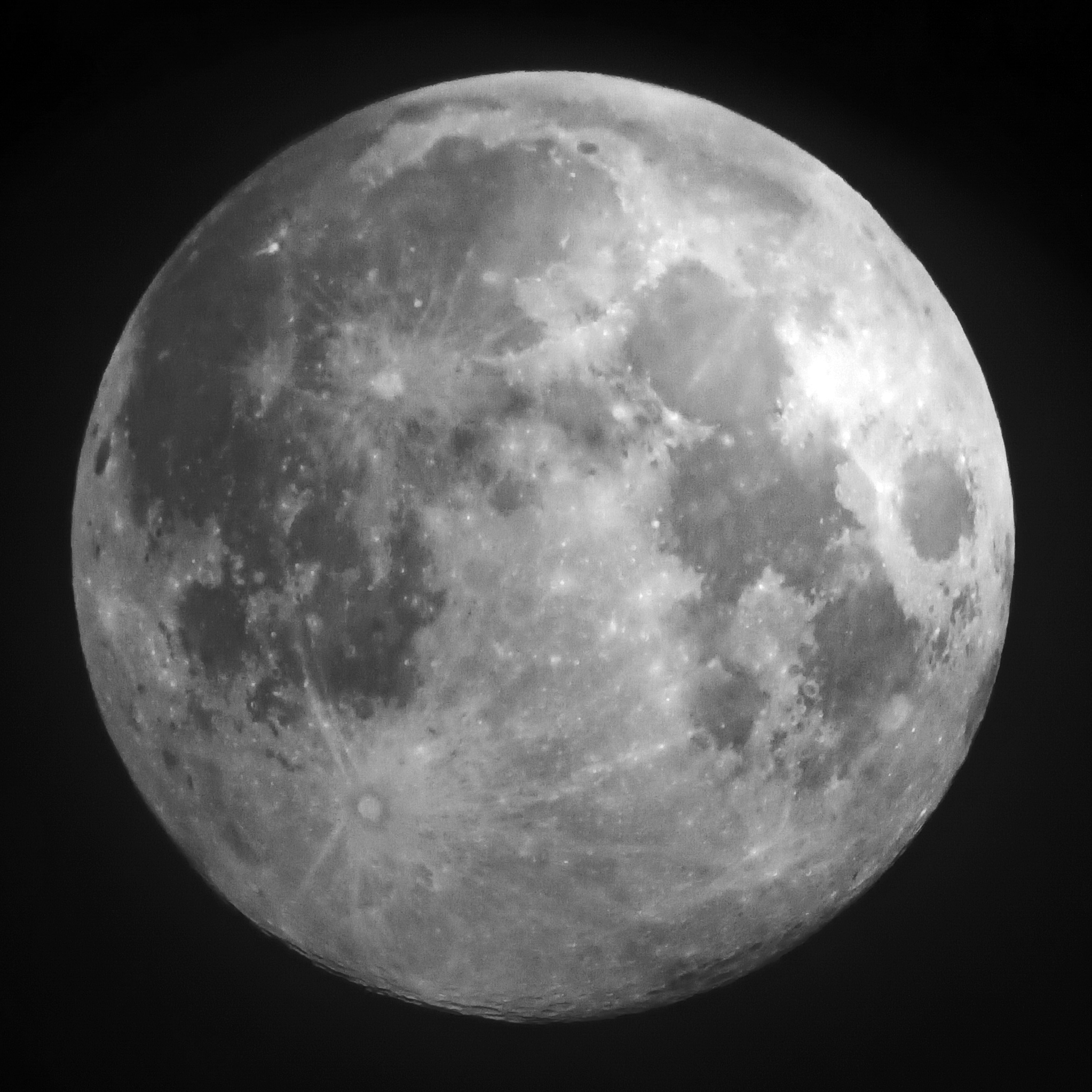
Image credit: JM (TRAC)
Above image: A telescopic view of the Full Moon - 14 Jan 2025, 01:24. The view of the Moon was better after 01:00, but by then it was time for bed.
The Moon Occults the Pleiades
The 81%-lit Moon passed close to the Pleiades on the evening of 09 Jan 2025, moving across the star cluster in the early hours of the following morning.
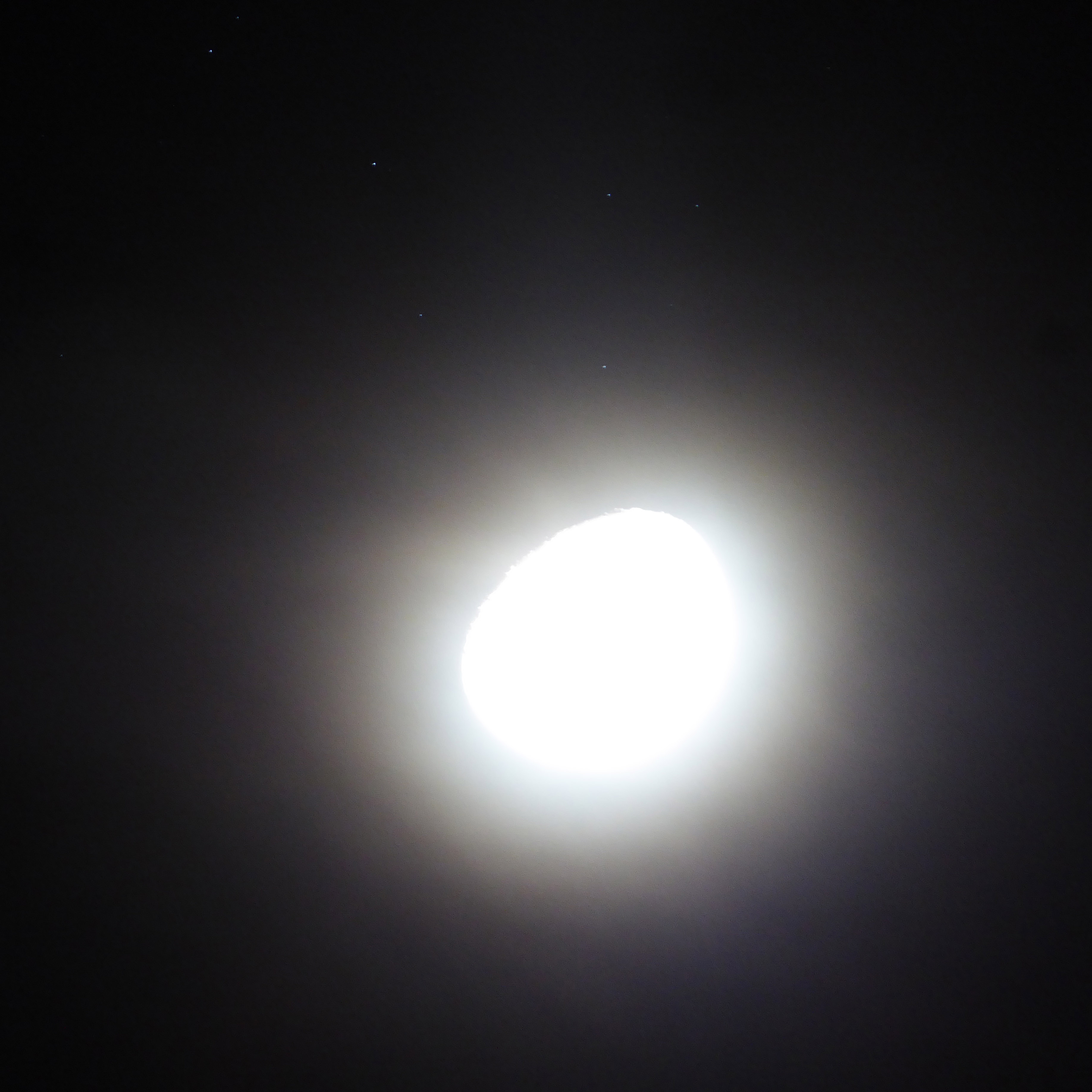
Image credit: JM (TRAC)
Above image: The Moon close to the Pleiades, taken at 01:16 on 10 Jan 2025. The brightest six stars in the cluster can be seen just before the occultation.
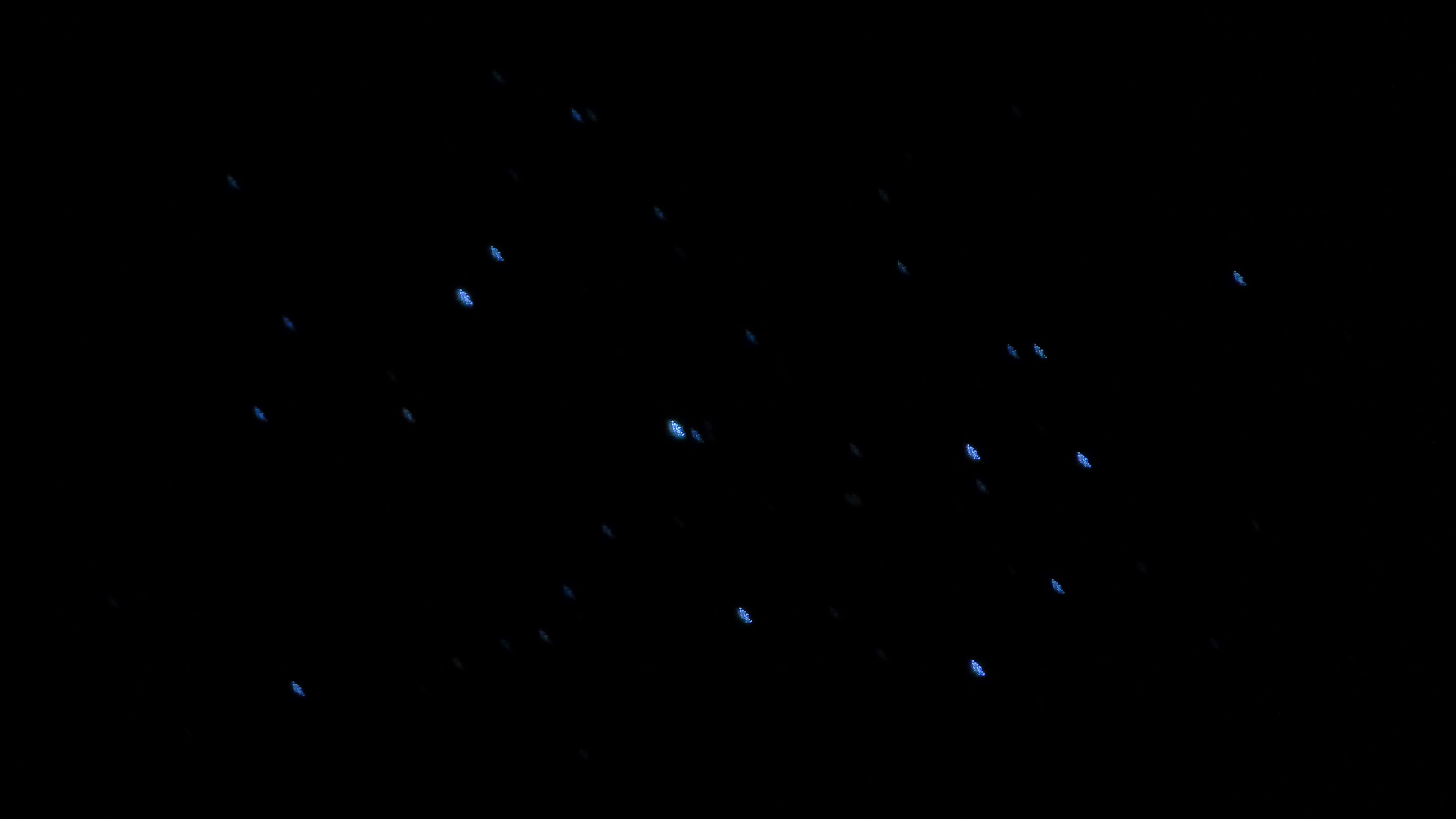
Image credit: JM (TRAC)
Above image: This is about the best photo you could possibly get of a star cluster with a standard camera with a high optical zoom.
Perhaps next month we can take a photo of the Pleiades through the telescope.
Moon Shadow Transits
Ganymede Occultation and Io Shadow Transit
03 Jan 2025: We saw Jupiter occult Ganymede, the start of Io's transit, and Io's shadow transit. Io wasn't seen in front of the planet. Jupiter is so bright, Io is quite small, and there's little contrast in the colour between the moon and the planet.

Image credit: JM (TRAC)
Above image: This photo was taken shortly after Io, Jupiter's innermost moon, emerged from the planet's eastern limb. Io's shadow can be seen towards the eastern side of Jupiter's southern equatorial belt. The moon sitting just above Jupiter is Ganymede, and the moon to the far west (left) is Europa.
Europa Shadow Transit
10 Jan 2025: It was difficult to observe the shadow transit of Europa. All four moons were seen clearly, with Europa lying close to Jupiter. The shadow was spotted using the zoom eyepiece.
The shadow was hard to see since Europa is the smallest of the Galilean moons. Although the weather was excellent, we had an almost-full moon close by.
Ganymede Transit
20 Jan 2025: We were slightly too late to see Ganymede in front of Jupiter, but we did watch it emerge from the planet's eastern side. The weather was poor; most of the time we spent watching Jupiter drifting in and out of clouds.
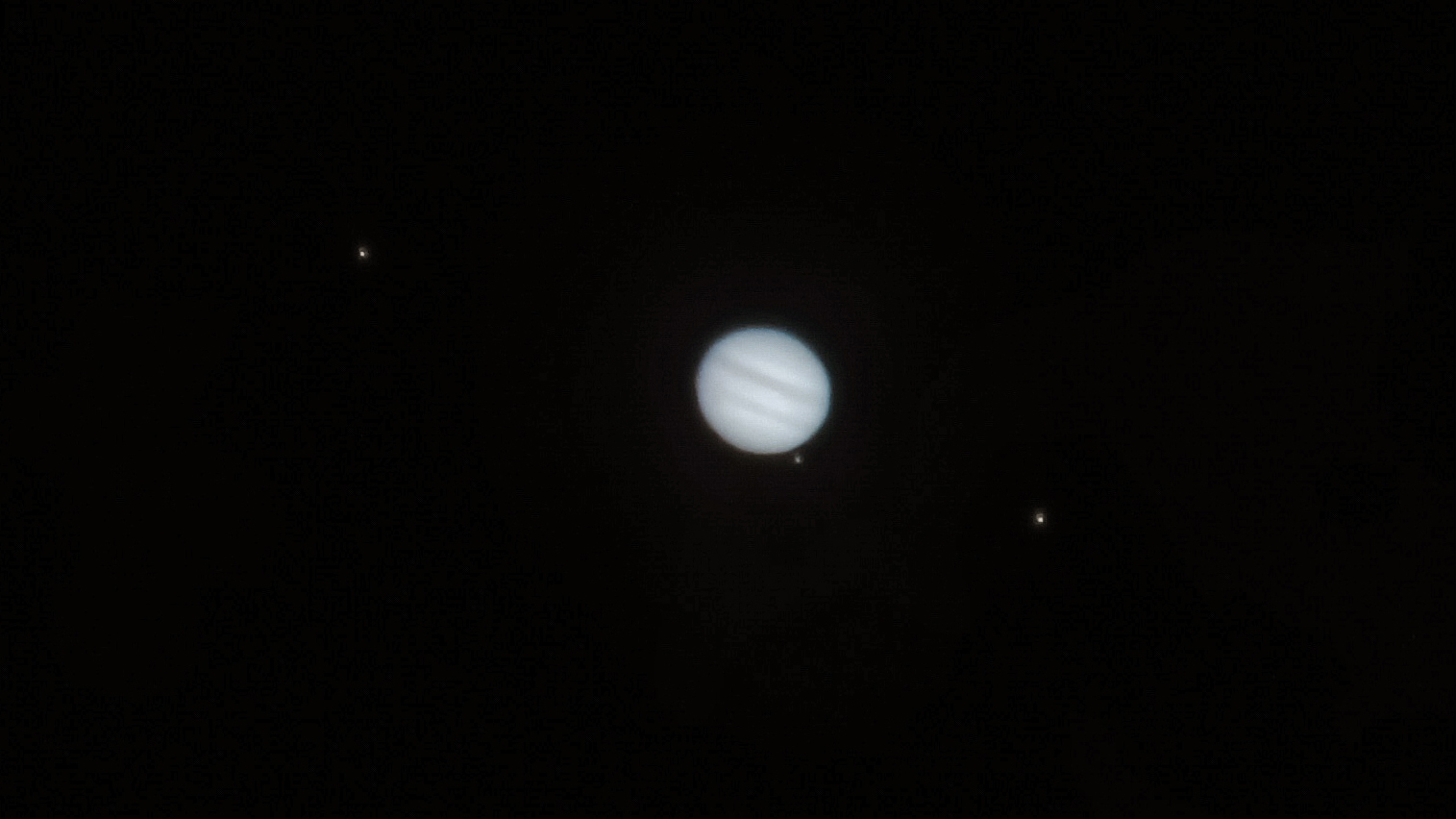
Image credit: MK (TRAC)
Above image: Taken at 21:20. Ganymede is the moon close to the east of Jupiter. Further out is Io, and to the west is Europa.
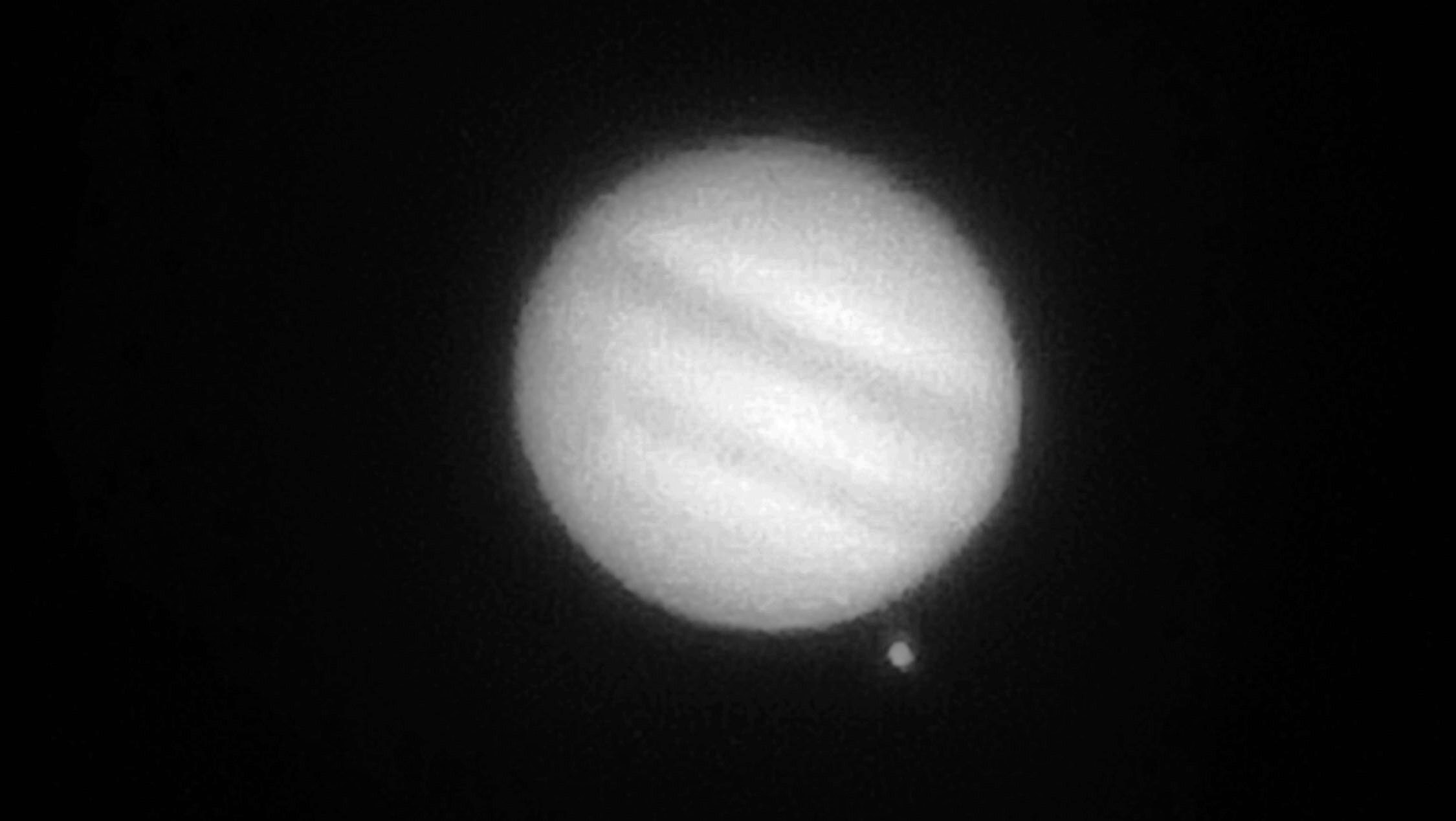
Image credit: MK (TRAC)
Above image: Taken at 21:25. A zoomed-in view of Ganymede alongside Jupiter.
Ganymede Shadow Transit
20 Jan 2025: Later on the same evening, I saw Ganymede's shadow transit Jupiter.
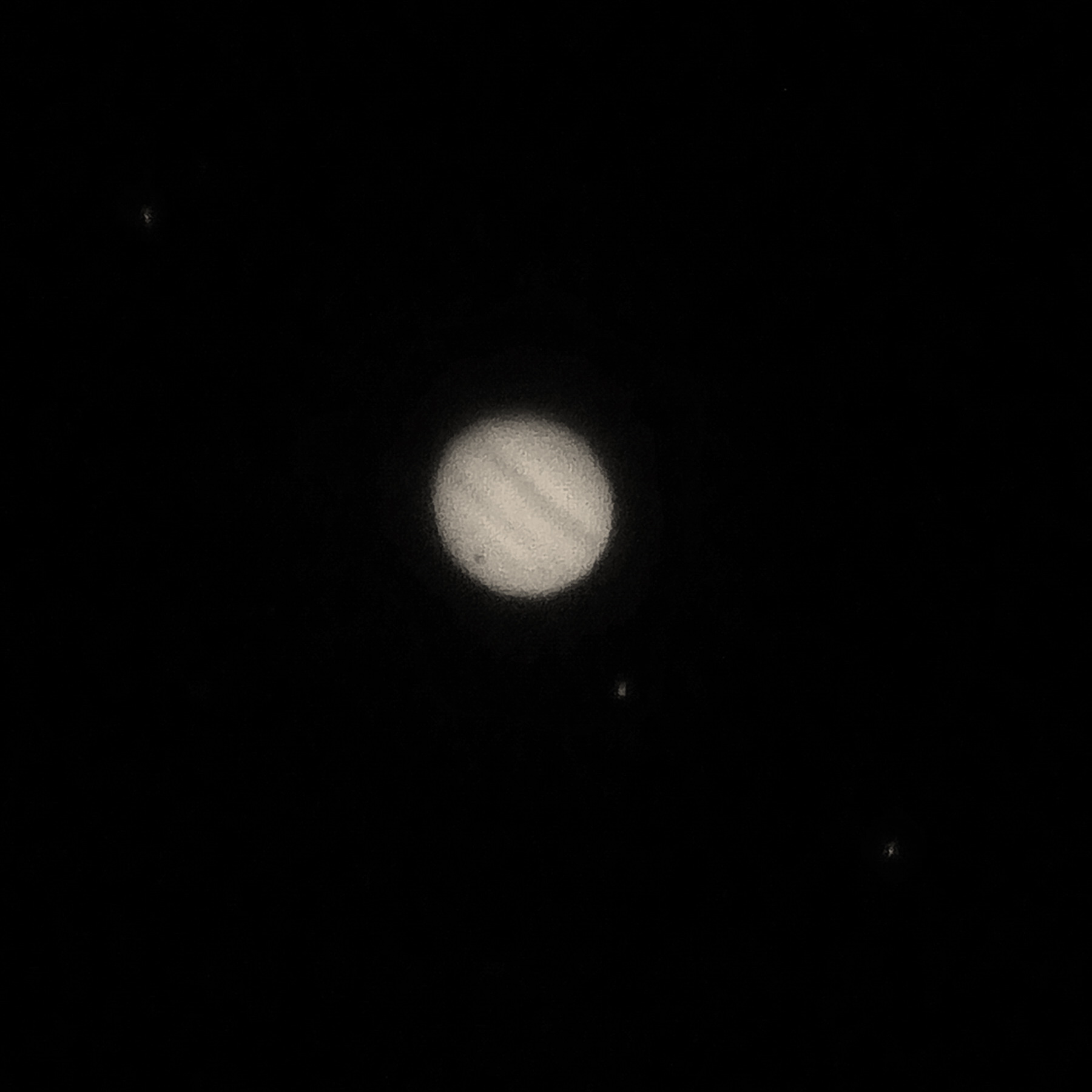
Image credit: JM (TRAC)
Above image: Taken at 23:38. The small dark dot near the south of Jupiter is Ganymede's shadow. Moons (left to right) are Europa, Ganymede, and Io.
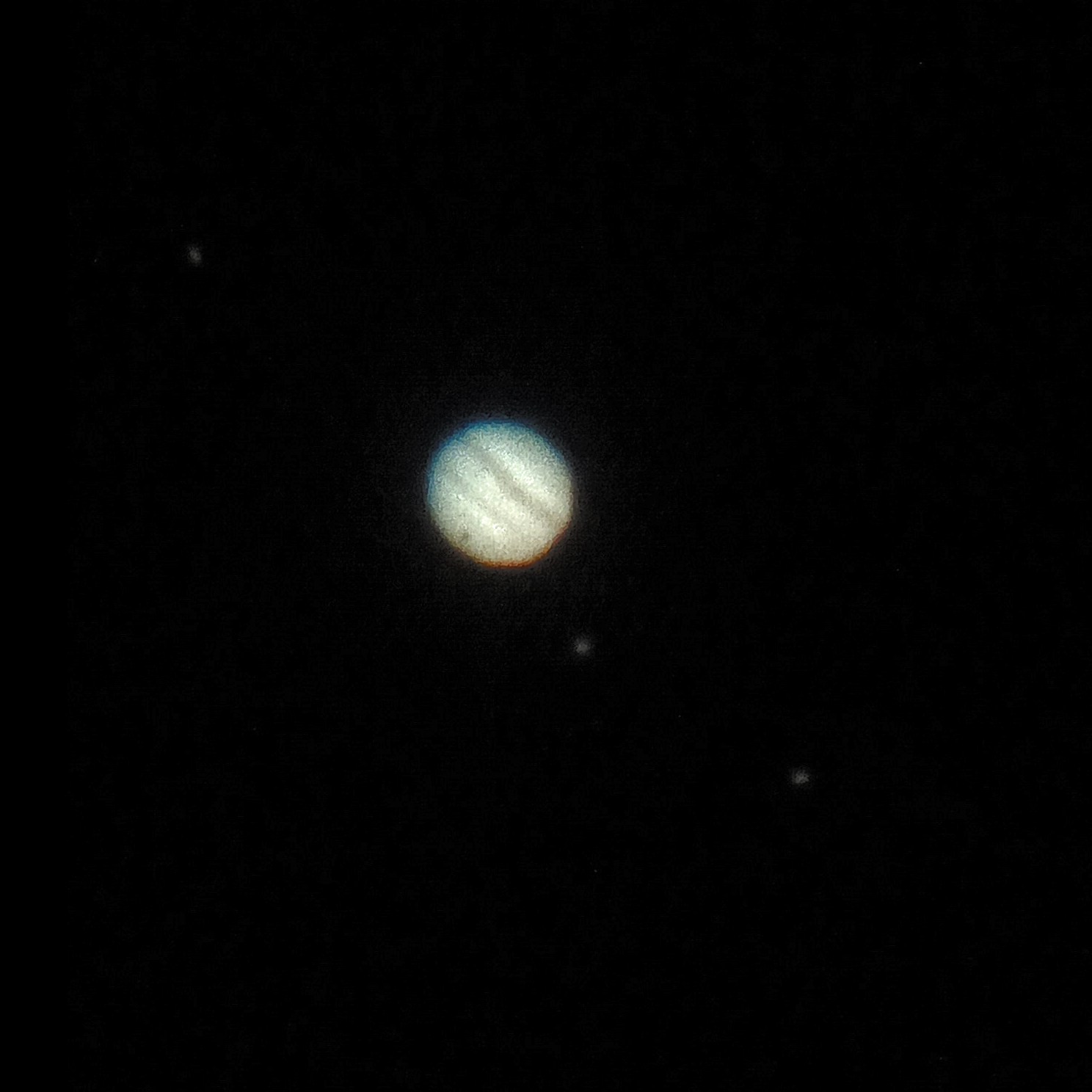
Image credit: JM (TRAC)
Above image: Taken at 23:43. Another photo of the shadow transit.
Titan Shadow Transits
Once again, we didn't see any Titan shadow transits. It's going to be very tricky to see one due to how small Saturn appears in the telescope. Sky conditions will need to be absolutely perfect.
07 Jan 2025, 19:00-20:00: Saturn was low on the roofs from the north side of the street. Saturn and its rings were visible with the telescope, but the image was unstable. There was no sign of Titan's shadow.
2025-01-23, 18:00-19:00: The conditions were poor. Saturn's now low in the sky. The best chance is to see it from the park. At one point, I thought I could see the shadow, but I think it was just in my imagination!
Planets
Venus
The phase of Venus is now easy to see using the telescope. Matey took the below photo of Venus (mag. -4.3) at 18:30 on 10 Jan 2025 when the planet was 51% illuminated (dichotomy).

Image credit: MK (TRAC)
Mars
Mars reached opposition on 16 Jan 2025 and could be seen shining brightly all month.
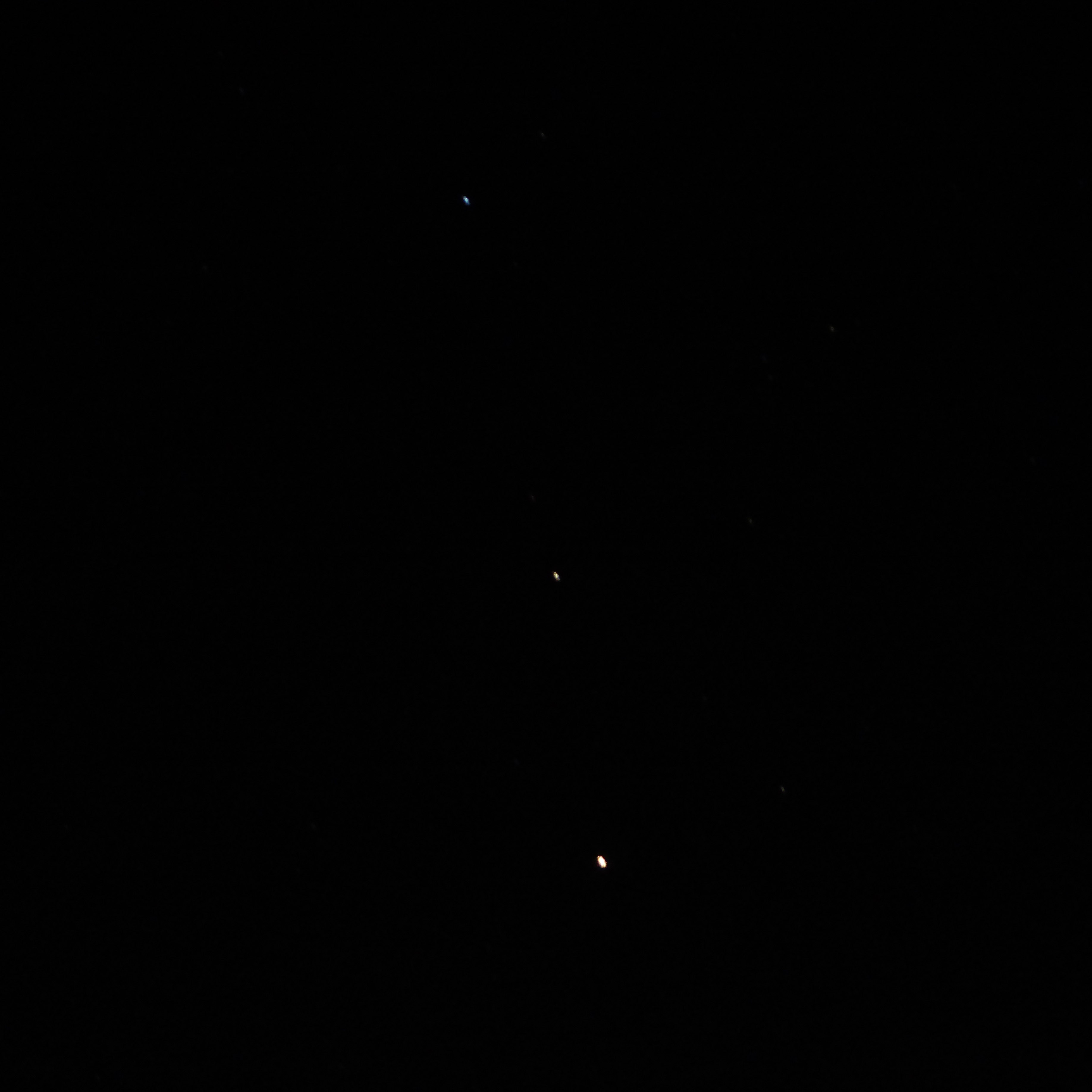
Image credit: JM (TRAC)
Above image: From top to bottom, Castor, Pollux, and Mars at 19:00 on the evening of opposition.
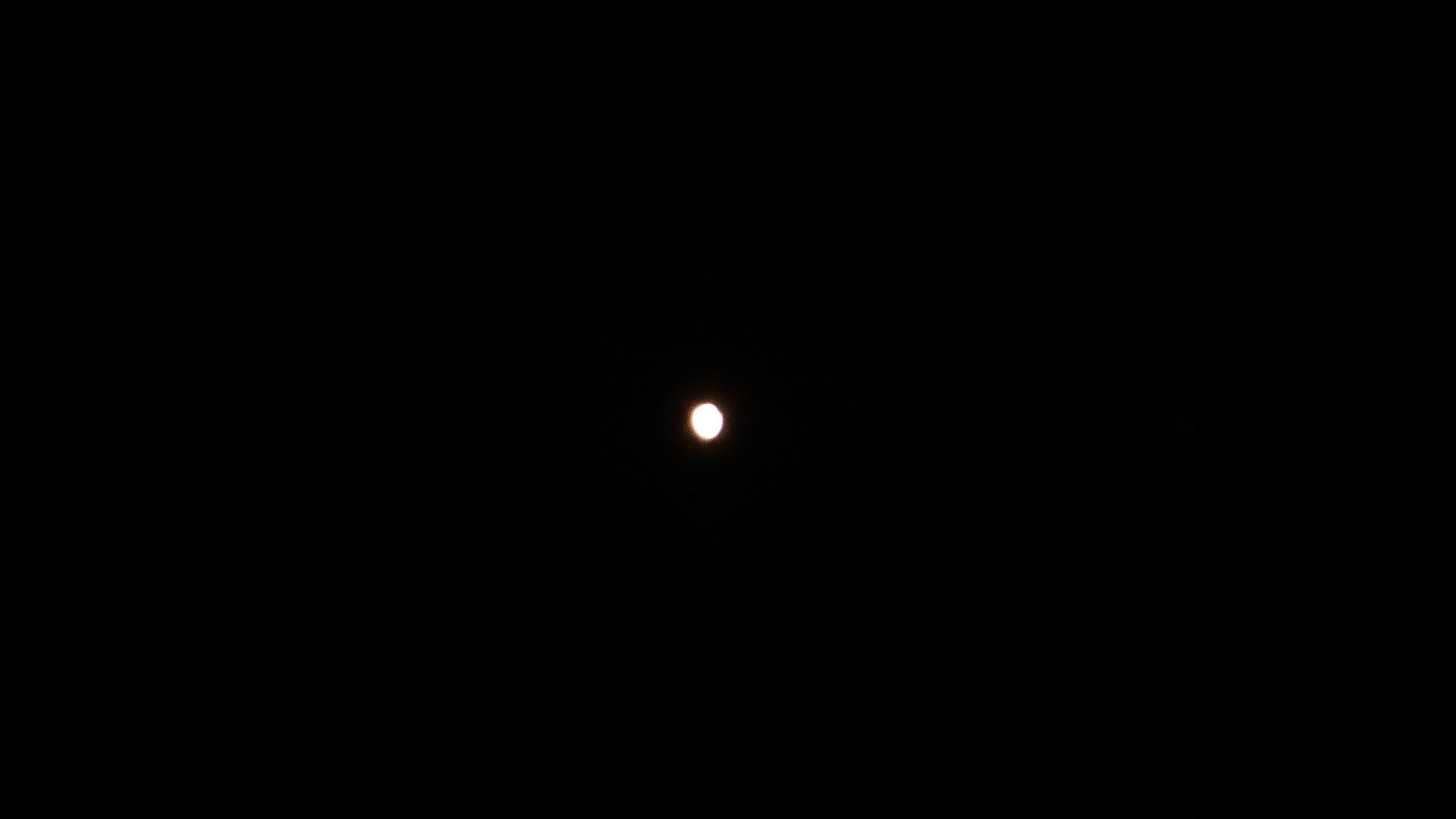
Image credit: JM (TRAC)
Above image: A closer view of Mars at opposition. The conditions were poor, and no detail was discernible.
Our best photo yet of Mars (below) was taken on 21 Jan 2025 at 00:30. Dark surface markings are visible on the Red Planet, and a tiny part of the northern ice cap is just about perceptible.
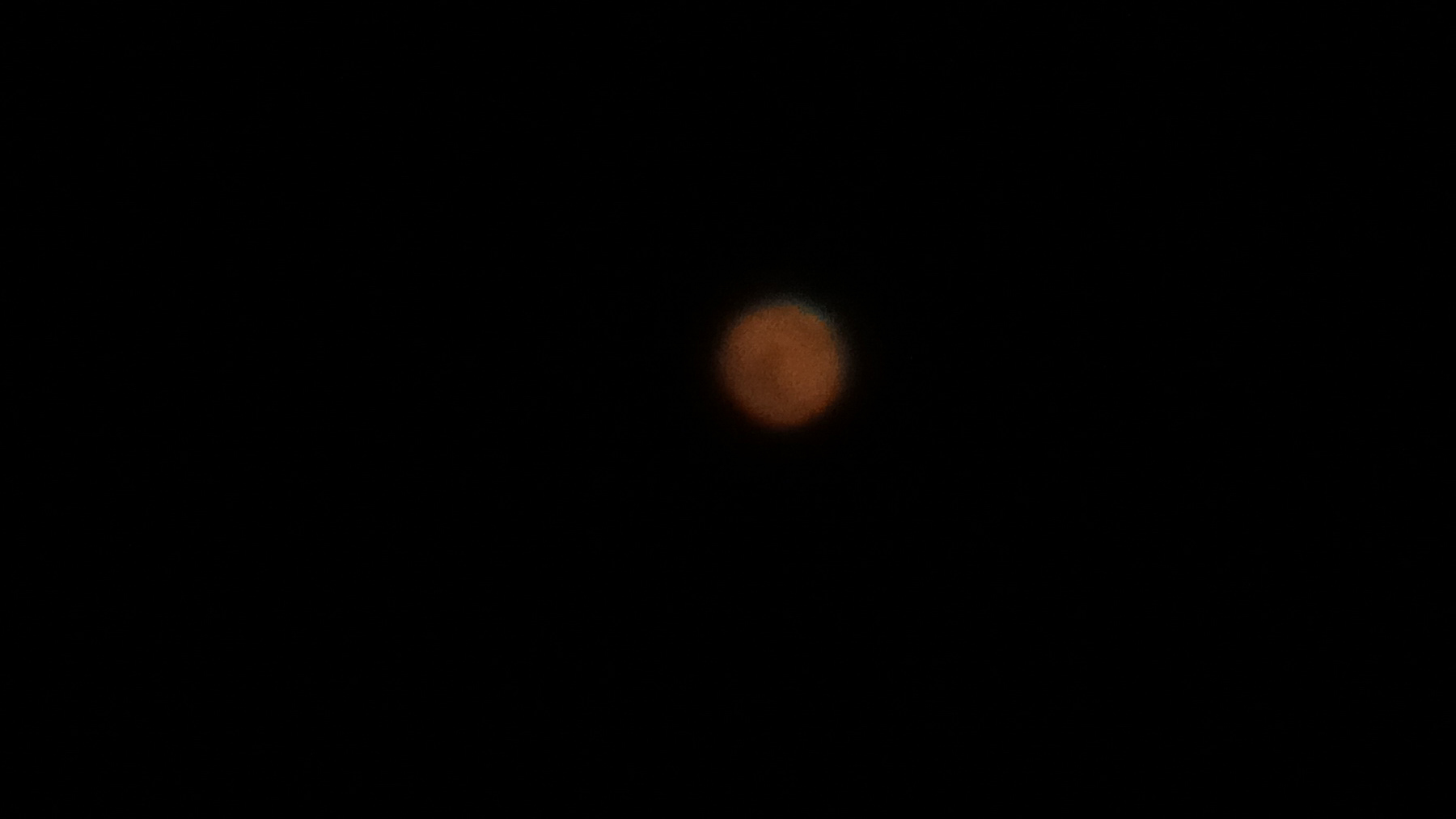
Image credit: JM (TRAC)
Below is a computed-generated image of Mars showing the same surface features. Roughly in the centre of this image is the location of the landing site of NASA's Mars rover Perseverance, which touched down in February 2021.
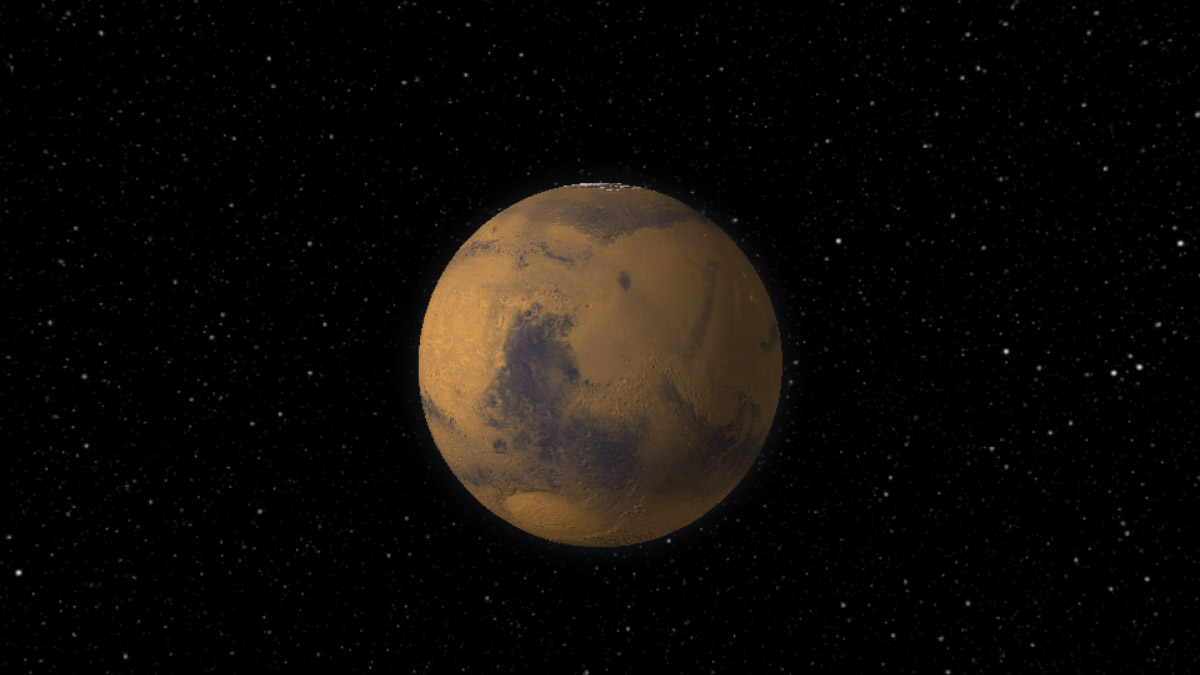
Image credit: Ian Webster (Mars in 3D) & NASA
Jupiter
Our main observations of Jupiter and its moons took place during the Jovian moon shadow transit events on various nights.
A clear view of the planet's Great Red Spot (GRS) was obtained on 03 Jan 2025 at 22:45 using the zoom eyepiece without the Barlow lens &ndash so it can be seen when the conditions are excellent! The GRS was also just about perceptible on 30 Jan 2025.
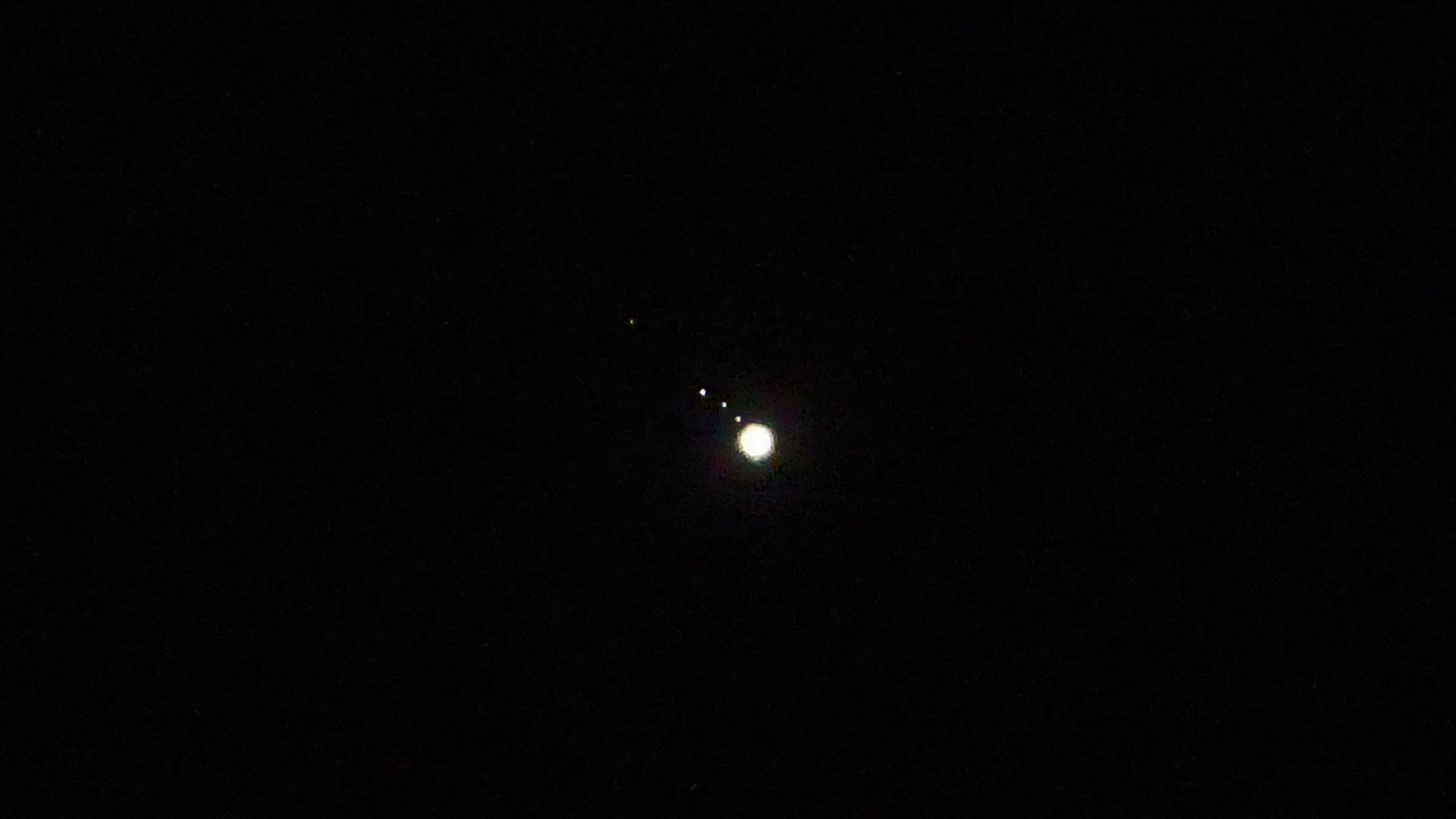
Image credit: JM (TRAC)
Above image: Using binoculars, it was possible to see all four large moons of Jupiter spaced out in this arrangement on 19 Jan 2025 at 23:20.
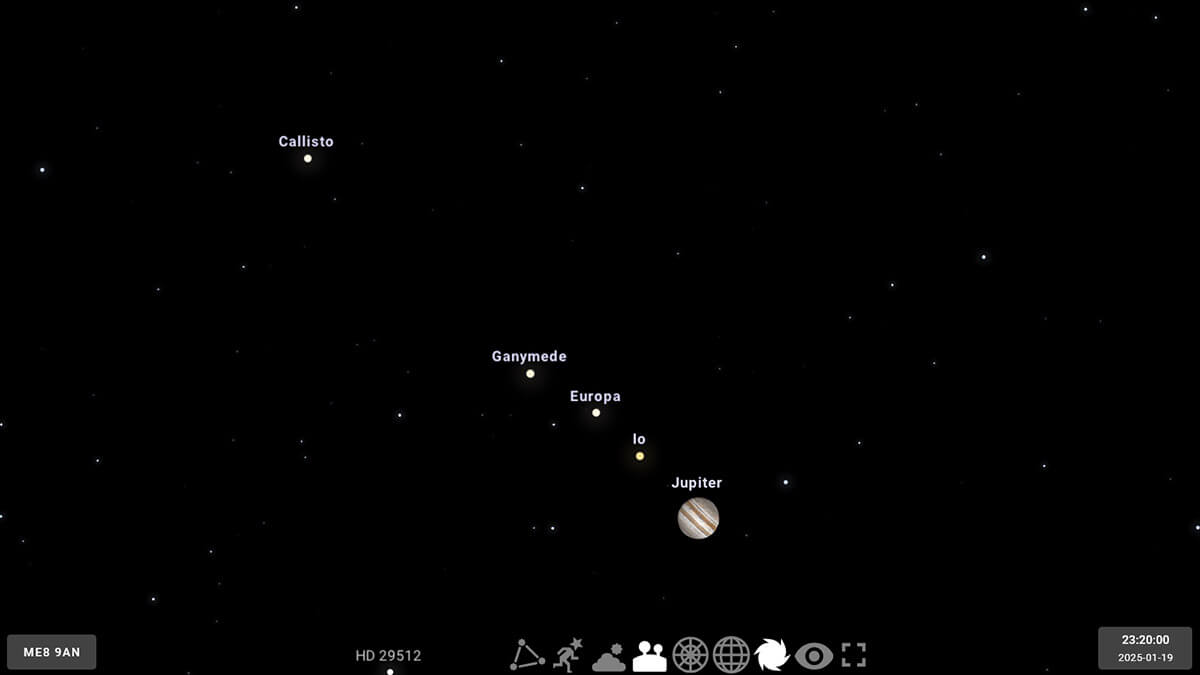
Image credit: Stellarium
Above image: A simulated view of the positions of Jupiter's moons at the time the previous photo was taken.
Saturn
Once again, it wasn't possible for us to observe the two Titan shadow transits we had planned to see due to the awful weather.
We got a good view of the ringed planet on 10 Jan 2025, and even Titan was clear. We also saw a faint pinprick of light between Titan and Saturn which we are logging as a possible sighting of Dione, another of Saturn's moons, but it was not possible for us to be 100% certain of this.
I attempted to see the shadow transit on 23 Jan 2025, but the seeing conditions were poor, and I was unable to get the image of Saturn focused.
Another observation of Saturn was conducted on 16 Jan 2025 when Venus was close by.
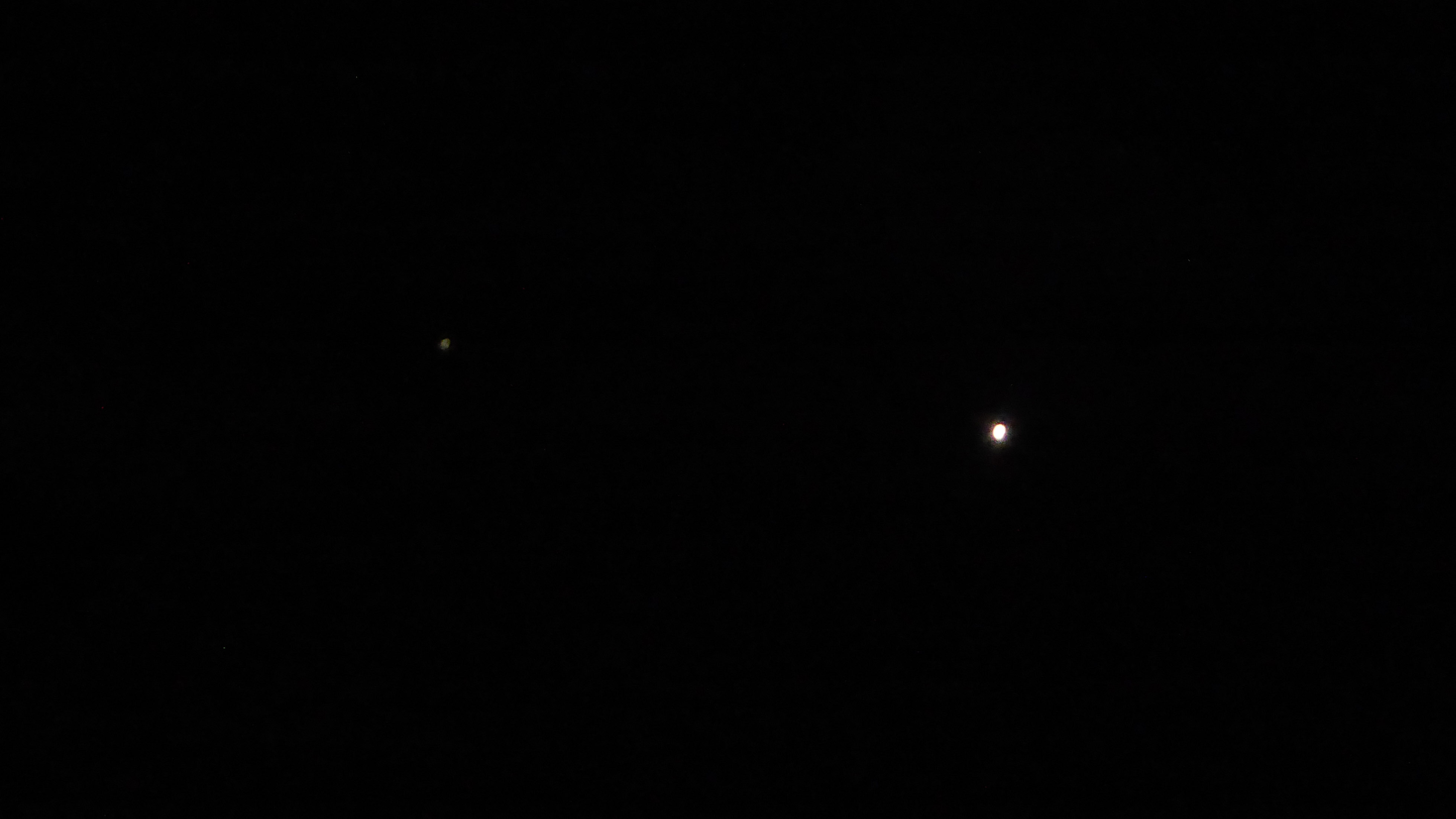
Image credit: JM (TRAC)
Above image: Saturn is the faint brownish dot to the left of blazingly bright Venus. The conjunction was seen on 16 Jan 2025.
Uranus
Uranus was seen in binoculars on 02 Jan 2025. I had a go at locating it with the telescope, but I couldn't find it!
I couldn't see the planet on 10 Jan 2025, probably due to cloud cover high in the atmosphere.
Neptune
No attempts were made to see Neptune.
Astrophotography
Tips We Picked Up
We found that to get the best photos, it's important to steady the camera and tripod to reduce the wobble as much as possible.
- Spread out the tripod legs as wide as they go.
- Keep the tripod as low to the ground as is practical when using the Lumix camera. Only extend the legs as far as needed and no further.
- Move out of the wind whenever possible.
- Use severla house bricks to weigh down the telescope tripod.
- Use a 10-second delay timer or remote shutter.
Employing these five methods steadies the image, resulting in sharper photos.
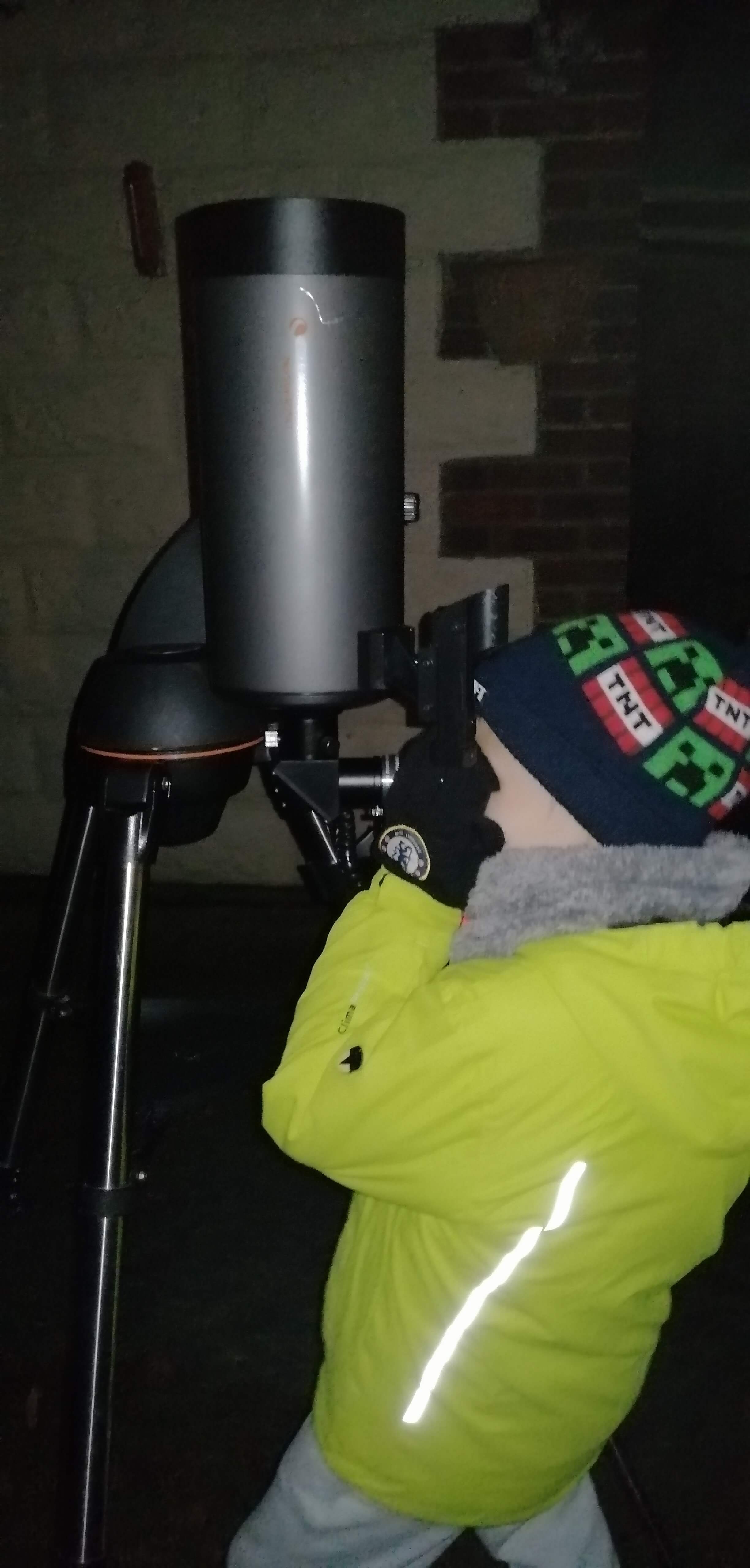
Image credit: MK (TRAC)
Above image: A TRAC team member decided to take a look at what he could see directly above him. I believe the answer was "a dark patch of sky". The point directly above the observer is called the "zenith".
More to Come
Improving our astrophotography skills will form part of our mission for 2025.
Telescope Repairs
Battery Connector Snaps
Disaster strikes! The battery connector cable snapped on 07 Jan 2025. Four wires were damaged, and the telescope would not switch on.
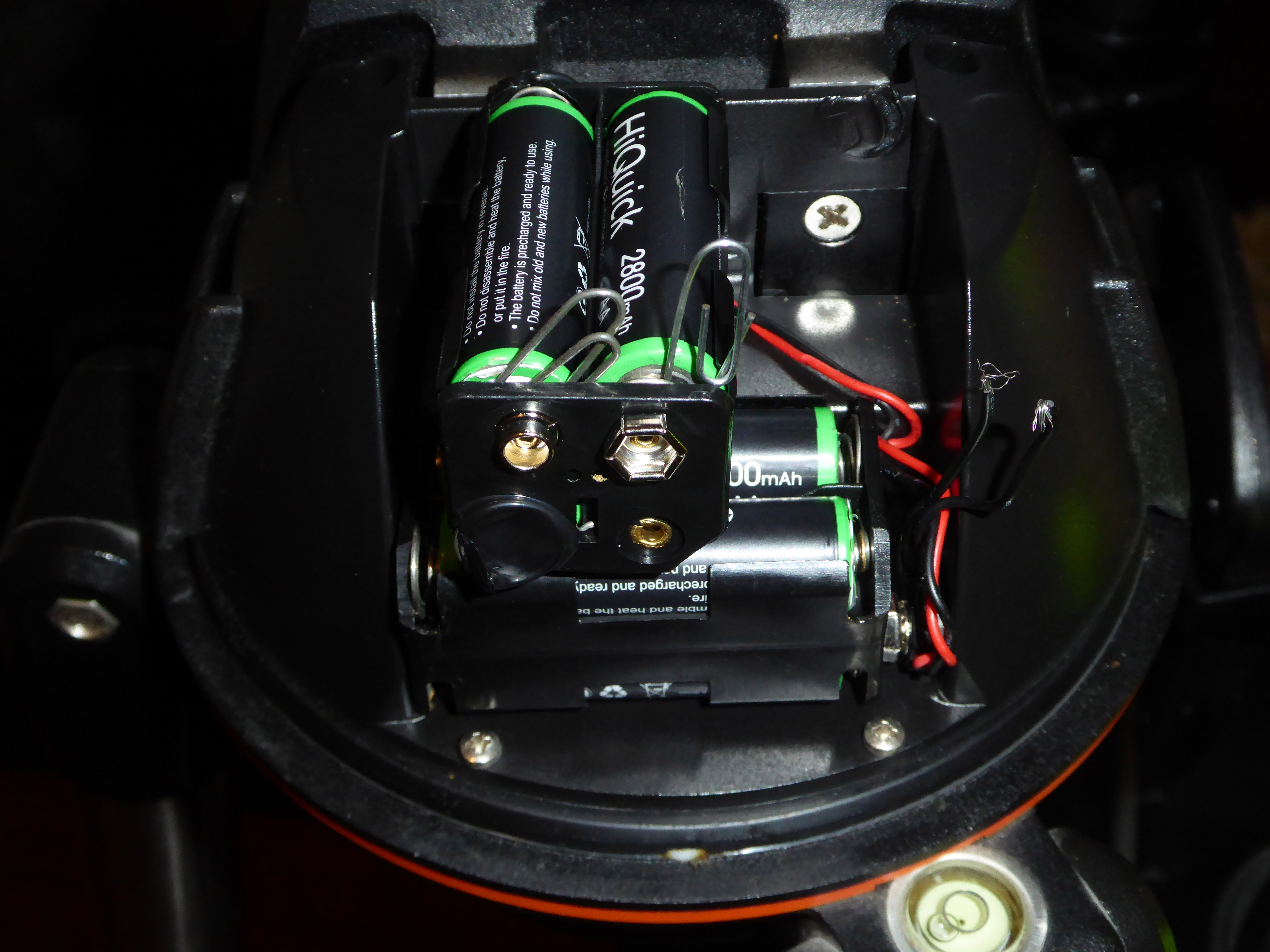
Image credit: JM (TRAC)
For a short time in mid-January, two paperclips were used to connect the broken wires to the battery housing. This worked well for one night, but unfortunately the paperclips short-circuited overnight and the current was high enough to heat up the end of the batteries and melt the plastic housing.
A replacement was ordered online, and I repaired it on 202 Jan 2025.
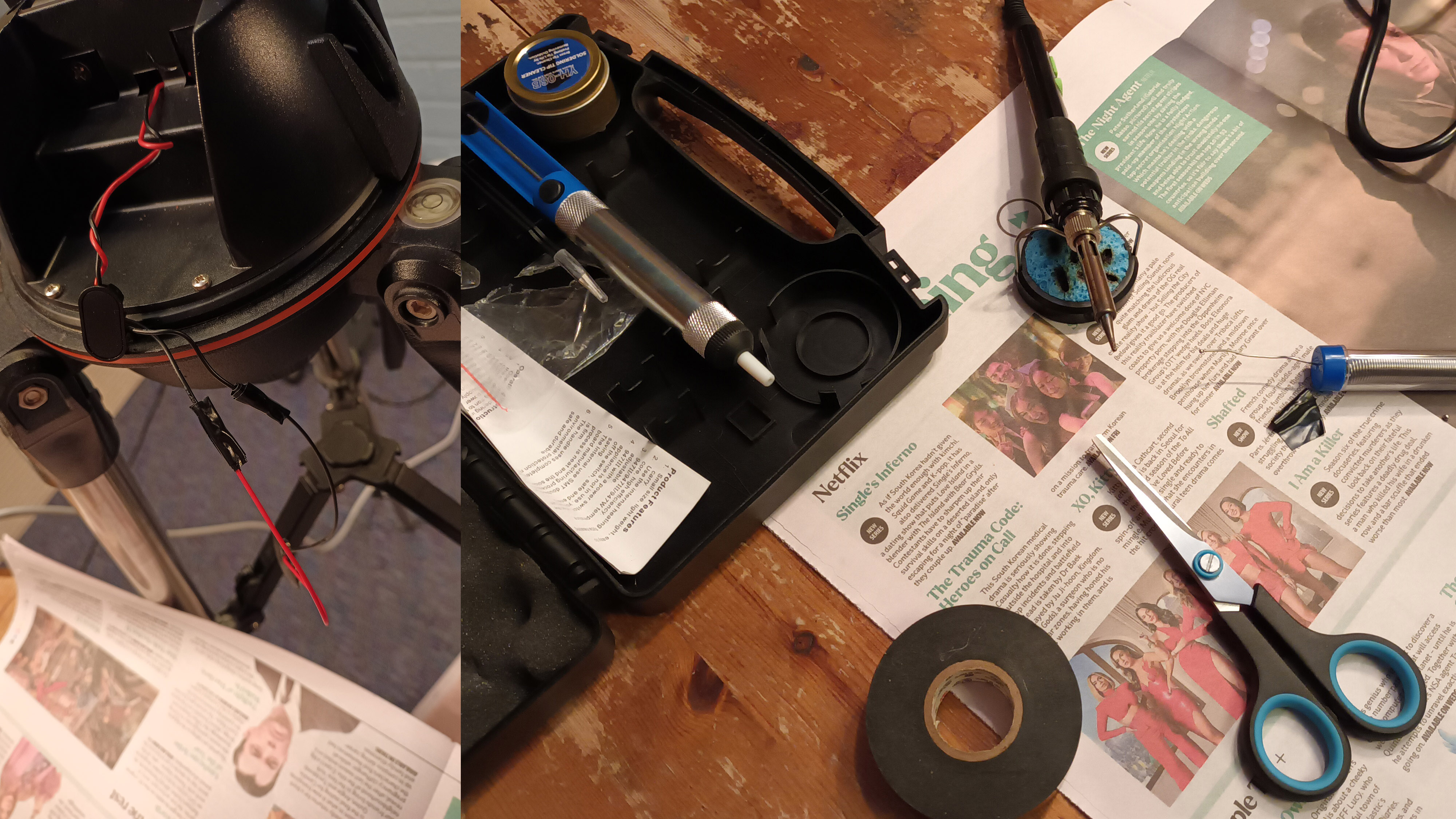
Image credit: JM (TRAC)
Thank you to Vasile M for the loan of his soldering iron kit, and thank you to David M for agreeing to hold the wires while the scorching hot soldering iron came dangerously close to his fingers.
Admin Tasks
Access to Ryetop Park
On 29 Jan 2025, TRAC was granted special permission to access the park after the normal closing time to allow us extra time for our stargazing sessions.
A huge thank you to James, Liam, and the Medway Norse Grounds Team at Capstone Country Park for working with us to organise this.
If we get clear skies one Friday or Saturday evening next month, we can head to the park for a couple of hours and enjoy a wide view of the night sky away from the bright street lights.
A clear view of the sky from a darker location like the park will help us immensely. We'll stand a much better chance of seeing targets like the Orion Nebula, the Andromeda Galaxy, and some of the fainter constellations.
Website Content
Krum used the Data Book of Astronomy to fill out the Winter Hexagon table from last month's Action Plan. We can use the table to compare the magnitudes and distances to some of the winter night sky's brightest stars.
A Logo, a Poster, a Bookmark, and a Certificate
- I'm working on an updated logo, based on a design by Krum from all the way back in April 2024! It should be ready soon.
- Krum has created first draft designs of our TRAC 2025 bookmark and a certificate for astronomy club visitors. These designs will be revisited and refined next month.
- Krum also designed an ice warning poster (shown below) to warn passersby that we can expect extremely cold temperatures and that it might be icy underfoot.
Summary
January was one of the best months we've ever had!
A Strong Start to 2025
January was a very productive month – especially in terms of photography. The "Planets Parade" offered us lots of chances to observe our closest celestial neighbours. We need to make the most of the planets because their visibility won't stay this good for ever!
New Equipment
The astronomy club received a new 5x Barlow lens. We'll give it a proper tryout on a very clear, still night soon. With any luck, it will allow us to take a closer look at Mars and Jupiter in February.
Thank you to Matey and Krum for such a thoughtful and generous gift.
Ice Warning
It got very chilly on some nights, and we even had some snow and frost. TRAC members are a tough bunch and carried out some observations in temperatures as low as -3°C!
Krum issued an ice warning at 21:15 on 09 Jan 2025. His advice was to be careful and to wrap up! This was sound advice.
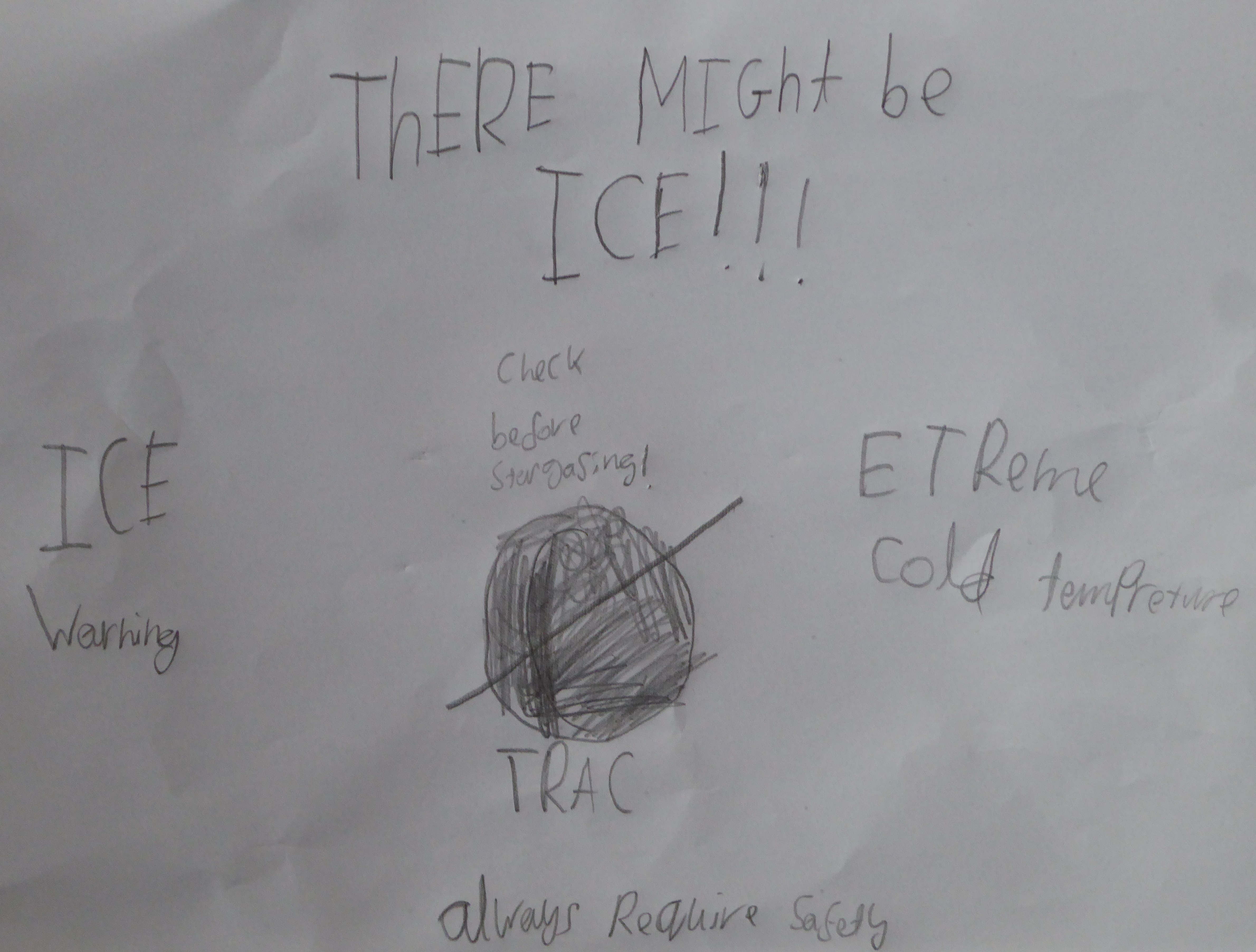
Image credit: KK (TRAC)
Signs of Spring
We are already starting to see some other constellations and stars rising in the east after midnight. The bright star Arcturus (in Boötes) and Leo, the Lion, are visible, which means that spring is on its way!
James M
TRAC Team Leader
01 Feb 2025 – Rainham, Kent

TRAC is an amateur astronomy group based in Rainham (Kent) in the United Kingdom.
On clear nights, you'll find us outside, observing stars, planets, moons, galaxies, satellites, meteors, and comets.
This monthly report is intended to keep club members informed of our observational activities, track progress towards the club's long-term goals, celebrate successes, and record memorable moments.
Unless stated otherwise, magnitude values refer to apparent magnitude and have usually been rounded to one decimal place; photos of deep-sky objects credited to TRAC were taken using a Seestar S50 smart telescope; our observations were made from Rainham, Kent; and times and dates are in the UK's local time zone (GMT or BST, depending on the time of year).
We welcome any questions, feedback, or suggestions you may have. Please let us know if anything is unclear or if you notice an error, inaccuracy, or typo. Contact us via email.
© 2025 Taverners Road Astronomy Club