TRAC Monthly Report: December 2024
- Category: Monthly Reports
- Author: JM
- Published: 02 Jan 2025
- Last updated: 03 Jan 2025
Winter Night Sky
December 2024 was a month of almost total cloud cover from horizon to horizon nearly every single evening.
We had zero opportunities to admire the winter night sky and all its wonderful sights, like the brightest star in the sky, Sirius, and the constellations of Orion, Canis Major, and Gemini.
We'll try to see everything in January 2025!
Lunar Observations
Full Moon Photos
Matey and I headed out on 15 Dec 2024 to take some photos of the Full Moon. We tested the new Celestron phone adapter and found that it was much easier to use than the unbranded one we had been struggling with.
Yet again, we had fast-moving clouds, so the resulting photos are not quite so spectacular this month. That being said, during a rare break in the clouds, Matey was able to capture the below image of December's Full Moon using his phone and the new adapter. This phone turned out well, given the adverse weather.
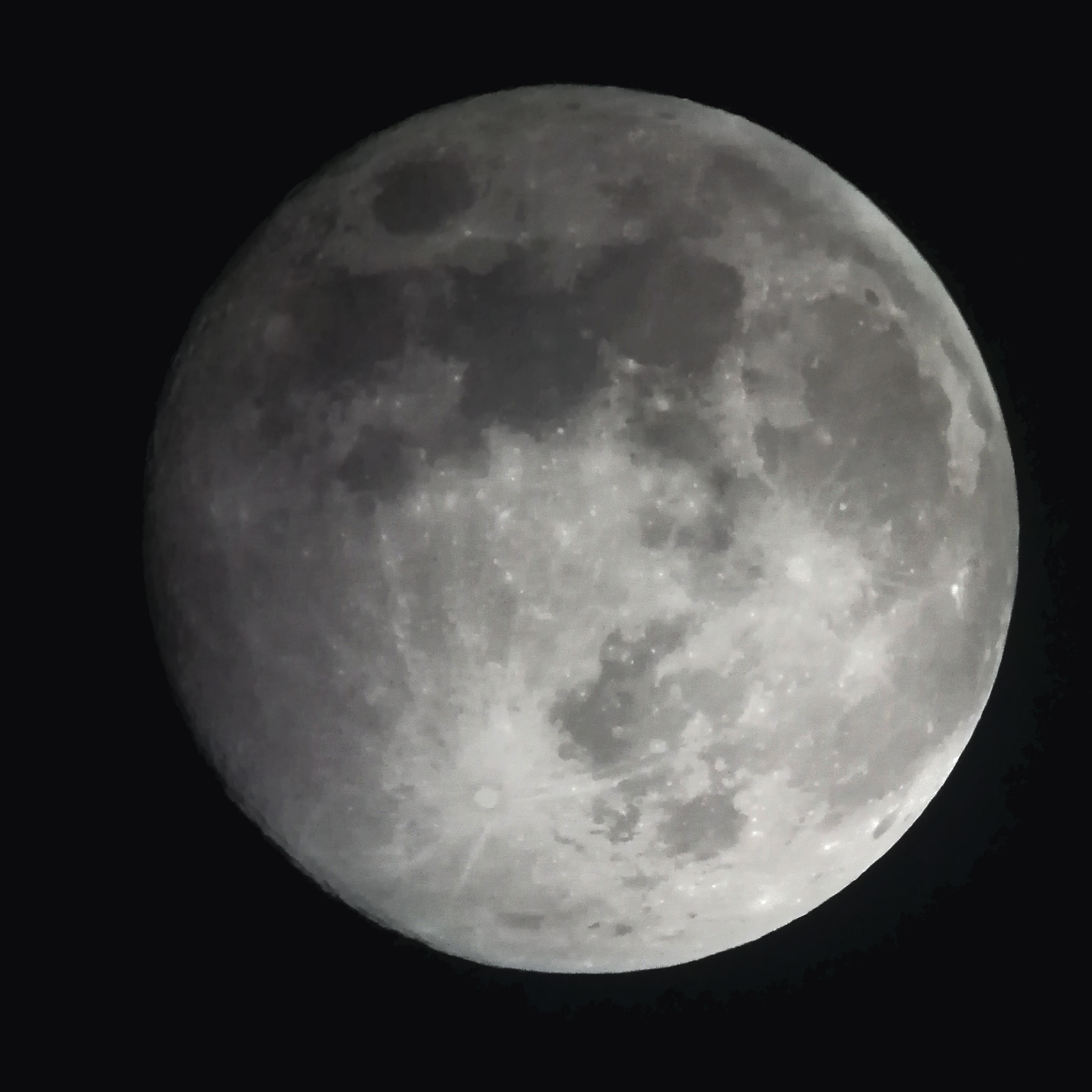
Image credit: MK/JM (TRAC)
A spooky atmosphere created by the Full Moon and clouds was captured in the photo below, resembling a scene from Harry Potter. It looks like Voldemort is about to arrive, or some kind of evil spell has been cast!
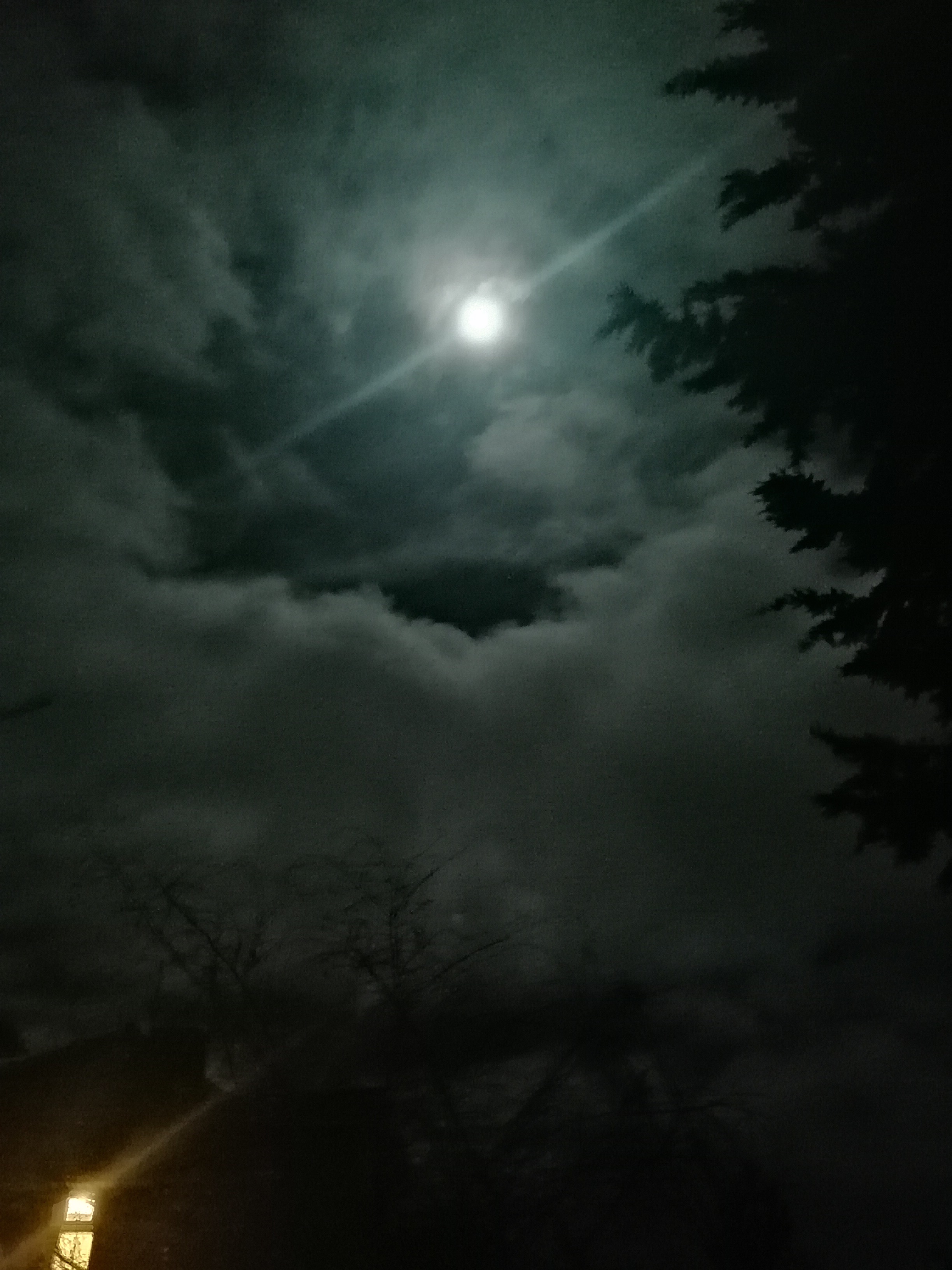
Image credit: MK (TRAC)
Moon–Jupiter Conjunction
On 14 Dec 2024, we observed the Moon close to Jupiter. But it was only visible through the clouds. A few photos were taken, but they turned out so bad there's no point in adding them here.
Moon Shadow Transits
Jupiter-Io Shadow Transit
On 03 Dec 2024, we observed our second Io shadow transit.
This time, the sky was cloudy. We had fast-moving clouds with occasional breaks, but we persevered and got an excellent view of Io's shadow.
The view with the 25mm eyepiece was average. With the Celestron 9mm standard eyepiece, it was possible to see the shadow, but the image was blurred.
The zoom eyepiece performed much better – to my surprise! The image quality was far superior to the 9mm eyepiece. We got an excellent view of Io's shadow, which appeared as a perfectly circular black disc in contrast against Jupiter's pale pink southern belt.
Matey took some photos, but the seeing conditions were quite poor, and I couldn't see Io's shadow in the photos. Next time, we'll take some photos using the zoom eyepiece and the new phone adapter.
03 Dec 2024 was our most successful evening this month.
Planets
Venus
We did not make any telescopic observation of Venus in December 2024. It was admired with the naked eye on a few occasions as we continued to monitor its brightness.
Mars
Our clearest view of Mars in 2024 was achieved late on 03 Dec 2024. In the eyepiece, Mars appeared noticeably larger than in November, and the image was slightly sharper.
The phase of Mars (93%) was clearly visible, with the north-east side of the planet darkened.
The Martian polar ice cap was visible as a very small white region near the north pole. This view was achieved using the Svbony zoom eyepiece and the Barlow lens. The image was more stable than previously experienced. The zoom eyepiece was set to approximately 10mm, meaning a magnification of around 300x as required. This is above the maximum useful magnification for a 127mm aperture telescope!
Jupiter
Our main observation of the Jovian system took place on 03 Dec 2024, during the Io shadow transit.
I saw Jupiter's Great Red Spot remains to be seen. We'll aim to observe it in December when Jupiter will reach opposition.
On 03 Dec 2024, I saw Jupiter's Great Red Spot (GRS) at 22:30 by using the zoom eyepiece together with the Barlow lens. The GRS was faint, but the pinkish "eye of the storm" was visible, so it can be seen when the conditions are good! The location of the GRS was confirmed by online central meridian transit timings and the simulated view on Stellarium.
On 14 Dec 2024, it was just about possible to see Jupiter close to the Moon through the clouds. Photos were attempted, but none of them turned out to be of high enough quality to be usable.
Saturn
Once again, it wasn't possible for us to observe the two Titan shadow transits we had planned to see due to awful weather. No other observations of Saturn were conducted.
Uranus
We first located Uranus using binoculars on 28 Nov 2024. We repeated this in December, using the same strategy we used in November, and found that the planet is actually quite easy to locate once you've had some practice.
I am confident that I observed Uranus with the telescope at 23:00 on 20 Dec 2024. A group of three mag. +7 stars formed a small equilateral triangle just below Uranus. I also used the brightish star above Uranus with a similar magnitude as the planet to check that I was looking at the right object.
I used the Sky Align (stars: Hamal, Aldebaran, Mizar) to get close to Uranus to begin with, then hunted around to pinpoint the planet exactly.
Neptune
I'm very sad to report that we had zero opportunities to see Neptune in December 2024.
Of course, this means we have not achieved our main mission for 2024. Seeing Neptune will likely become one of our long-term goals. I'm sure we'll see it one day. Never lose hope.
Astrophotography
An Early Christmas Present
TRAC has purchased a Celestron NexYZ 3-Axis Universal Smartphone Adapter. It should help us take better photos on our phones. The process of aligning the eyepiece with the camera on your phone should be easier and less frustrating.
Matey and I tested it on 15 Dec 2024, and we agreed that its design was much better than the adapter we've been using. It was easier to make small adjustments to the position of the camera, and it held the phone in place more securely. Further testing is required to make a proper judgement.
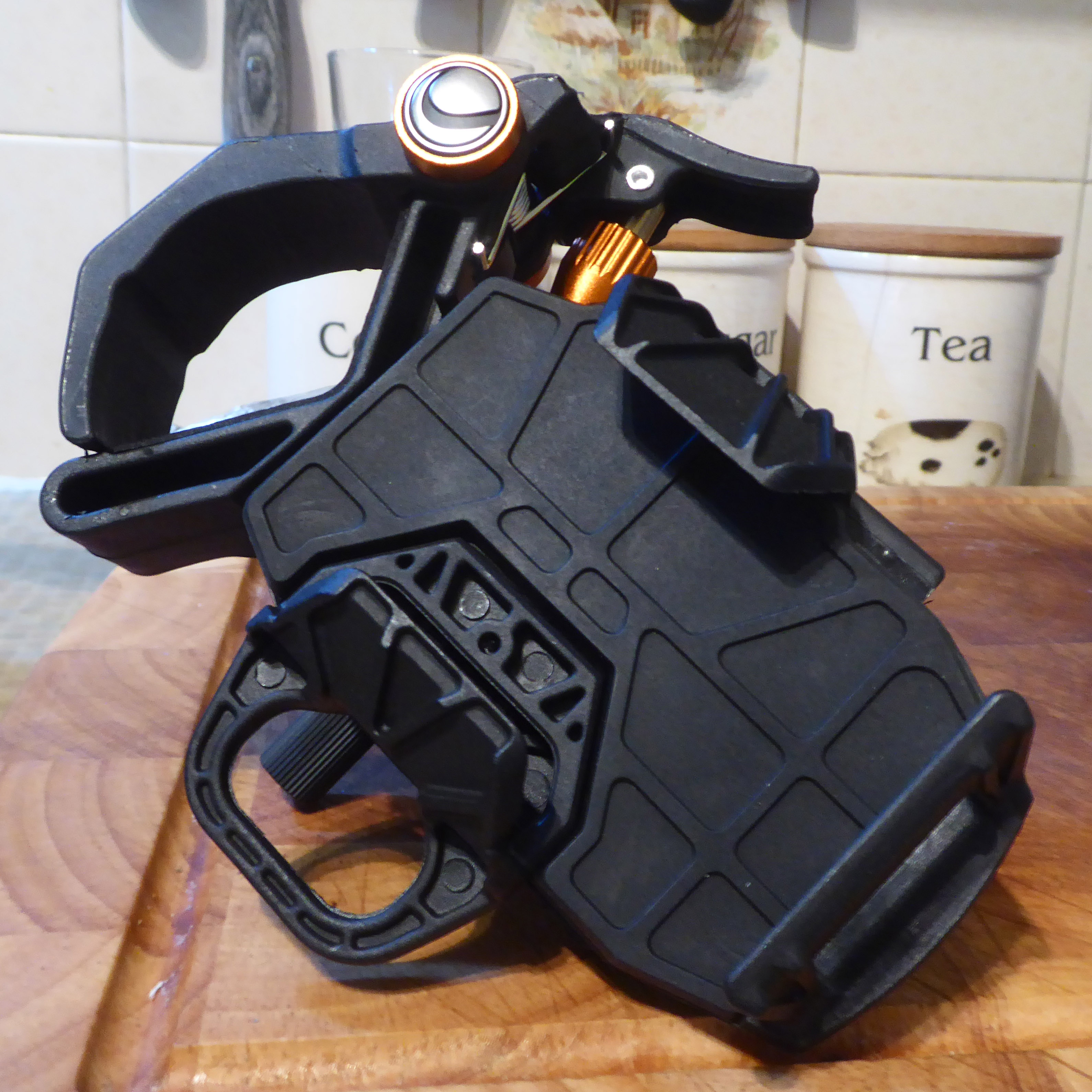
Image credit: KK (TRAC)
More to Come
Improving our astrophotography skills will form part of our mission for 2025.
Access to Ryetop Park
I was in contact via email with Medway Norse throughout December. We have been granted permission to access the park after hours. We have hit a small technicality, which we ought to be able to overcome.
I'll keep you posted on any developments.
Summary
Disappointment
December 2024 was undoubtedly the worst month this year for the astronomy club. Even the Sun was not seen for about eight days at one point. It was frustrating to not be able to go stargazing over the Christmas holidays.
Not a single meteor was seen during this year's Geminids. The area of sky in Auriga where minor planet Eunomia was positioned was scanned a few times, but the conditions made it difficult to find the tiny object. It was only possible for us to observe one moon shadow transit.
Sadness
The only decent night was 03 Dec 2024, when we saw the Io shadow transit. Later that evening, the phase of Mars and its polar ice cap were visible, and so was Jupiter's GRS. This shows that when you do get decent weather, it can often be possible to see many interesting sights in a single stargazing session.
There were numerous exciting planetary and lunar events to observe in December 2024. Alas, almost all of them took place behind a thick layer of cloud.
Failure
We had exactly zero opportunities to see Neptune, so we reached the end of the year one planet short of our main mission. Neptune was always going to be a tricky one. It turns out that many amateur astronomers have never seen Neptune, even those who have much more experience than us.
We can still be proud that most of us saw 5/7 planets and two of us saw 6/7. That's not bad for our first year.
A New Hope
Despite this disappointing end to 2024, we should remember all the wonderful things we did manage to observe this year, such as two comets, many meteors, the aurora borealis, Starlink satellite trains, all of the main seasonal constellations, and not forgetting the Moon!
2025 is a new year, and there will be lots of interesting sights and events to look forward to starting in January – one of the best months for stargazing!
James M
TRAC Team Leader
02 Jan 2025 – Rainham, Kent

TRAC is an amateur astronomy group based in Rainham (Kent) in the United Kingdom.
On clear nights, you'll find us outside, observing stars, planets, moons, galaxies, satellites, meteors, and comets.
This monthly report is intended to keep club members informed of our observational activities, track progress towards the club's long-term goals, celebrate successes, and record memorable moments.
Unless stated otherwise, magnitude values refer to apparent magnitude and have usually been rounded to one decimal place; photos of deep-sky objects credited to TRAC were taken using a Seestar S50 smart telescope; our observations were made from Rainham, Kent; and times and dates are in the UK's local time zone (GMT or BST, depending on the time of year).
We welcome any questions, feedback, or suggestions you may have. Please let us know if anything is unclear or if you notice an error, inaccuracy, or typo. Contact us via email.
© 2025 Taverners Road Astronomy Club